
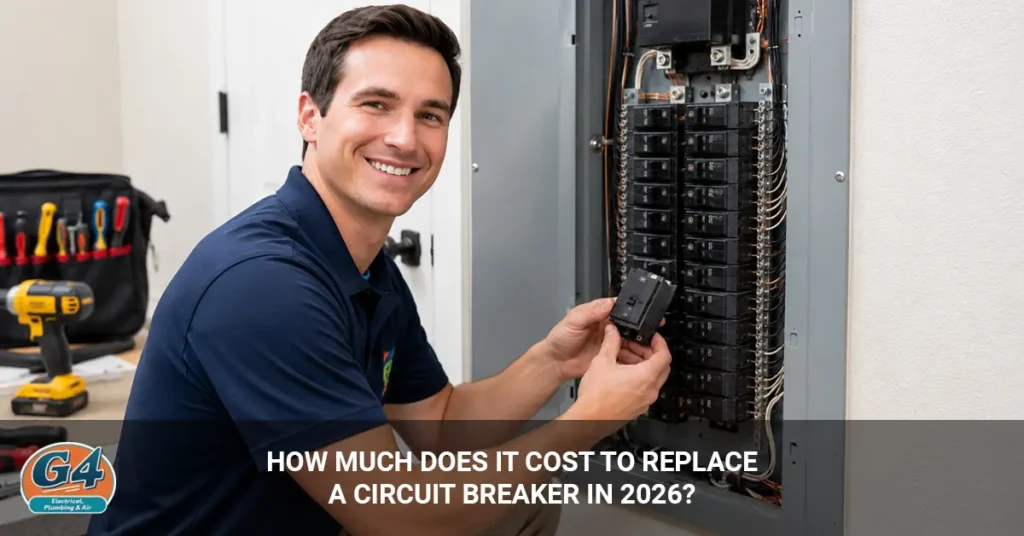
Replacing a circuit breaker in 2026 typically costs between $100 and $400, with most homeowners paying $150 to $300 for a standard breaker replacement. The final cost depends on the breaker type, amperage, electrical panel brand, labor rates, permit requirements, and whether additional electrical repairs are needed.
A simple single-pole breaker replacement is usually the least expensive option, while GFCI, AFCI, smart breakers, and older electrical panels can significantly increase costs.
Because circuit breakers play a critical role in protecting your home’s electrical system, replacement should be handled carefully and, in most cases, performed by a licensed electrician.
In this guide, we’ll break down circuit breaker replacement costs, labor charges, breaker types, warning signs of failure, and ways to save money on your project.
Average Circuit Breaker Replacement Cost in 2026
The average cost to replace a circuit breaker in 2026 ranges from $100 to $400, depending on the type of breaker and the complexity of the installation.
Most standard breaker replacements can be completed quickly, keeping labor costs relatively low. However, projects involving specialty breakers, older electrical panels, or electrical troubleshooting often cost more.
Circuit Breaker Replacement Cost Breakdown
| Cost Category | Typical Cost Range |
| Circuit Breaker | $10–$200 |
| Labor | $75–$250 |
| Permit Fees | $25–$300 |
| Electrical Materials | $10–$100 |
| Total Replacement Cost | $100–$400+ |
National Average Cost
Most homeowners spend between $150 and $300 for a standard circuit breaker replacement completed by a licensed electrician.
What Affects Circuit Breaker Replacement Costs?
Several factors influence the total cost of replacing a circuit breaker:
- Type of breaker
- Breaker amperage
- Electrical panel brand
- Labor rates
- Permit requirements
- Electrical panel condition
- Accessibility of the panel
- Emergency service needs
For example, replacing a standard 20-amp breaker is typically much less expensive than replacing a GFCI breaker or troubleshooting an older electrical panel.
Circuit Breaker Replacement Cost by Breaker Type
The type of circuit breaker is one of the biggest factors affecting replacement costs. Standard single-pole breakers are usually the least expensive to replace, while GFCI, AFCI, combination, and smart breakers cost more due to their advanced safety and monitoring features.
Choosing the correct breaker type is essential because it must be compatible with your electrical panel and meet current electrical code requirements.
Circuit Breaker Replacement Cost by Type
| Breaker Type | Average Replacement Cost |
| Standard Single-Pole Breaker | $100–$250 |
| Double-Pole Breaker | $150–$350 |
| GFCI Breaker | $150–$450 |
| AFCI Breaker | $200–$500 |
| Combination AFCI/GFCI Breaker | $250–$600 |
| Smart Circuit Breaker | $300–$800+ |
These estimates include both the breaker and professional installation.
Standard Single-Pole Breaker Cost
Replacing a standard single-pole breaker typically costs $100 to $250. These breakers are the most common type found in residential electrical panels and are used for standard 120-volt circuits.
Single-pole breakers commonly power:
- Lighting circuits
- Bedrooms
- Living rooms
- Hallways
- General-purpose outlets
Because they are widely available and easy to install, they generally have the lowest replacement cost.
Double-Pole Breaker Cost
A double-pole breaker usually costs $150 to $350 installed. These breakers control 240-volt circuits and are designed for larger electrical loads.
Double-pole breakers are commonly used for:
- Electric dryers
- Water heaters
- Air conditioners
- Electric ranges
- Heat pumps
The higher cost is primarily due to the larger breaker and increased electrical capacity.
GFCI Breaker Cost
Replacing a GFCI breaker typically costs $150 to $450. GFCI (Ground Fault Circuit Interrupter) breakers help protect against electrical shock by shutting off power when a ground fault is detected.
These breakers are often required in areas exposed to moisture, including:
- Bathrooms
- Kitchens
- Garages
- Basements
- Outdoor circuits
Benefits of GFCI Breakers
- Improved electrical safety
- Shock protection
- Compliance with modern electrical codes
AFCI Breaker Cost
An AFCI breaker generally costs $200 to $500 installed. AFCI (Arc Fault Circuit Interrupter) breakers are designed to reduce the risk of electrical fires by detecting dangerous arcing conditions within wiring.
Many newer homes are required to have AFCI protection in living areas.
Common locations include:
- Bedrooms
- Living rooms
- Dining rooms
- Hallways
Benefits of AFCI Breakers
- Fire prevention
- Enhanced safety
- Code compliance
Combination AFCI/GFCI Breaker Cost
A combination AFCI/GFCI breaker typically costs $250 to $600 installed. These breakers provide both arc fault and ground fault protection in a single device.
They are commonly installed where electrical codes require both types of protection.
Benefits
- Comprehensive safety protection
- Simplified installation
- Compliance with updated electrical codes
Although more expensive than standard breakers, they offer the highest level of protection for many residential circuits.
Smart Circuit Breaker Cost
Replacing a smart circuit breaker generally costs $300 to $800 or more. Smart breakers connect to monitoring systems that allow homeowners to track energy usage, receive alerts, and control circuits remotely.
Features may include:
- Energy monitoring
- Remote breaker control
- Mobile app integration
- Electrical usage reporting
Smart breakers are becoming increasingly popular in modern and energy-efficient homes.
Which Circuit Breaker Is Most Affordable?
A standard single-pole breaker is usually the least expensive breaker to replace, with total costs often ranging from $100 to $250. These breakers are commonly used throughout residential homes and require minimal installation time.
Which Circuit Breaker Provides the Best Protection?
For most homeowners, AFCI and GFCI breakers provide the best balance of safety and value. AFCI breakers help prevent electrical fires, while GFCI breakers protect against electrical shock. Combination AFCI/GFCI breakers offer the highest level of protection by addressing both risks in a single device.
Choosing the right breaker depends on your home’s electrical system, local code requirements, and the specific circuit being protected.
Labor Cost to Replace a Circuit Breaker
The labor cost to replace a circuit breaker typically ranges from $75 to $250, depending on the complexity of the job, the condition of the electrical panel, and local electrician rates. Most standard breaker replacements can be completed within one to two hours, keeping labor costs relatively affordable.
However, if the electrician must troubleshoot electrical issues, replace multiple breakers, or work on an older electrical panel, labor costs can increase significantly.
Average Electrician Labor Cost
Electricians generally charge between $50 and $150 per hour, depending on their experience, location, and the type of electrical work being performed.
For a straightforward breaker replacement, labor is often the largest portion of the total project cost. Most electricians charge either an hourly rate or a minimum service call fee.
Standard Breaker Replacement Labor Cost
Replacing a standard circuit breaker typically costs $75 to $200 in labor.
In a typical replacement, the electrician will:
- Turn off the power to the panel
- Remove the faulty breaker
- Install a new compatible breaker
- Inspect wiring connections
- Test the circuit for proper operation
Because the process is relatively quick, labor costs are usually lower than those associated with larger electrical repairs.
Labor Cost to Replace a GFCI or AFCI Breaker
Replacing a GFCI or AFCI breaker generally costs $100 to $250 in labor.
These breakers often require additional testing and verification to ensure they function properly and comply with current electrical codes.
Labor costs may increase if:
- Circuit troubleshooting is required
- Multiple circuits are involved
- Existing wiring issues are discovered
Labor Cost for Multiple Breaker Replacements
Replacing multiple breakers during the same service visit often reduces the labor cost per breaker.
Typical Labor Cost: $150–$500+
Because the electrician is already working inside the panel, replacing several breakers at once is often more cost-effective than scheduling separate appointments.
Emergency Electrical Service Costs
Emergency breaker replacement services can increase labor costs by 25% to 100% or more.
Electricians typically charge premium rates for:
- After-hours service
- Weekend appointments
- Holiday calls
- Urgent electrical failures
A breaker that fails at night or during a holiday may cost substantially more to replace than a scheduled service visit.
What Increases Labor Costs?
Several factors can increase the labor cost of replacing a circuit breaker.
Difficult Electrical Panel Access
Panels located in tight spaces, crawl spaces, utility closets, or areas with limited access may require additional labor.
Older Electrical Systems
Older homes often require extra inspection and troubleshooting before a breaker can be safely replaced.
Electricians may need to:
- Verify wiring integrity
- Check for outdated components
- Inspect grounding systems
- Identify code violations
Permit Requirements
Some municipalities require permits and inspections for electrical work, especially when multiple breakers are replaced or panel modifications are involved.
Permit-related paperwork and inspections can increase labor costs.
Electrical Troubleshooting
If a breaker continues to trip or shows signs of failure, the electrician may need to identify the underlying cause before replacing it.
Common issues include:
- Overloaded circuits
- Short circuits
- Faulty appliances
- Damaged wiring
Troubleshooting can add significant time and cost to the project.
Electrical Panel Repairs
Sometimes a failed breaker is not the only problem.
Additional repairs may be necessary if the electrician discovers:
- Corrosion inside the panel
- Damaged bus bars
- Loose connections
- Overheating components
These issues can increase both labor and material costs.
How Can You Reduce Labor Costs?
The best way to reduce labor costs is to address breaker issues early and schedule service before an emergency occurs.
You can also save money by:
- Getting multiple electrician quotes
- Replacing multiple breakers during one visit
- Scheduling work during normal business hours
- Performing routine electrical inspections
Taking a proactive approach often helps homeowners avoid expensive emergency repairs and larger electrical problems in the future.
Is Hiring an Electrician Worth It?
In most cases, hiring a licensed electrician is worth the cost because circuit breakers are critical safety devices. Improper installation can lead to electrical fires, damaged equipment, failed inspections, and serious safety hazards.
Professional installation ensures the breaker is compatible with the panel, properly connected, and functioning safely according to current electrical codes.
Circuit Breaker Replacement Cost by Amperage
The amperage rating of a circuit breaker affects both the cost of the breaker itself and the total replacement cost. Higher-amperage breakers are generally more expensive because they are designed to handle larger electrical loads and are often used for major appliances and equipment.
While labor costs are usually similar across most breaker replacements, the price of the breaker can increase as amperage requirements rise.
Circuit Breaker Replacement Cost by Amperage
| Breaker Size | Average Replacement Cost |
| 15-Amp Breaker | $100–$200 |
| 20-Amp Breaker | $100–$250 |
| 30-Amp Breaker | $150–$300 |
| 40-Amp Breaker | $150–$350 |
| 50-Amp Breaker | $200–$400 |
| 60-Amp Breaker | $250–$500 |
These estimates include both the breaker and professional installation.
15-Amp Breaker Replacement Cost
Replacing a 15-amp breaker typically costs $100 to $200. These breakers are commonly used for lighting circuits and general-purpose outlets in bedrooms, hallways, and living areas.
Because they are among the most common residential breakers, they are generally inexpensive to replace.
Common Applications:
- Lighting circuits
- Bedroom outlets
- Hallway outlets
- Living room circuits
20-Amp Breaker Replacement Cost
A 20-amp breaker generally costs $100 to $250 installed. These breakers are frequently used for kitchen outlets, bathroom circuits, garage outlets, and dedicated appliance circuits.
Many modern homes use 20-amp circuits to support increased electrical demand.
Common Applications:
- Kitchen countertop outlets
- Bathroom outlets
- Laundry rooms
- Garage circuits
30-Amp Breaker Replacement Cost
Replacing a 30-amp breaker typically costs $150 to $300. These breakers are often used for larger appliances that require dedicated circuits.
Common Applications:
- Electric water heaters
- Clothes dryers
- Small HVAC equipment
Because these circuits handle higher electrical loads, proper installation and testing are especially important.
40-Amp Breaker Replacement Cost
A 40-amp breaker generally costs $150 to $350 installed. These breakers are commonly used for medium-sized electrical equipment and some heating and cooling systems.
Common Applications:
- Air conditioning units
- Electric cooktops
- Larger appliances
Replacement costs may be slightly higher because these breakers are typically found on 240-volt circuits.
50-Amp Breaker Replacement Cost
Replacing a 50-amp breaker usually costs $200 to $400. These breakers support larger electrical loads and are often used for heavy-duty residential equipment.
Common Applications:
- Electric ranges
- Hot tubs
- EV charging outlets
- Large HVAC systems
As amperage increases, the breaker itself becomes more expensive, which contributes to higher replacement costs.
60-Amp Breaker Replacement Cost
A 60-amp breaker typically costs $250 to $500 installed. These breakers are designed for substantial electrical loads and may be used for subpanels or large residential equipment.
Common Applications:
- Electrical subpanels
- Large workshops
- Heavy-duty HVAC equipment
- High-capacity circuits
Because these breakers handle significant power demands, electricians often perform additional testing during replacement.
Does Higher Amperage Always Mean Higher Costs?
In most cases, yes. Higher-amperage breakers generally cost more because they are built to handle larger electrical loads and often require larger conductors, specialized components, or more extensive testing.
However, labor costs are usually similar for most standard breaker replacements unless the project requires troubleshooting, panel repairs, or code-related upgrades.
How Do You Know Which Breaker Size You Need?
The correct breaker size depends on the electrical load of the circuit and the wiring connected to it. Installing the wrong breaker size can create serious safety hazards, including overheating, equipment damage, and fire risks.
If you’re unsure which breaker size is required, consult a licensed electrician. They can verify the proper amperage, inspect the wiring, and ensure the replacement complies with current electrical codes.
Circuit Breaker Replacement Cost by Electrical Panel Brand
The brand of your electrical panel can affect circuit breaker replacement costs because each manufacturer uses specific breaker designs that are not always interchangeable. Standard breakers from major brands are generally affordable and easy to find, while older or discontinued panels often require specialty breakers that cost significantly more.
Using the correct breaker for your panel is critical for safety, code compliance, and proper electrical system performance.
Circuit Breaker Replacement Cost by Panel Brand
| Panel Brand | Average Replacement Cost |
| Square D | $100–$250 |
| Siemens | $100–$250 |
| Eaton | $100–$300 |
| GE | $100–$300 |
| Cutler-Hammer | $100–$300 |
| Federal Pacific (FPE) | $200–$800+ |
| Zinsco | $200–$1,000+ |
These estimates include the breaker, labor, and basic installation.
Square D Breaker Replacement Cost
Replacing a Square D breaker typically costs $100 to $250. Square D is one of the most common electrical panel brands in North America and is known for its reliability and widespread availability.
Because replacement breakers are readily available, installation costs are usually lower.
Common Square D Product Lines:
- Homeline
- QO
Siemens Breaker Replacement Cost
A Siemens breaker replacement generally costs $100 to $250. Siemens panels are widely used in residential construction and have a reputation for durability and compatibility with modern electrical systems.
Replacement breakers are commonly available through electricians and electrical supply stores.
Eaton Breaker Replacement Cost
Replacing an Eaton breaker typically costs $100 to $300. Eaton manufactures several popular breaker lines used in residential and commercial properties.
Costs may vary depending on the breaker type and amperage rating.
Common Eaton Series:
- BR Series
- CH Series
GE Breaker Replacement Cost
A GE breaker replacement usually costs $100 to $300 installed. GE electrical panels are found in many older and newer homes, and replacement breakers are generally easy to source.
The total cost depends on the breaker size, panel age, and labor requirements.
Cutler-Hammer Breaker Replacement Cost
Replacing a Cutler-Hammer breaker generally costs $100 to $300. Since Cutler-Hammer products are now manufactured under the Eaton brand, replacement parts are often readily available.
This availability helps keep replacement costs relatively affordable.
Federal Pacific Breaker Replacement Cost
Replacing a Federal Pacific breaker typically costs $200 to $800 or more. However, many electricians recommend replacing the entire Federal Pacific electrical panel rather than replacing individual breakers.
Federal Pacific Electric (FPE) panels have been associated with documented safety concerns, including breakers that may fail to trip properly during overload conditions.
Common Recommendation:
- Panel inspection
- Full panel replacement evaluation
- Electrical system safety assessment
Zinsco Breaker Replacement Cost
A Zinsco breaker replacement generally costs $200 to $1,000 or more. Like Federal Pacific panels, Zinsco panels are considered outdated and may present safety concerns.
Replacement breakers can be difficult to find and are often more expensive than modern alternatives.
Many electricians recommend considering a full panel upgrade rather than investing heavily in an aging Zinsco system.
Why Do Older Panel Brands Cost More?
Older electrical panels often cost more to service because:
- Replacement breakers are harder to find
- Specialized parts may be required
- Safety inspections are often recommended
- Panel replacement may be necessary
These factors can significantly increase both labor and material costs.
Should You Replace the Breaker or the Entire Panel?
If your panel is modern and in good condition, replacing a single breaker is usually the most cost-effective solution. However, if your home has an older Federal Pacific, Zinsco, or severely outdated panel, replacing the entire panel may be the safer and more economical long-term investment.
A licensed electrician can evaluate your panel’s condition and determine whether a breaker replacement or panel upgrade is the better option.
Signs You Need to Replace a Circuit Breaker
You should replace a circuit breaker if it is no longer functioning properly, repeatedly trips without cause, shows signs of overheating, or fails to protect the circuit as intended. Circuit breakers are designed to last for many years, but age, wear, electrical surges, and repeated overloads can eventually cause them to fail.
Recognizing the warning signs early can help prevent electrical damage, power outages, and potential fire hazards. Understanding common circuit breaker causes and fixes can help determine whether the breaker actually needs replacement or if another electrical problem is causing the issue.
Breaker Trips Frequently
A breaker that trips repeatedly may indicate that it is failing or that there is an underlying electrical issue. If your circuit breaker keeps tripping, the problem may be caused by overloaded circuits, faulty wiring, or a worn-out breaker.
Common causes include:
- Circuit overloads
- Short circuits
- Ground faults
- Worn-out breakers
If the breaker continues to trip after the electrical load has been reduced, replacement may be necessary. Many breaker failures occur after homeowners ignore common electrical panel overload signs, such as frequent breaker trips, flickering lights, and overloaded circuits.
Breaker Won’t Reset
A breaker that will not stay in the ON position often indicates a serious problem.
Possible causes include:
- Internal breaker failure
- Damaged wiring
- Active short circuit
- Ground fault condition
An electrician should inspect the circuit before replacing the breaker.
Burning Smells
A burning odor coming from the electrical panel is a serious warning sign.
This may indicate:
- Overheating breakers
- Loose electrical connections
- Damaged wiring
- Internal arcing
If you notice a burning smell, contact an electrician immediately and avoid using the affected circuit.
Scorch Marks Around the Panel
Dark discoloration, burn marks, or melted components near the breaker panel can indicate excessive heat or electrical arcing.
These signs often suggest that the breaker is no longer operating safely and should be inspected as soon as possible.
Breaker Feels Hot
Circuit breakers may feel slightly warm during normal operation, but they should never become excessively hot.
A hot breaker can indicate:
- Internal damage
- Overloaded circuits
- Loose connections
- Electrical faults
Ignoring this issue can increase the risk of equipment damage and fire.
Flickering Lights
Lights that flicker when appliances turn on may signal a failing breaker or an overloaded circuit.
Although flickering lights can have multiple causes, they should not be ignored if they occur frequently or affect multiple rooms.
Aging Electrical Panel
Older electrical systems are more likely to experience breaker failures.
If your home has:
- A panel over 25–40 years old
- Federal Pacific breakers
- Zinsco breakers
- Repeated electrical problems
It may be time to have the system professionally evaluated.
When Should You Replace a Circuit Breaker?
You should replace a circuit breaker if it trips frequently, won’t reset, feels hot, shows visible damage, produces burning odors, or no longer provides reliable circuit protection. Prompt replacement can improve safety, protect your electrical system, and help prevent costly repairs in the future.
Additional Costs That Can Increase Circuit Breaker Replacement Costs
The cost of replacing a circuit breaker can increase if the project requires permits, inspections, wiring repairs, panel repairs, or electrical upgrades. While a straightforward breaker replacement may cost less than $300, additional work can quickly increase the total bill.
Understanding these potential expenses can help you budget more accurately and avoid unexpected costs during the repair process.
Permit Fees
Some cities and municipalities require permits for electrical work, especially when multiple breakers are being replaced or modifications are made to the electrical panel.
Typical Cost: $25–$300
Permit requirements vary by location, so homeowners should verify local regulations before scheduling work.
Electrical Inspections
In some jurisdictions, an inspection may be required after electrical work is completed.
Inspections help ensure:
- Code compliance
- Safe installation
- Proper breaker operation
- Electrical system safety
Typical Cost: $50–$200
Some permit fees include inspection costs, while others charge separately.
Wiring Repairs
A failed breaker is sometimes a symptom of an underlying wiring problem.
Common issues include:
- Damaged wiring
- Loose connections
- Short circuits
- Ground faults
Typical Cost: $100–$1,500+
The final cost depends on the location and severity of the wiring issue.
Electrical Panel Repairs
If the electrician discovers damage inside the panel, additional repairs may be required before the new breaker can be installed safely.
Common panel repairs include:
- Replacing damaged bus bars
- Tightening loose connections
- Repairing corrosion
- Replacing damaged panel components
Typical Cost: $150–$1,500+
Panel repairs can significantly increase project costs but may prevent larger electrical problems in the future.
Electrical Panel Upgrade
An outdated or overloaded electrical panel may need to be upgraded rather than repaired. Before moving forward, homeowners should understand typical electrical panel upgrade costs if their existing panel can no longer support modern electrical demands.
Common reasons for panel upgrades include:
- Insufficient electrical capacity
- Lack of available breaker spaces
- Aging equipment
- Safety concerns
Typical Cost: $1,500–$5,000+
Panel upgrades are among the most expensive electrical projects but often improve safety and support modern electrical demands.
Emergency Service Calls
Emergency breaker replacement services usually cost more than scheduled appointments.
Homeowners can expect higher charges for:
- Nights
- Weekends
- Holidays
- Urgent electrical failures
Additional Cost: 25%–100%+
Whenever possible, scheduling electrical work during normal business hours can help reduce expenses.
Code Compliance Upgrades
Electrical work may trigger code-related improvements, especially in older homes.
Common upgrades include:
- Grounding improvements
- AFCI protection
- GFCI protection
- Panel labeling updates
- Safety corrections
Typical Cost: $100–$2,000+
While these upgrades increase project costs, they improve safety and help ensure compliance with modern electrical standards.
How Much Should You Budget for Additional Costs?
Most homeowners should budget an additional $50 to $500 for minor repairs, permits, and materials beyond the cost of the breaker replacement itself. However, homes with older electrical systems or damaged panels may require extensive repairs that can add thousands of dollars to the project.
Requesting an itemized estimate before work begins can help you understand potential costs and avoid unexpected surprises.
Circuit Breaker Replacement vs Electrical Panel Replacement Cost
Replacing a circuit breaker is usually much less expensive than replacing an entire electrical panel. In many cases, a faulty breaker can be replaced individually without affecting the rest of the electrical system.
However, if the panel is outdated, damaged, overloaded, or considered unsafe, replacing the entire panel may be the better long-term solution. In some situations, recurring breaker problems may indicate the need for electrical panel repair or replacement rather than another breaker replacement.
Circuit Breaker vs Panel Replacement Cost Comparison
| Project Type | Average Cost |
| Circuit Breaker Replacement | $100–$400 |
| Electrical Panel Replacement | $1,500–$5,000+ |
The large difference in cost reflects the amount of labor, equipment, permits, and inspections involved in a panel replacement.
Cost to Replace a Circuit Breaker
Replacing a circuit breaker typically costs $100 to $400, depending on the breaker type, amperage, labor rates, and any additional electrical work required.
A breaker replacement is usually appropriate when:
- A single breaker has failed
- The electrical panel is in good condition
- No major electrical issues are present
- The system meets current safety standards
For many homeowners, replacing an individual breaker is the most affordable solution.
Cost to Replace an Electrical Panel
Replacing an electrical panel generally costs $1,500 to $5,000 or more.
Panel replacement often includes:
- New electrical panel
- New breakers
- Permits and inspections
- Utility coordination
- Labor and installation
The final cost depends on panel size, electrical service capacity, local labor rates, and code requirements.
When Is a Panel Replacement Necessary?
A panel replacement may be necessary if:
- The panel is over 25–40 years old
- The panel is damaged or corroded
- The system is overloaded
- There are no available breaker spaces
- The home contains a Federal Pacific or Zinsco panel
- Frequent electrical problems occur
In these situations, replacing the panel may be safer and more cost-effective than repeatedly replacing breakers.
Can Replacing a Breaker Solve the Problem?
Replacing a breaker can solve the problem if the breaker itself has failed. However, if the breaker is tripping because of overloaded circuits, damaged wiring, or faulty appliances, replacing the breaker alone may not resolve the issue.
A licensed electrician can identify the root cause and recommend the most appropriate repair.
Which Option Is Better?
For most homeowners, replacing a single breaker is the better option when the electrical panel is modern and functioning properly. However, if the panel is outdated, unsafe, or unable to meet your home’s electrical needs, investing in a panel replacement may provide better long-term value and safety.
Before making a decision, have a qualified electrician inspect the system and provide recommendations based on the condition of the panel and the overall electrical infrastructure.
How to Save Money on Circuit Breaker Replacement
The best ways to save money on circuit breaker replacement are comparing electrician quotes, replacing multiple breakers during one visit, avoiding emergency service calls, and addressing electrical issues before they become major problems.
With proper planning, homeowners can reduce repair costs while maintaining a safe and reliable electrical system.
Compare Multiple Electrician Quotes
Getting estimates from at least three licensed electricians can help you find competitive pricing.
When comparing quotes, review:
- Labor charges
- Material costs
- Permit fees
- Warranty coverage
- Scope of work
The lowest quote is not always the best option. Experience, reputation, and licensing should also be considered.
Replace Multiple Breakers at Once
If several breakers are showing signs of wear, replacing them during the same service visit can reduce labor costs.
Because the electrician is already working inside the panel, the cost per breaker is often lower when multiple replacements are completed together.
Avoid Emergency Service Calls
Emergency electrical repairs can increase labor costs by 25% to 100% or more.
Scheduling service before a breaker completely fails can help you avoid:
- After-hours labor charges
- Weekend fees
- Holiday service premiums
Preventive maintenance is almost always less expensive than emergency repairs.
Schedule Preventive Electrical Inspections
Routine electrical inspections can identify problems before they become costly.
An inspection may reveal:
- Worn breakers
- Loose connections
- Overloaded circuits
- Aging panel components
Addressing these issues early can help prevent expensive repairs later.
Address Electrical Issues Early
Ignoring a breaker that frequently trips or shows signs of overheating can lead to larger and more expensive problems.
Replacing a faulty breaker early may help prevent:
- Wiring damage
- Appliance damage
- Panel repairs
- Electrical fires
Which Money-Saving Strategy Works Best?
For most homeowners, the biggest savings come from comparing quotes and replacing breakers before they fail completely. These simple steps can reduce labor costs and help prevent more expensive electrical repairs in the future.
Circuit Breaker Replacement Cost Calculator
You can estimate the cost of replacing a circuit breaker by adding the price of the breaker, labor, permit fees, and any additional repairs or upgrades required.
Circuit Breaker Replacement Cost Formula
Total Cost = Breaker + Labor + Permit Fees + Electrical Repairs + Required Upgrades
The final cost depends on the breaker type, amperage, electrical panel condition, and local labor rates.
Example 1: Standard 20-Amp Breaker Replacement
A basic breaker replacement is usually one of the least expensive electrical repairs.
| Cost Item | Cost |
| 20-Amp Breaker | $25 |
| Labor | $125 |
| Materials | $25 |
| Permit | $50 |
| Total Cost | $225 |
Example 2: GFCI Breaker Replacement
GFCI breakers cost more because of their built-in safety features.
| Cost Item | Cost |
| GFCI Breaker | $75 |
| Labor | $150 |
| Materials | $25 |
| Permit | $50 |
| Total Cost | $300 |
Example 3: Multiple Breaker Replacement
Replacing several breakers during one visit often reduces the labor cost per breaker.
| Cost Item | Cost |
| Three Breakers | $90 |
| Labor | $250 |
| Materials | $50 |
| Permit | $75 |
| Total Cost | $465 |
Common Costs to Include in Your Estimate
When calculating replacement costs, consider:
- Circuit breaker price
- Labor charges
- Permit fees
- Electrical inspections
- Wiring repairs
- Panel repairs
- Panel upgrades
- Emergency service fees
Including these expenses provides a more accurate estimate of your total project cost.
How Accurate Is a Circuit Breaker Cost Calculator?
A circuit breaker cost calculator provides a useful estimate, but actual costs vary depending on local labor rates, breaker type, panel condition, and any underlying electrical issues.
For the most accurate pricing, request estimates from licensed electricians and compare the details of each proposal.
Frequently Asked Questions
How much does it cost to replace a circuit breaker?
Replacing a circuit breaker typically costs $100 to $400, with most homeowners spending between $150 and $300 for a standard breaker replacement.
How much does an electrician charge to replace a breaker?
Electricians generally charge $75 to $250 in labor for a circuit breaker replacement, depending on the complexity of the project and local labor rates.
Can I replace a circuit breaker myself?
While replacing a circuit breaker may appear simple, professional installation is recommended. Working inside an electrical panel exposes you to dangerous voltages and potential safety risks.
How long does it take to replace a breaker?
Most standard breaker replacements take 30 minutes to 2 hours. More complex projects involving troubleshooting or panel repairs may take longer.
What causes a circuit breaker to fail?
Common causes include:
- Age and wear
- Electrical surges
- Repeated overloads
- Short circuits
- Loose connections
- Internal mechanical failure
Should I replace a breaker that keeps tripping?
Yes, if a breaker continues to trip after the electrical load has been reduced and other issues have been ruled out, replacement may be necessary. However, an electrician should first determine whether an underlying electrical problem exists.
How often do circuit breakers need replacement?
Most circuit breakers can last 25 to 40 years under normal conditions. However, breakers exposed to frequent overloads, power surges, or harsh environments may fail sooner.
Does homeowners insurance cover circuit breaker replacement?
Homeowners’ insurance typically does not cover normal wear and tear. However, coverage may apply if the breaker is damaged by a covered event such as lightning, fire, or another insured peril.
What Is the Difference Between a Breaker and a Fuse?
A circuit breaker can be reset after it trips, while a fuse must be replaced after it blows. Most modern homes use circuit breakers because they are safer and more convenient.
When Should I Replace My Electrical Panel Instead of a Breaker?
If your panel is outdated, damaged, overloaded, or contains Federal Pacific or Zinsco components, a full panel replacement may be safer and more cost-effective than replacing individual breakers.
Final Thoughts
The cost to replace a circuit breaker in 2026 typically ranges from $100 to $400, with most homeowners spending between $150 and $300 for a standard replacement. The final cost depends on the breaker type, amperage, labor rates, permit requirements, and the overall condition of the electrical panel.
While replacing a faulty breaker is often a relatively affordable repair, additional costs can arise if electrical troubleshooting, wiring repairs, panel repairs, or code upgrades are needed. Understanding these factors can help you budget accurately and avoid unexpected expenses.
Before hiring an electrician, compare multiple quotes, verify licensing and insurance, and request a detailed estimate. Investing in timely circuit breaker replacement can improve electrical safety, protect your home’s wiring, and help prevent more expensive electrical problems in the future.