
AC repair costs in 2026 typically range from $350 to $1,800, depending on the problem, the age of the system, and the parts that need replacement. Minor repairs may cost less than $200, while major repairs such as compressor or coil replacement can exceed $4,000.
When your air conditioner stops cooling on a hot summer day, the first thing you want to know is how much the repair will cost. The answer depends on several factors. A simple capacitor replacement is far less expensive than repairing a refrigerant leak or replacing a compressor. Labor rates, emergency service fees, system size, and equipment age can also affect the final bill.
Repair costs have increased in recent years due to higher labor expenses, rising equipment prices, and changes in refrigerant regulations. As a result, homeowners are paying more to maintain and repair their cooling systems than they did just a few years ago.
The good news is that not every AC problem leads to a costly repair. Many common issues can be fixed quickly and affordably when caught early. Understanding typical repair costs can help you budget for service, avoid unexpected expenses, and decide whether repairing or replacing your air conditioner makes the most financial sense.
In this guide, you’ll learn the average AC repair costs in 2026, the price of common repairs, labor charges, factors that affect pricing, and when replacement may be the better option.
How Much Does AC Repair Cost in 2026?
AC repair costs in 2026 typically range from $100 to more than $4,000, depending on the type of repair needed. Most homeowners spend between $350 and $1,800 for professional AC repair services.
| Repair Type | Average Cost |
| Minor Repairs | $100–$500 |
| Moderate Repairs | $500–$1,500 |
| Major Repairs | $1,500–$4,000+ |
Minor repairs are usually quick and affordable. Common examples include replacing a capacitor, contactor, thermostat, or clogged drain line. These repairs often require less labor and inexpensive replacement parts.
Moderate repairs typically involve components such as fan motors, circuit boards, or refrigerant leak detection. These jobs require more time, specialized tools, and additional labor.
Major repairs are the most expensive. Problems involving compressors, evaporator coils, condenser coils, or significant refrigerant leaks can quickly push repair costs into the thousands. In some cases, replacing an older air conditioner may be more cost-effective than investing in a major repair.
The final cost depends on several factors, including the age of your system, the repair required, labor rates in your area, warranty coverage, and whether emergency service is needed. Getting a professional diagnosis is the best way to determine the actual repair cost for your specific AC system.
AC Repair Cost at a Glance
The cost of AC repair depends on the type of service, the parts required, and the amount of labor involved. While some repairs cost only a few hundred dollars, major component replacements can cost several thousand dollars.
| Cost Category | Typical Cost |
| Service Call Fee | $75–$250 |
| Diagnostic Fee | $75–$200 |
| Labor Cost | $75–$200 per hour |
| Emergency Service | 25%–100% additional |
| Refrigerant Recharge | $200–$2,000 |
| Compressor Replacement | $1,200–$3,500 |
| Capacitor Replacement | $100–$400 |
A service call fee covers the technician’s visit to your home. Many HVAC companies also charge a diagnostic fee to inspect the system, identify the problem, and provide a repair estimate. Some contractors will credit this fee toward the repair cost if you choose to move forward with the recommended work.
Labor is another major expense. Most HVAC technicians charge between $75 and $200 per hour, depending on the location, complexity of the repair, and time of service. Emergency repairs performed at night, on weekends, or during holidays typically cost more.
The repair itself often determines the final bill. Simple fixes like replacing a capacitor are usually affordable, while larger repairs involving refrigerant leaks, evaporator coils, or compressors can significantly increase costs.
Understanding these common AC repair expenses can help you budget for service and avoid surprises when you receive a repair estimate.
AC Repair Cost by Type of Repair
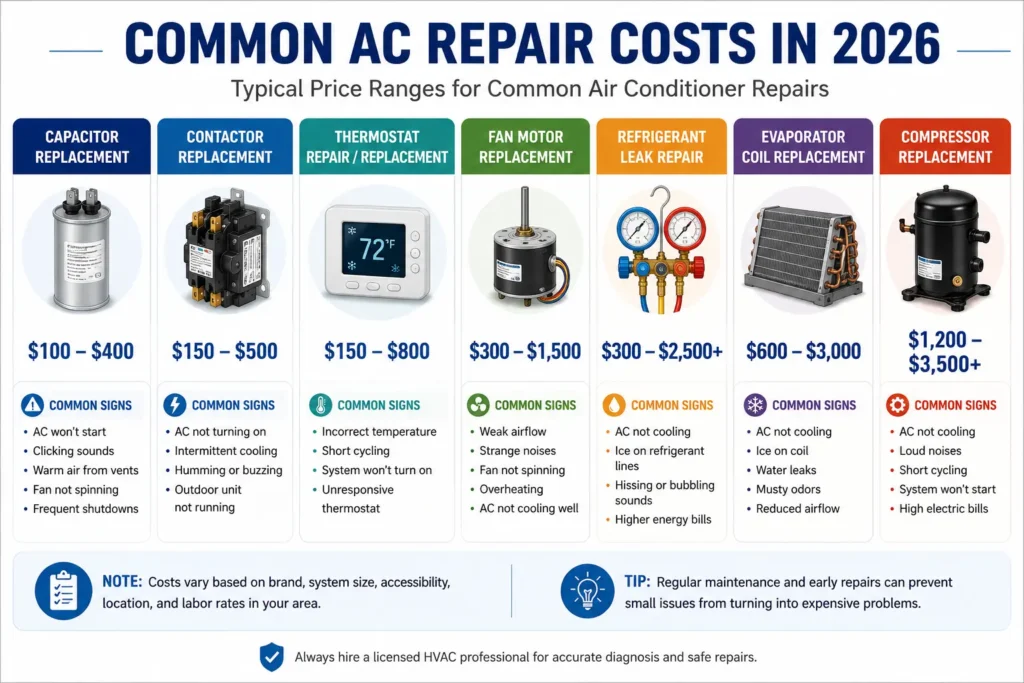
The type of repair needed is the biggest factor that affects AC repair costs. Simple repairs may cost less than $200, while major component replacements can exceed $3,000. Understanding the cost of common AC repairs can help you estimate what you might pay before scheduling service.
Capacitor Replacement Cost
A capacitor replacement typically costs between $100 and $400. Capacitors provide the electrical boost needed to start and run the motors in your air conditioning system.
Because capacitors handle frequent electrical loads, they are one of the most commonly replaced AC parts. Fortunately, replacement is usually quick and affordable.
Common signs of a failing capacitor include:
- AC won’t start
- Clicking sounds from the outdoor unit
- Warm air coming from vents
- Frequent system shutdowns
- Outdoor fan not spinning
Most capacitor replacements take less than an hour to complete.
Contactor Replacement Cost
A contactor replacement usually costs $150 to $500. The contactor acts like a switch that sends electricity to the compressor and condenser fan when your thermostat calls for cooling.
When a contactor wears out, your AC may struggle to start or stop working entirely.
Common symptoms include:
- AC not turning on
- Intermittent cooling
- Humming or buzzing noises
- Outdoor unit not running
Replacing a faulty contactor is often a straightforward repair that can restore normal operation quickly.
Thermostat Repair or Replacement Cost
Thermostat repair or replacement generally costs $150 to $800. The final price depends on whether the thermostat can be repaired or needs to be replaced.
A malfunctioning thermostat can cause:
- Incorrect temperature readings
- Short cycling
- Uneven cooling
- AC system not turning on
Smart thermostats typically cost more because they require additional setup, wiring, and programming compared to standard models.
Fan Motor Repair Cost
Fan motor repairs typically range from $300 to $1,500, depending on which motor fails.
Condenser Fan Motor Cost
Replacing a condenser fan motor usually costs $300 to $900. This motor helps release heat from the outdoor unit.
Common signs of failure include:
- Outdoor fan not spinning
- Overheating system
- Reduced cooling performance
- Unusual noises
Blower Motor Cost
Blower motor repairs or replacement generally cost $400 to $1,500. The blower motor moves cooled air through your ductwork and into your home.
Symptoms of a failing blower motor include:
- Weak airflow
- No airflow from vents
- Strange noises
- Higher energy bills
Blower motor repairs often cost more because the motor is located inside the indoor air handler and may require additional labor.
Refrigerant Leak Repair Cost
Refrigerant leak repairs typically cost $300 to $2,500 or more. These repairs are often expensive because technicians must locate the leak, repair the damaged area, and recharge the system with refrigerant.
Several factors affect the cost, including:
- Leak location
- Refrigerant type
- Amount of refrigerant needed
- Accessibility of the damaged component
- Size of the AC system
If left unrepaired, refrigerant leaks can reduce cooling performance, increase energy costs, and damage the compressor. Low refrigerant levels can also lead to an AC freezing up, which often requires professional diagnosis.
Evaporator Coil Repair Cost
Evaporator coil repairs generally cost $600 to $3,000. The evaporator coil absorbs heat from indoor air and plays a critical role in the cooling process.
When the coil develops leaks or corrosion, homeowners may notice:
- Reduced cooling
- Ice buildup on the coil
- Higher energy bills
- Warm air from vents
In many cases, replacing a severely damaged coil may be more cost-effective than repairing it. If your system is running but not cooling effectively, see our guide on AC not cooling properly.
Condenser Coil Repair Cost
Condenser coil repairs typically cost $300 to $2,500. The condenser coil releases heat collected from inside your home to the outdoor air.
Common problems include:
- Physical damage
- Refrigerant leaks
- Corrosion
- Excessive dirt buildup
Damaged condenser coils can force your system to work harder, reducing efficiency and increasing utility bills.
Compressor Repair or Replacement Cost
Compressor repairs or replacement usually cost $1,200 to $3,500 or more. The compressor is one of the most important and expensive components in an air conditioning system.
Compressor repairs cost more because they often involve:
- Specialized HVAC labor
- Refrigerant recovery and recharge
- Electrical diagnostics
- System evacuation procedures
- Expensive replacement parts
If an older AC system experiences compressor failure, replacement may be a better long-term investment.
Circuit Board Repair Cost
Circuit board repairs generally cost $200 to $1,200. Modern air conditioners use electronic control boards to manage communication between key system components.
A faulty circuit board can cause:
- System shutdowns
- Communication errors
- Fan malfunctions
- Compressor problems
- Inconsistent operation
Because diagnosing electrical issues can be complex, labor costs may account for a significant portion of the repair bill.
Drain Line and Condensate Pump Repair Cost
Drain line and condensate pump repairs typically cost $100 to $700. These components help remove moisture created during the cooling process.
Common issues include:
- Clogged drain lines
- Broken condensate pumps
- Water leaks around the unit
- Mold and mildew growth
- Overflow safety switch activation
Addressing drainage problems quickly can help prevent water damage and avoid more expensive repairs in the future.
AC Repair Cost by System Type
AC repair costs vary by system type because each system uses different components, designs, and installation methods. Some systems are easier and less expensive to repair, while others require specialized parts and labor.
Central Air Conditioner Repair Cost
Central air conditioner repairs typically cost $150 to $3,500. The final price depends on the specific problem, the age of the system, and the components that need repair or replacement.
Central air systems are the most common cooling systems in residential homes, which means replacement parts are usually easy to find and technicians are familiar with servicing them.
Common central AC repairs include:
- Capacitor replacement
- Fan motor replacement
- Refrigerant leak repair
- Thermostat replacement
- Compressor repair
Minor repairs often cost a few hundred dollars, while major component failures can push costs into the thousands.
Heat Pump Repair Cost
Heat pump repairs generally cost $200 to $3,500. Since heat pumps provide both heating and cooling, they operate throughout much of the year and experience more wear and tear than traditional air conditioners.
Common heat pump repairs include:
- Reversing valve replacement
- Defrost control issues
- Fan motor repairs
- Refrigerant leaks
- Compressor repairs
Because heat pumps run in every season, regular maintenance is important to help reduce repair costs and extend system life.
Ductless Mini Split Repair Cost
Ductless mini split repairs typically cost $200 to $2,500. Repair costs vary based on the number of indoor units, the complexity of the problem, and the availability of replacement parts.
Common mini split repairs include:
- Refrigerant leaks
- Sensor failures
- Drain line issues
- Control board problems
- Fan motor replacement
Mini split systems often require technicians with specialized training, which can increase labor costs compared to traditional central air systems.
Packaged HVAC Unit Repair Cost
Packaged HVAC unit repairs usually cost $250 to $4,000. These systems contain all major heating and cooling components in a single outdoor cabinet.
Common repairs include:
- Compressor replacement
- Blower motor repair
- Electrical component replacement
- Refrigerant leak repair
- Control board replacement
Because all components are housed together, technicians may need to spend additional time accessing and disassembling parts of the unit, which can increase labor costs.
Window AC Repair Cost
Window AC repairs generally cost $75 to $500. These systems are smaller and simpler than whole-home cooling systems, making repairs more affordable.
Common window AC repairs include:
- Thermostat replacement
- Fan motor repair
- Electrical issues
- Control switch replacement
- Drainage problems
For older window units, replacement is often more cost-effective than major repairs. If repair costs approach the price of a new unit, many homeowners choose to replace the system instead.
AC Repair Cost Comparison by System Type
| System Type | Average Repair Cost |
| Central Air Conditioner | $150–$3,500 |
| Heat Pump | $200–$3,500 |
| Ductless Mini Split | $200–$2,500 |
| Packaged HVAC Unit | $250–$4,000 |
| Window AC Unit | $75–$500 |
In general, window units are the least expensive to repair, while packaged HVAC systems and central air conditioners tend to have the highest repair costs when major components fail.
AC Repair Labor Costs in 2026
AC repair labor costs in 2026 typically range from $75 to $200 per hour, depending on your location, the complexity of the repair, and when the service is performed. Labor is often one of the largest parts of an AC repair bill, especially when diagnosing electrical issues or replacing major components.
| Service Type | Average Rate |
| Standard Labor | $75–$200/hr |
| After-Hours Service | $125–$300/hr |
| Weekend Service | $150–$350/hr |
| Emergency Calls | $200–$500/hr |
Most HVAC companies charge standard rates during normal business hours. If you need service in the evening, on weekends, or during holidays, expect to pay a higher hourly rate. Emergency calls often come with additional fees because technicians must respond outside of regular schedules.
Several factors can affect labor costs, including:
- Your geographic location
- Local demand for HVAC services
- The technician’s experience level
- System accessibility
- The complexity of the repair
- Emergency or same-day service requests
Homeowners in large cities and high-cost-of-living areas generally pay more for HVAC labor than those in smaller towns or rural communities. Higher operating expenses, increased demand, and labor shortages often contribute to higher service rates.
Complex repairs can also increase labor costs. For example, replacing a compressor, locating a refrigerant leak, or diagnosing electrical problems usually takes more time than replacing a capacitor or thermostat.
Before approving any repair, ask for a detailed estimate that separates labor charges from parts costs. This makes it easier to compare quotes and understand exactly what you’re paying for.
What Factors Affect AC Repair Costs?
Several factors affect AC repair costs, including the age of your system, the type of repair needed, labor requirements, and whether emergency service is required. Understanding these factors can help explain why repair estimates can vary significantly from one home to another.
Age of the System
Older air conditioners often cost more to repair because replacement parts can be difficult to find or may no longer be manufactured. As systems age, components also become more likely to fail, which can lead to additional repair expenses.
In many cases, repairing an older system may not be the most cost-effective option, especially if multiple major components are nearing the end of their lifespan.
Type of Repair
The type of repair is usually the biggest factor affecting the final cost. Simple repairs such as replacing a capacitor, contactor, or thermostat are generally affordable, while major repairs involving compressors, evaporator coils, or refrigerant leaks can cost thousands of dollars.
Repairs that require specialized tools, additional labor, or extensive system disassembly typically come with higher costs.
Refrigerant Type
The type of refrigerant used in your system can have a major impact on repair costs. Newer refrigerants are generally easier to obtain and may cost less to recharge.
Older systems that use phased-out refrigerants often have higher service costs because the refrigerant is less available and more expensive. If a refrigerant leak occurs in an older unit, the cost of recharging the system can increase significantly.
Brand
Air conditioner brand can also affect repair pricing. Some manufacturers use specialized parts that are more expensive than standard components.
Premium brands often offer high-quality equipment, but replacement parts may cost more and occasionally require longer lead times. The availability of parts can also influence labor time and overall repair expenses.
Warranty Coverage
Warranty coverage can greatly reduce out-of-pocket repair costs. If your system is still covered under the manufacturer’s parts warranty, you may only need to pay for labor and service fees.
Before approving a repair, check whether your equipment warranty is still active. A valid warranty can save hundreds or even thousands of dollars on major component replacements.
Accessibility
The location of your air conditioning equipment can affect labor costs. Systems installed in tight crawl spaces, attics, rooftops, or other difficult-to-access areas typically require more time and effort to service.
When technicians need additional time to reach and repair equipment, labor charges often increase.
Seasonal Demand
AC repair costs often rise during peak cooling season. During the hottest months of the year, HVAC companies experience higher demand, which can lead to longer wait times and increased service rates.
Scheduling maintenance or non-urgent repairs before summer arrives may help you avoid seasonal price increases.
Emergency Service
Emergency AC repairs usually cost more than standard service calls. If you need repairs at night, on weekends, or during holidays, most HVAC companies charge premium rates for emergency response.
While emergency service can restore comfort quickly, it often comes with higher labor costs and additional service fees.
Signs Your AC Needs Repair
Your air conditioner may need repair if you notice reduced cooling performance, unusual noises, water leaks, or a sudden increase in energy bills. Identifying these warning signs early can help prevent larger and more expensive problems.
Warm Air from Vents
Warm air coming from your vents is one of the most common signs of an AC problem. Learn more about the causes of an AC blowing warm air. This issue may be caused by a refrigerant leak, compressor failure, thermostat malfunction, or restricted airflow.
If your thermostat is set to cooling mode and warm air continues to blow, it’s a good idea to have the system inspected by an HVAC technician.
Weak Airflow
Weak airflow often indicates that your system is struggling to circulate air throughout your home. Read our guide on weak airflow from AC vents causes and fixes. Common causes include a failing blower motor, clogged air filter, blocked ductwork, or frozen evaporator coil.
Poor airflow can make your home less comfortable and force the system to work harder than necessary.
Strange Noises
Unusual sounds coming from your air conditioner often signal a mechanical problem. Banging, grinding, squealing, rattling, or buzzing noises may indicate loose components, motor issues, worn bearings, or electrical problems.
Ignoring these sounds can lead to more extensive damage over time.
Burning Odors
A burning smell coming from your AC system can indicate electrical issues, overheating components, or damaged wiring. Musty odors may point to mold growth inside the system or ductwork.
Any unusual smell should be investigated promptly to prevent further damage and maintain indoor air quality.
Excessive Humidity
Air conditioners help remove moisture from indoor air. If your home feels unusually humid even when the AC is running, the system may not be operating correctly.
Possible causes include refrigerant issues, oversized equipment, drainage problems, or reduced cooling capacity.
Frequent Cycling
Frequent cycling occurs when the air conditioner turns on and off more often than normal. Learn what causes AC short cycling and how to fix it. This problem can result from thermostat issues, dirty coils, low refrigerant levels, or an improperly sized system.
Short cycling increases wear and tear on components and can raise energy costs.
Water Leaks
Water leaking around your indoor unit should never be ignored. Common causes include clogged condensate drain lines, damaged drain pans, frozen evaporator coils, or condensate pump failures.
Prompt repairs can help prevent water damage, mold growth, and additional repair expenses.
Higher Energy Bills
A sudden increase in energy bills often indicates that your air conditioner is losing efficiency. Dirty coils, refrigerant leaks, failing components, or airflow restrictions can force the system to consume more energy while delivering less cooling.
Comparing current utility bills to previous seasons can help identify performance issues.
System Won’t Start
If your air conditioner won’t turn on, the problem may involve the thermostat, capacitor, contactor, circuit breaker, control board, or electrical connections.
While some issues may have simple solutions, a complete system failure usually requires professional diagnosis and repair.
Addressing these warning signs as soon as they appear can help reduce repair costs, improve energy efficiency, and extend the life of your air conditioning system.
Emergency AC Repair Cost
Emergency AC repair typically costs between $250 and $4,000 or more, depending on the problem and the time service is needed. Most HVAC companies charge higher rates for after-hours, weekend, holiday, and same-day emergency calls.
Emergency fees can increase the total repair cost by 25% to 100% compared to standard service rates. The final price depends on the type of repair, labor required, replacement parts, and technician availability.
You may need emergency AC repair if:
- Your AC stops working during extreme heat
- The system trips breakers repeatedly
- You notice burning smells or electrical issues
- The unit is leaking large amounts of water
- The compressor fails unexpectedly
While emergency service can restore comfort quickly, scheduling repairs during normal business hours is usually the most cost-effective option whenever possible.
AC Repair vs AC Replacement
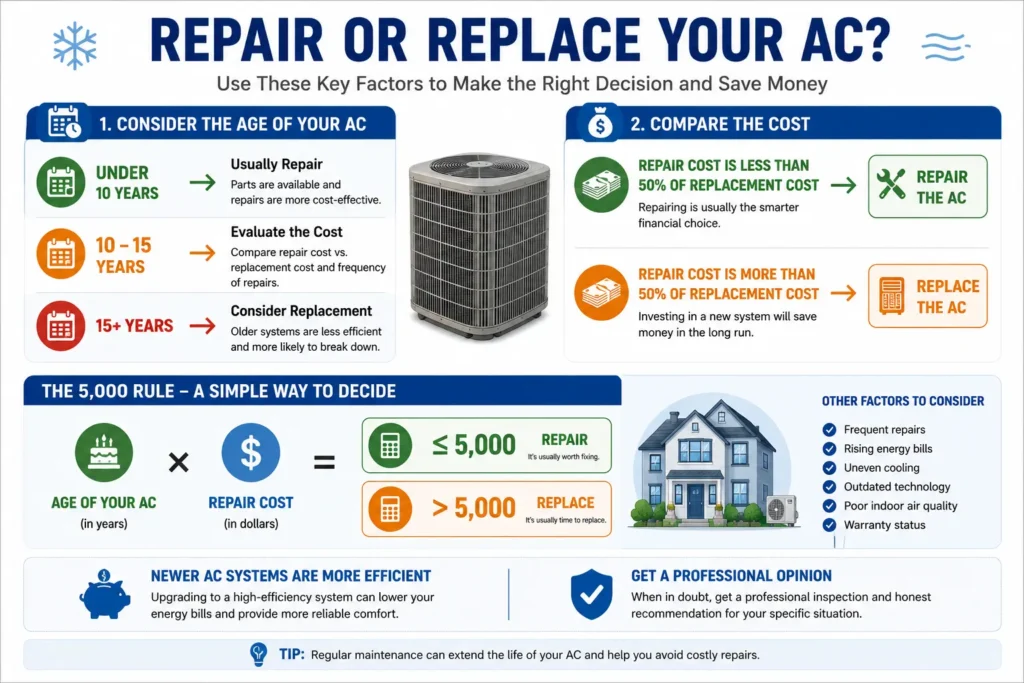
Repairing an air conditioner makes sense when the repair cost is reasonable and the system still has several years of useful life remaining. However, replacing the unit may provide better long-term value when repairs become frequent or expensive. Compare the costs to repair or replace your HVAC system before making a decision.
When AC Repair Makes Sense
Repair is often the better choice when:
- The system is less than 10 years old
- The repair cost is relatively low
- The equipment is still under warranty
- The unit has been properly maintained
- This is the first major repair
In many cases, fixing a newer system can restore reliable performance without the expense of a full replacement.
When AC Replacement Makes Sense
Replacing your air conditioner may be the better investment when:
- The system is more than 12 to 15 years old
- Repair costs exceed 50% of replacement costs
- Major components fail repeatedly
- Energy bills continue to increase
- Refrigerant-related repairs become expensive
- The system struggles to cool your home
A new air conditioner can improve energy efficiency, reduce future repair costs, and provide more reliable cooling. If replacement is the better option, see our complete guide to AC replacement cost.
The 5,000 Rule
The 5,000 Rule is a simple guideline that helps homeowners decide whether to repair or replace an air conditioner.
Multiply the repair cost by the age of the system:
Repair Cost × System Age = Result
If the result exceeds 5,000, replacement is often the more cost-effective long-term option.
For example, if a 14-year-old AC system needs a $500 repair:
$500 × 14 = 7,000
Because the result is greater than 5,000, replacing the system may provide better value than repairing it.
While the 5,000 Rule is not a strict rule, it can be a useful starting point when evaluating major repair decisions.
How to Save Money on AC Repairs
You can save money on AC repairs by keeping your system well-maintained, addressing problems early, and taking advantage of available warranties and service plans. Preventive care often costs far less than major repairs or emergency service calls.
Schedule Annual Maintenance
Annual AC maintenance is one of the most effective ways to reduce repair costs. Homeowners should also understand how often to service an HVAC system to prevent costly breakdowns.
During a maintenance visit, an HVAC technician can inspect key components, clean the system, and identify worn parts before they fail. Regular maintenance can help improve efficiency, extend system life, and reduce the risk of unexpected breakdowns.
Replace Air Filters Regularly
Replacing your air filter regularly helps maintain proper airflow and reduces strain on your air conditioner. A dirty filter forces the system to work harder, which can increase energy use and accelerate wear on important components.
Most homeowners should check their filters monthly and replace them as needed based on usage and manufacturer recommendations.
Address Small Problems Quickly
Small AC issues often become expensive repairs when left unresolved. Unusual noises, weak airflow, inconsistent cooling, or higher energy bills may indicate developing problems that should be inspected promptly.
Fixing minor issues early can prevent damage to larger and more expensive components.
Compare Multiple Quotes
Getting estimates from multiple HVAC contractors can help you find competitive pricing and avoid overpaying for repairs. Comparing quotes also gives you a better understanding of the recommended work and helps ensure the repair is necessary.
When reviewing estimates, compare both labor costs and replacement parts to make an informed decision.
Use Warranty Coverage
Manufacturer warranties can significantly reduce repair costs by covering eligible replacement parts. Some HVAC contractors also offer labor warranties that provide additional protection.
Before approving a repair, check whether your equipment is still covered under warranty. A valid warranty can save hundreds or even thousands of dollars on major repairs.
Join Maintenance Programs
Many HVAC companies offer maintenance memberships or service plans that include benefits such as discounted repairs, priority scheduling, annual tune-ups, and reduced service call fees.
For homeowners who plan to stay in their home long-term, a maintenance program can help lower repair costs and improve system reliability over time.
By following these simple maintenance and cost-saving strategies, homeowners can reduce the likelihood of major breakdowns and keep AC repair expenses under control.
Frequently Asked Questions
How much does AC repair cost in 2026?
AC repair costs in 2026 typically range from $350 to $1,800 for most homeowners. Minor repairs such as capacitor or thermostat replacement may cost less than $500, while major repairs involving compressors, coils, or refrigerant leaks can exceed $4,000.
What is the most expensive AC repair?
Compressor replacement is usually the most expensive AC repair. Most homeowners pay between $1,200 and $3,500 or more to replace a compressor, depending on the system size, brand, labor costs, and refrigerant requirements.
Is it worth repairing a 15-year-old air conditioner?
Repairing a 15-year-old air conditioner may be worthwhile for minor issues, but replacement is often the better long-term investment when major components fail. Older systems are generally less efficient, more prone to breakdowns, and may use expensive or phased-out refrigerants.
How much does a refrigerant recharge cost?
A refrigerant recharge typically costs $200 to $2,000, depending on the type of refrigerant, the amount needed, and whether leak repairs are required. If the system is low on refrigerant, a technician should also identify and repair the source of the leak.
Can maintenance reduce repair costs?
Yes, regular maintenance can help reduce repair costs. Annual inspections and tune-ups allow technicians to identify worn components, improve system efficiency, and address minor issues before they turn into expensive repairs.
Final Thoughts
AC repair costs in 2026 typically range from $350 to $1,800, but the final price depends on the specific problem, labor rates, system age, and the parts that need repair or replacement. Minor repairs are often affordable, while major issues involving compressors, coils, or refrigerant leaks can cost several thousand dollars.
Knowing the average cost of common AC repairs can help you budget for unexpected breakdowns and avoid surprises when receiving an estimate. It can also help you decide whether repairing your current system or replacing it makes better financial sense.
Regular maintenance, timely repairs, and routine filter changes can reduce the risk of costly breakdowns and help your air conditioner operate more efficiently. Addressing small problems early is often the easiest way to avoid larger repair bills later.
Before moving forward with any repair, ask for a detailed estimate, review any available warranty coverage, and consider the age and overall condition of your system. Taking these steps can help you make an informed decision and get the best value from your air conditioning investment.