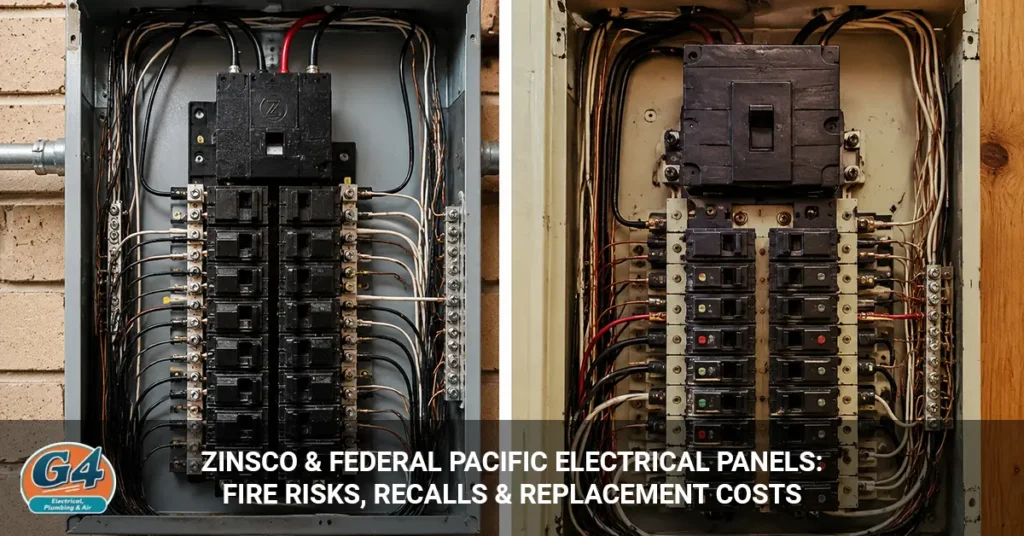
Zinsco and Federal Pacific electrical panels are considered potential fire hazards because their breakers may fail to shut off power during electrical problems. Many electricians, home inspectors, and insurance companies consider these older panels high-risk due to overheating issues, breaker failures, and possible electrical fire dangers.
Many homeowners discover these panels during home inspections, renovations, or electrical upgrades. While the panels may still appear to work normally, hidden internal problems can develop over time. Issues such as loose connections, overheating wires, melted breakers, and electrical arcing can increase the risk of fire and system failure.
This guide explains the fire risks linked to Zinsco and Federal Pacific panels, common warning signs, recall history, replacement costs, and why many homeowners choose to upgrade to a modern electrical panel for better safety and reliability.
What Are Zinsco and Federal Pacific Electrical Panels?
Zinsco and Federal Pacific electrical panels are older breaker panels that are now widely known for potential safety and fire risks. These panels were commonly installed in homes across the United States from the 1950s through the 1980s.
Both brands became popular because they were affordable and widely available during that time. However, many electricians and home inspectors later discovered problems with breaker performance, overheating, and internal panel damage.
Today, these panels are considered outdated by many electrical professionals. Some insurance companies may even require homeowners to replace them before approving coverage.
History of Zinsco Electrical Panels
Zinsco electrical panels were commonly installed in homes during the 1950s, 1960s, and 1970s. The company manufactured residential electrical panels and circuit breakers that became widely used in many neighborhoods across the country.
Over time, electricians began noticing serious problems inside these panels. In some cases, breakers failed to trip during overloads or short circuits, similar to issues discussed in circuit breaker keeps tripping situations. This created a higher risk of overheated wires and electrical fires.
Another common issue involved corrosion on the aluminum bus bars inside the panel. As the corrosion worsened, electrical connections could become loose and generate excessive heat.
The company eventually changed ownership, and Zinsco panels were discontinued. Even so, many older homes still have the original Zinsco panel installed today.
History of Federal Pacific Electric Panels
Federal Pacific Electric panels, also known as FPE Stab-Lok panels, were widely installed in homes from the 1950s through the 1980s. These panels became popular because they were affordable, easy to install, and commonly approved for residential construction at the time.
As the panels aged, electricians and home inspectors began reporting problems with some Stab-Lok breakers. In certain cases, the breakers failed to trip during overloads or short circuits. When a breaker does not shut off power properly, wires can overheat and increase the risk of electrical fires.
Because of these safety concerns, Federal Pacific panels developed a poor reputation within the electrical industry. Today, many electricians recommend replacing these older panels to improve electrical safety and reliability.
Why These Panels Still Exist in Homes Today
Many older homes still have Zinsco or Federal Pacific panels because electrical systems can remain in service for decades. Homeowners often do not realize they have an outdated panel since electrical panels are usually located in garages, basements, or utility areas that are rarely inspected closely.
In many cases, the panel continues working without obvious signs of failure. Because of that, homeowners may not think about replacing it until:
- A home inspection identifies the panel
- Electrical problems begin appearing
- An insurance company raises concerns
- A renovation or electrical upgrade is planned
Even if the panel seems to work normally, hidden internal damage or breaker problems may still exist.
Why Zinsco and FPE Panels Are Considered Dangerous
Zinsco and Federal Pacific panels are considered dangerous because some breakers may fail to shut off power during electrical problems. When breakers do not work properly, wires can overheat and increase the risk of electrical fires.
These older panels are also known for issues such as loose connections, overheating components, and internal damage. In some cases, the panel may appear to work normally even when hidden safety problems exist inside.
Because of these risks, many electricians and home inspectors recommend replacing Zinsco and FPE panels with modern electrical panels.
Circuit Breakers May Fail to Trip
Circuit breakers are designed to shut off power when a circuit becomes overloaded or experiences a short circuit. This helps protect the wiring from overheating and reduces the risk of electrical fires.
One of the biggest concerns with Zinsco and Federal Pacific panels is that some breakers may not trip properly during dangerous conditions. Instead of shutting off power, the breaker may continue allowing electricity to flow through overloaded wiring.
When this happens, heat can build up inside the walls, outlets, or electrical panel. Over time, that excessive heat can damage wires, melt insulation, and increase the chance of an electrical fire.
Internal Arcing and Overheating Problems
Zinsco and Federal Pacific panels can develop internal arcing and overheating as they age. Loose electrical connections, corrosion, and worn components inside the panel can create dangerous heat buildup over time.
In many Zinsco panels, corrosion forms on the aluminum bus bars where breakers connect to the panel. This corrosion weakens the electrical connection and increases resistance, which can generate excessive heat inside the panel.
Federal Pacific panels may also develop loose or damaged breaker connections. These poor connections can lead to electrical arcing. Arcing happens when electricity jumps between gaps in electrical connections instead of flowing normally through the circuit.
Electrical arcing creates intense heat that can damage breakers and contribute to buzzing electrical panel problems.
Fire Hazards Linked to Electrical Panel Failures
Electrical panel failures can create serious fire hazards inside a home. Since the panel controls and distributes electricity throughout the house, any internal failure can affect the entire electrical system.
When breakers fail to trip or connections overheat, electrical wiring may continue carrying unsafe levels of electricity. This can cause hidden damage inside walls and around electrical circuits.
Common fire risks linked to failing panels include:
- Overheated wiring
- Melted breaker connections
- Electrical sparks
- Burned wire insulation
- Damage to appliances and electronics
Because these problems often develop inside the panel, many homeowners first notice signs of an overloaded electrical panel before major failures happen. For this reason, many electricians recommend replacing older Zinsco and Federal Pacific panels instead of relying on temporary repairs.
Electrical Shock Risks
Zinsco and Federal Pacific panels may also create electrical shock hazards. In some cases, a breaker may appear to shut off while electricity is still flowing through the circuit.
This can become extremely dangerous for homeowners or electricians working on the electrical system. Someone may believe the power is off when energized components are still active inside the panel.
Loose breakers, damaged connections, and internal panel failures can all increase the risk of accidental electrical shock, especially during DIY electrical repairs.
Federal Pacific Stab-Lok Panel Fire Risks
Federal Pacific Stab-Lok panels are considered a potential fire risk because some breakers may fail to trip during electrical overloads or short circuits. When breakers do not shut off power properly, wiring can overheat and increase the chance of an electrical fire.
Because of these safety concerns, many electricians and home inspectors recommend replacing older Federal Pacific panels with modern electrical systems.
Problems With Stab-Lok Breakers
Federal Pacific Stab-Lok breakers are known for several reported safety and performance problems. The biggest concern is that some breakers may not trip when dangerous electrical conditions occur.
Common problems linked to Stab-Lok breakers include:
- Breakers failing to trip during overloads
- Breakers becoming stuck in the ON position
- Loose breaker connections to the bus bar
- Breakers overheating during normal use
When a breaker fails to shut off power, homeowners often experience issues similar to a power outage in one room. This can overheat wires, damage insulation, and create a serious fire hazard inside the home.
Reported Safety Concerns and Testing Findings
Independent testing and electrical inspections have raised concerns about the reliability of some Federal Pacific Stab-Lok breakers. Over the years, many electricians and home inspectors have reported finding breaker failures and overheating issues in these panels.
Because of their reputation, Federal Pacific panels are commonly flagged during home inspections. Many electrical professionals believe the potential safety risks are serious enough to justify replacing the panel, especially in older homes.
Although not every panel experiences failure, the possibility of breakers not operating properly remains a major concern.
Were Federal Pacific Panels Recalled?
Federal Pacific panels were never officially recalled nationwide. However, concerns about breaker testing and product certification created long-term controversy within the electrical industry.
Even without a formal recall, many insurance companies and electricians still consider Federal Pacific Stab-Lok panels high-risk electrical equipment. In some cases, insurance providers may request panel replacement before approving or renewing coverage.
Zinsco Electrical Panel Problems
Zinsco electrical panels are known for problems such as corrosion, overheating, and breaker failure. As these panels age, internal components can become damaged and increase the risk of electrical fires or power failures.
Many electricians recommend replacing Zinsco panels because the problems often develop inside the panel where homeowners cannot easily see them.
Aluminum Bus Bar Corrosion
Corrosion on the aluminum bus bars is one of the most common problems found in Zinsco panels. The bus bar is the metal strip that connects the breakers to the electrical power supply inside the panel.
Over time, corrosion can weaken those electrical connections and create resistance inside the panel. As resistance increases, the panel may begin generating excessive heat.
That heat can damage breakers, melt components, and reduce the panel’s ability to safely distribute electricity throughout the home.
Breakers Melting Into the Panel
Some Zinsco breakers can partially melt or fuse directly onto the bus bar. This happens because of overheating and poor electrical contact inside the panel.
When breakers become fused, they can be extremely difficult and dangerous to remove safely. In some cases, the breaker may appear to be switched off while still allowing electricity to flow through the circuit.
This type of hidden failure increases both fire and shock risks inside the electrical system.
Signs of Electrical Failure in Zinsco Panels
Zinsco panels often show warning signs before major electrical failures happen. These symptoms usually point to overheating, loose connections, or failing internal components.
Common warning signs include:
- Flickering lights
- Burning smells near the panel
- Warm or hot panel surfaces
- Buzzing or crackling noises
- Loose-feeling breakers
- Random power interruptions
If you notice any of these problems, the electrical panel should be inspected by a licensed electrician as soon as possible.
Common Warning Signs Your Electrical Panel May Be Unsafe
Unsafe electrical panels often show warning signs before major problems happen. Issues like overheating, breaker failure, and loose electrical connections can create visible symptoms that should never be ignored.
If you notice any of these warning signs, the panel should be inspected by a licensed electrician as soon as possible.
Frequently Tripping Breakers
Breakers that trip often may signal overloaded circuits or failing breaker components. While an occasional trip can happen, repeated breaker trips usually mean the electrical system is struggling to handle the load safely.
Older panels like Zinsco and Federal Pacific may also have breakers that no longer function properly.
Burning Odors Near the Panel
A burning smell near the electrical panel can indicate overheating wires or melting insulation. This is one of the most serious warning signs of electrical trouble.
If you notice a burning odor, turn off the power to the affected area if possible and contact an electrician immediately.
Warm or Hot Panel Surface
Electrical panels should not feel excessively warm to the touch. Heat buildup inside the panel often points to loose connections, overloaded circuits, or failing breakers.
A hot panel may indicate dangerous internal overheating that could lead to electrical fires.
Flickering or Dimming Lights
Lights that flicker or dim during normal appliance use may indicate unstable electrical flow. This problem can happen when breakers, wiring, or panel connections begin failing.
Older electrical panels may struggle to handle modern power demands, especially when large appliances are running.
Crackling or Buzzing Noises
Buzzing or crackling sounds coming from the panel may suggest electrical arcing or loose connections inside the system.
Electricity should flow quietly through the panel. Unusual noises often signal hidden electrical damage that needs immediate inspection.
Rust, Corrosion, or Visible Damage
Rust, moisture damage, and corrosion can weaken electrical connections and damage internal panel components.
Visible signs of corrosion may indicate long-term deterioration inside the panel, especially in older Zinsco systems.
Appliances Losing Power Randomly
Random power loss or appliances shutting off unexpectedly can point to failing breakers or damaged circuits.
Intermittent electrical problems are often early signs that the panel is no longer distributing power safely and reliably.
How to Identify a Zinsco or Federal Pacific Panel
You can usually identify a Zinsco or Federal Pacific panel by checking the manufacturer label and looking at the breaker design. These older panels often have distinct markings and layouts that help electricians recognize them quickly.
If you are unsure about the panel type, it is best to have a licensed electrician inspect it for safety and proper identification.
Where to Find the Manufacturer Label
Most electrical panels have the manufacturer name printed inside the panel door or directly on the breakers. In many cases, you can identify the panel brand by opening the metal panel cover and checking the labeling.
You may see names such as:
- Zinsco
- GTE-Sylvania
- Federal Pacific
- FPE
- Stab-Lok
If the label is faded or missing, the breaker style and panel layout can still help identify the system.
Common Identifying Features of Zinsco Panels
Zinsco panels often have a unique breaker design that stands out from modern panels. Many older Zinsco systems include brightly colored breaker handles and vertically arranged breakers.
Common signs of a Zinsco panel include:
- Bright red, blue, green, or colored breaker handles
- Vertical breaker layout
- Zinsco labeling
- GTE-Sylvania branding on some models
Many of these panels were installed in homes during the 1950s through the 1970s.
Common Identifying Features of FPE Stab-Lok Panels
Federal Pacific panels are commonly recognized by their Stab-Lok breaker design and branding. The panel or breakers may display:
- “Federal Pacific”
- “FPE”
- “Stab-Lok”
These panels often have thin breaker handles and a distinctive breaker arrangement compared to modern systems.
Why Professional Identification Is Recommended
Professional inspection is recommended because some older electrical panels can look similar to other brands. A licensed electrician can safely identify the panel, inspect internal components, and check for hidden safety problems.
This is especially important with older Zinsco and Federal Pacific panels since many issues develop inside the panel where homeowners cannot easily see them.
Are Zinsco and FPE Panels Still Legal?
Zinsco and Federal Pacific panels are not automatically illegal in many areas, but they are widely considered outdated and potentially unsafe. Even if the panels are still allowed under local codes, many electricians recommend replacing them because of known safety concerns.
Homeowners often replace these panels during renovations, electrical upgrades, or home sales.
Building Code Considerations
In many locations, older Zinsco and Federal Pacific panels can remain in service if the electrical system has not been heavily modified. Simply having an older panel does not always mean the home violates electrical code.
However, building codes may require panel upgrades when:
- Major remodeling work is performed
- Electrical service is upgraded
- New circuits are added
- The panel shows signs of damage or failure
Local electrical requirements can vary by city and state, so homeowners should always check with a licensed electrician or local building authority.
Why Many Electricians Recommend Replacement Anyway
Many electricians recommend replacing Zinsco and FPE panels because of their age, reliability problems, and potential fire risks. Even if the panel still works, internal damage may already exist.
Common reasons electricians suggest replacement include:
- Aging electrical components
- Increased fire risk
- Breakers failing to trip properly
- Overheating connections
- Difficulty finding safe replacement parts
Modern electrical panels provide safer breaker technology and better protection for today’s electrical demands.
Home Insurance Challenges
Insurance companies may view Zinsco and Federal Pacific panels as high-risk electrical equipment. Because of this, some homeowners face challenges when applying for or renewing insurance coverage.
Depending on the insurance provider, they may:
- Refuse coverage
- Require panel replacement
- Increase insurance premiums
- Request electrical inspections before approval
Insurance concerns are one of the most common reasons homeowners choose to replace outdated electrical panels.
Should You Replace a Zinsco or Federal Pacific Panel?
Replacing a Zinsco or Federal Pacific panel is often recommended because these older panels are linked to breaker failures, overheating, and potential fire risks. Even if the panel still appears to work, hidden internal damage may already exist.
Many electricians advise homeowners to upgrade to a modern electrical panel for better safety, reliability, and insurance approval.
When Replacement Is Strongly Recommended
Electrical panel replacement is strongly recommended when the system shows signs of failure or can no longer safely handle the home’s electrical demands.
You should consider replacing the panel if:
- The panel shows signs of overheating
- Breakers trip repeatedly
- Lights flicker or power cuts in and out
- The home needs additional electrical capacity
- The panel is several decades old
- An insurance company requests replacement
- A home inspector flags the panel during an inspection
Older Zinsco and Federal Pacific panels may continue operating even while hidden internal damage develops inside the system.
Why Repairs Often Do Not Solve the Problem
Repairing a single breaker usually does not solve the deeper problems inside older Zinsco or Federal Pacific panels. Many of these systems have aging internal components, corrosion, or outdated breaker designs that cannot be fully corrected with small repairs.
In some cases, replacement breakers are difficult to find or may not perform reliably. Even after repairs, overheating or breaker failure risks may still remain inside the panel.
Because of this, many electricians recommend full panel replacement instead of temporary fixes.
Benefits of Upgrading to a Modern Electrical Panel
Upgrading to a modern electrical panel improves electrical safety and helps support today’s higher power demands. New panels use updated breaker technology and modern electrical panel safety features designed to respond more reliably during overloads.
Benefits of upgrading include:
- Improved fire protection
- Better breaker performance
- Increased electrical capacity
- Safer electrical connections
- Easier insurance approval
- Better support for modern appliances
- Capacity for EV chargers and home upgrades
A modern panel can also improve long-term reliability and reduce the risk of unexpected electrical problems.
Zinsco and Federal Pacific Panel Replacement Costs
Replacing a Zinsco or Federal Pacific panel usually costs between $1,500 and $5,000 or more, depending on the home’s electrical system and upgrade requirements. The final cost can vary based on the panel size, wiring condition, and local electrical codes.
Although replacement can seem expensive, many homeowners choose to upgrade because of the safety benefits and reduced fire risks.
Average Electrical Panel Replacement Cost
Most homeowners pay between $1,500 and $5,000 to replace an older Zinsco or Federal Pacific panel. Smaller panel replacements may cost less, while larger electrical upgrades can increase the total price.
Homes that need additional wiring work, service upgrades, or code corrections often fall on the higher end of the price range.
Cost Factors That Affect Pricing
Several factors can affect the total cost of replacing an outdated electrical panel.
Common pricing factors include:
- Panel amperage size
- Permit and inspection fees
- Electrical code upgrades
- Grounding improvements
- Utility company coordination
- Local labor rates
- Condition of existing wiring
For example, upgrading from a 100-amp panel to a 200-amp service will usually cost more than a direct panel replacement.
Additional Costs Homeowners Should Expect
Some homes require additional electrical work during the replacement process. These extra upgrades help bring the electrical system up to current safety standards.
Additional costs may include:
- Drywall repair
- Whole-home surge protection
- Meter socket upgrades
- Wiring repairs
- Grounding system upgrades
An electrician may also recommend replacing damaged circuits or outdated wiring discovered during the installation.
Is Replacing the Panel Worth the Cost?
For many homeowners, replacing a Zinsco or Federal Pacific panel is worth the investment because it improves electrical safety and reliability. A new panel can lower fire risks, support modern electrical demands, and reduce future repair problems.
Panel replacement may also help avoid insurance issues and improve buyer confidence when selling the home.
What Happens During Electrical Panel Replacement?
Electrical panel replacement involves removing the old panel, installing a new one, updating electrical connections, and testing the system for safety. The process is usually completed by a licensed electrician and often requires permits and inspections.
Most residential panel replacements can be finished within one day, depending on the size of the project and the condition of the existing wiring.
Inspection and Permit Process
Most electrical panel replacements require permits and inspections to meet local building and electrical codes. Before work begins, the electrician typically evaluates the existing electrical system and determines what upgrades may be needed.
Permit requirements vary by location, but inspections help ensure the new panel is installed safely and correctly.
Power Shutoff and Panel Removal
The power must be temporarily shut off before the old electrical panel can be removed. Electricians usually coordinate this process with the utility company when necessary.
Once the power is disconnected, the old breakers, wiring connections, and panel components are safely removed from the wall.
Installation of New Breakers and Wiring Connections
After the old panel is removed, the electrician installs the new electrical panel along with updated breakers and wiring connections.
The installation may also include:
- New grounding components
- Updated bonding connections
- Circuit labeling
- Surge protection upgrades
Modern panels are designed to provide safer and more reliable electrical protection for the home.
Final Safety Testing and Inspection
Once installation is complete, the electrician tests the system to make sure all circuits and breakers are working properly.
In most areas, a local inspector will also examine the installation to confirm it meets current electrical code requirements before the power is fully restored.
How Long Panel Replacement Usually Takes
Most residential electrical panel replacements take about one day to complete. However, larger projects or homes with damaged wiring may require additional time.
Projects involving service upgrades, rewiring, or utility coordination can sometimes extend into multiple days.
Can You Sell a House With a Zinsco or FPE Panel?
Yes, you can sell a house with a Zinsco or Federal Pacific panel, but it may create challenges during the selling process. Many buyers, home inspectors, lenders, and insurance companies view these older panels as potential safety risks.
Because of this, outdated electrical panels can sometimes delay negotiations, financing, or insurance approval.
Home Inspection Issues
Zinsco and Federal Pacific panels are commonly flagged during home inspections because of their reputation for breaker failures and fire risks.
When buyers learn the home has one of these panels, they may:
- Request panel replacement
- Ask for repair credits
- Negotiate a lower sale price
- Delay moving forward with the purchase
In some cases, buyers may simply feel uncomfortable purchasing a home with an outdated electrical system.
Mortgage and Insurance Problems
Some lenders and insurance companies may require electrical upgrades before approving a mortgage or homeowners insurance policy.
Depending on the provider, they may:
- Request a licensed electrical inspection
- Require panel replacement before closing
- Increase insurance premiums
- Refuse coverage until upgrades are completed
These issues can sometimes slow down the closing process or create additional costs for the seller.
Should Sellers Replace the Panel Before Listing?
Replacing the panel before listing the home can make the selling process smoother and reduce buyer concerns. A modern electrical panel also shows that the home’s electrical system has been updated for safety and reliability.
Replacing the panel before selling may:
- Increase buyer confidence
- Reduce inspection concerns
- Help avoid delayed closings
- Improve insurance approval chances
- Make the home more attractive to buyers
While replacement involves an upfront cost, many sellers find it helps simplify negotiations and improve the overall sale process.
How to Prevent Electrical Fire Risks in Older Homes
You can reduce electrical fire risks in older homes by keeping the electrical system updated and addressing warning signs early. Older wiring, outdated panels, and overloaded circuits can all increase the chance of overheating and electrical fires.
Regular maintenance and professional inspections can help identify problems before they become dangerous.
Schedule Regular Electrical Inspections
Regular electrical inspections help detect hidden problems before major failures happen. A licensed electrician can check the panel, wiring, breakers, outlets, and grounding system for signs of wear or damage.
Inspections are especially important in older homes with outdated electrical panels or aging wiring.
Avoid Overloading Circuits
Overloaded circuits can overheat wires and increase fire risks. Older electrical systems were not designed to handle the number of appliances and electronics used in many homes today.
Try to avoid running multiple high-powered devices on the same circuit at the same time. Appliances such as space heaters, microwaves, air conditioners, and EV chargers can place heavy demand on older systems.
Upgrade Outdated Wiring and Panels
Replacing outdated electrical panels and damaged wiring improves both safety and reliability. Older systems like Zinsco and Federal Pacific panels may struggle to safely handle modern electrical loads.
Upgrading the electrical system can reduce overheating problems and improve overall power distribution throughout the home.
Install Whole-Home Surge Protection
Whole-home surge protection helps protect electronics, appliances, and electrical systems from sudden voltage spikes.
Power surges can damage sensitive equipment and place additional stress on older electrical systems. Surge protection adds another layer of safety for the home.
Watch for Early Warning Signs
Early warning signs often appear before major electrical problems develop. Burning smells, flickering lights, buzzing sounds, hot outlets, and frequently tripping breakers should never be ignored.
If you notice any of these symptoms, contact a licensed electrician quickly to inspect the system and identify the cause.
Final Thoughts
Zinsco and Federal Pacific panels are considered some of the most high-risk, outdated electrical panels still found in older homes. Problems such as breaker failure, overheating, corrosion, and electrical panel repair warning signs can increase the risk of electrical fires as these systems age.
Even if the panel appears to work normally, hidden internal damage may already exist. Warning signs like burning smells, flickering lights, buzzing noises, warm panel surfaces, or frequently tripping breakers should never be ignored.
A licensed electrician can inspect the electrical system and determine whether the panel should be replaced. Upgrading to a modern electrical panel improves safety, supports today’s electrical demands, and can help reduce future fire, repair, and insurance problems.