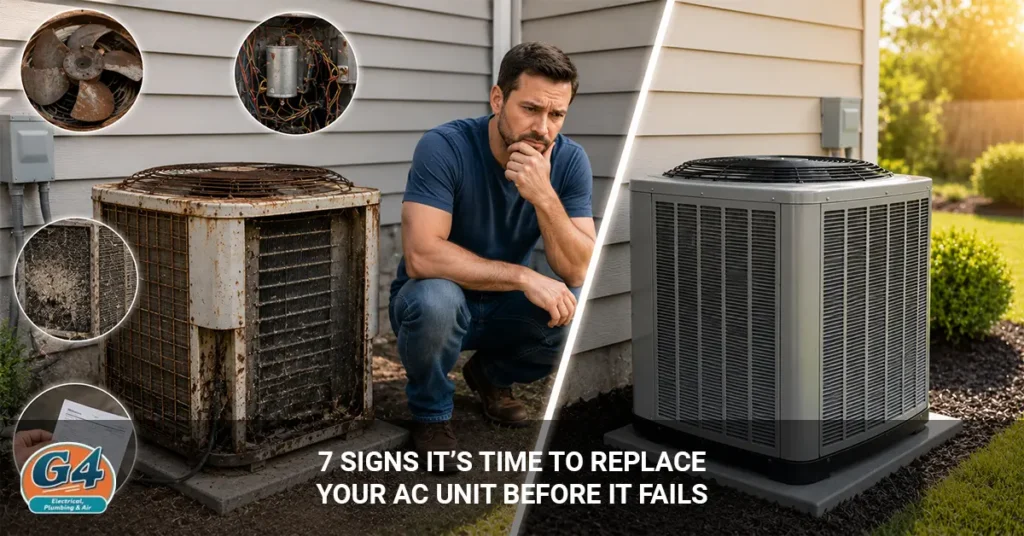
If your AC unit is failing, you’ll often notice signs like weak cooling, higher energy bills, frequent repairs, or unusual noises. These are clear signals that your system may need to be replaced.
Your AC usually doesn’t fail without warning. It shows small signs first. If you catch them early, you can avoid sudden breakdowns, high repair costs, and uncomfortable heat inside your home.
What to Check First Before Replacing Your AC Unit
Start with a few simple checks. These can rule out minor issues before you decide to replace the system.
Thermostat settings
Your AC may not cool properly if the thermostat is set incorrectly. This is one of the most common and easiest issues to fix.
Make sure the thermostat is set to “cool” and the temperature is lower than the current room temperature. If the settings are correct but the system still doesn’t cool, then the problem may be deeper.
Air filter condition
Your AC may struggle to cool if the air filter is dirty. A clogged filter blocks airflow and makes the system work harder.
When airflow is restricted, your AC can’t cool your home properly. Replacing the filter is a quick fix that often improves cooling right away.
Airflow and vents
Your AC may feel weak if airflow is blocked or restricted. Closed or covered vents can stop cool air from moving through your home.
Check that all vents are open and not blocked by furniture, curtains, or dust. Good airflow helps your AC cool more evenly and work more efficiently.
Recent repairs
Your AC may still have issues after recent repairs. If the same problem keeps coming back, it often means there’s a deeper issue.
Recurring repairs are a sign the system may be wearing out. If you’re fixing it again and again, it may be time to consider replacement instead of another repair.
7 Signs It’s Time to Replace Your AC Unit
1. Your AC Is Over 10–15 Years Old
Your AC unit likely needs replacement if it is over 10 to 15 years old. Older systems become less efficient and more likely to fail.
As your system ages, it works harder to cool your home and uses more energy. Even if it still runs, performance usually drops. Replacing an older unit can improve comfort and reduce energy costs.
2. Frequent Breakdowns and Repairs
Your AC likely needs replacement if it keeps breaking down. Frequent repairs are a sign the system is wearing out.
If you’re calling for service again and again, the costs can add up quickly. At some point, replacing the unit becomes the better option to avoid ongoing problems and expenses.
3. Rising Energy Bills
Your AC may need replacement if your energy bills keep increasing. This usually means the system is losing efficiency.
As AC units age, they have to work harder and run longer to cool your home. That leads to higher energy use. Replacing the system with a newer unit can lower your monthly bills and improve energy efficiency during extreme heat.
4. Weak Airflow or Poor Cooling
Your AC may need replacement if airflow is weak or cooling feels uneven. This often means the system can’t move air or remove heat like it used to.
Worn parts, a failing blower, or internal damage can cause this. If rooms stay warm or take too long to cool, the unit may be reaching the end of its life.
5. Strange Noises or Odors
Your AC may need replacement if it makes unusual noises or smells. These are often signs of serious internal problems.
Sounds like grinding, banging, or screeching can mean parts are worn or failing. Musty or burning smells can point to mold or electrical issues. If these problems keep coming back, replacing the unit is usually the safer choice.
6. Uses Old Refrigerant (R-22)
Your AC may need replacement if it uses R-22 refrigerant. This type is outdated and no longer widely available.
Because R-22 has been phased out, it is expensive and hard to find. If your system develops a leak, repairs can cost a lot. Replacing the unit with a newer system that uses modern refrigerant is usually the better long-term option.
7. Uneven Cooling in Your Home
Your AC may need replacement if some rooms are too hot while others feel cool. This usually means the system can’t distribute air evenly anymore.
As systems wear out, they struggle to balance airflow across the home. If this problem keeps happening even after basic fixes, the unit may no longer be able to keep up.
Repair vs Replace: How to Decide
You should repair your AC if the issue is small and the system is still in good condition. You should replace it if the system is older or keeps having problems.
A simple repair can keep a newer unit running for years. But if issues keep coming back or costs keep rising, replacement is usually the better long-term choice.
Cost of Replacing an AC Unit
Replacing an AC unit costs more upfront, but it can save money over time. The total AC replacement cost depends on the system size, efficiency level, and how complex the installation is.
Repairs may seem cheaper at first, but repeated fixes can add up quickly. A new system runs more efficiently, lowers energy bills, and reduces future repair costs, making it a better long-term investment.
Benefits of Replacing Your AC Unit
Replacing your AC unit improves comfort and lowers long-term costs. A new system cools your home more evenly and runs more efficiently.
It also reduces energy bills, cuts down on repairs, and gives you more reliable performance. Over time, a new unit can make your home more comfortable while saving you money.
How to Extend the Life of Your AC Unit
You can extend the life of your AC unit with regular maintenance. Simple habits help the system run better and last longer.
Replace your air filter regularly to keep airflow strong. Schedule regular HVAC tune-ups to catch small problems early and extend the life of your AC unit.
Keep vents clean and unblocked so air can move freely. These steps reduce wear and help your system stay efficient for years.
When to Call a Professional HVAC Technician
You should call a professional if your AC shows signs of failure or you’re not sure whether to repair or replace it. Expert advice can help you make the right decision.
A technician can inspect the system, find the root problem, and explain your options clearly. This helps you avoid unnecessary costs and choose the best solution for your home.
Final Thoughts
If your AC unit shows signs of failure, don’t wait until it stops working completely. Replacing it early can help you avoid bigger problems and higher costs.
Pay attention to the warning signs and act before the system gets worse. A new AC unit can improve comfort, lower energy bills, and give you reliable cooling when you need it most.