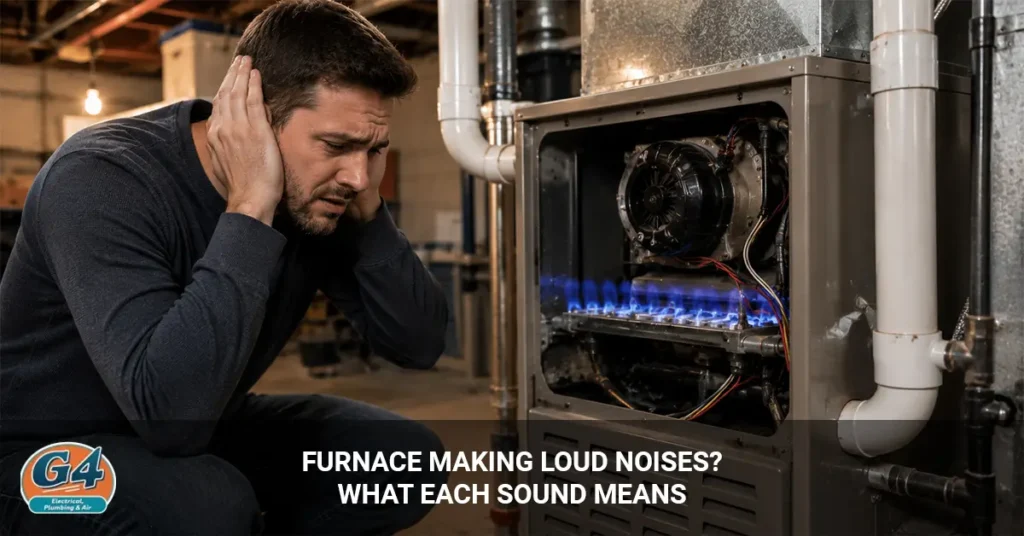
If your furnace is making loud noises, the most common causes are loose parts, airflow problems, ignition issues, or worn components. Some noises are harmless, but others can mean something is wrong.
Loud furnace sounds can be annoying and stressful, especially when you don’t know the cause. The good news is that most noises have clear reasons behind them.
Once you understand what each sound means, it becomes much easier to decide what to do next. In many cases, a quick check can help you find the problem before it gets worse.
What to Check First When Your Furnace Makes Loud Noise
Start with simple checks. These can fix minor noise issues quickly.
Air filter condition
Your furnace may make noise if the air filter is dirty. A clogged filter restricts airflow and can cause whistling or pressure sounds. Replacing the filter often reduces noise and helps the system run more smoothly.
Loose panels or screws
Your furnace may make a rattling noise if panels or screws are loose. This often happens over time as normal vibration causes parts to shift.
Checking the outer panels and tightening any loose screws can stop the noise quickly. If the rattling continues, there may be a loose part inside that needs professional attention.
Vents and airflow
Your furnace may make unusual noises if airflow is restricted. Blocked or closed vents can create pressure in the system and cause whistling or rattling sounds.
Make sure all vents and registers are open and not blocked by furniture or dust. Restoring proper airflow often reduces the noise and helps the system run more smoothly.
Recent changes or repairs
Your furnace may start making noise after recent work. New sounds often appear if something was installed incorrectly or a part was left loose.
If the noise began right after a repair or maintenance visit, it’s a good idea to check the system again. In many cases, tightening or adjusting a part can fix the issue.
Common Furnace Noises and What They Mean
1. Banging or Booming Noise
Your furnace may make a loud banging or booming noise due to delayed ignition. This happens when gas builds up before it ignites, creating a small explosion-like sound.
This is not a normal noise and can be serious if ignored. It can damage parts of the furnace and affect safety over time. If you hear this sound, it’s best to have the system checked as soon as possible by a professional.
2. Squealing or Screeching Noise
Your furnace may make a squealing or screeching noise if there is a problem with the blower motor or belt. This sound usually comes from worn, loose, or dry moving parts inside the system.
When parts start to wear out, they create a high-pitched noise during operation. This often means the components need adjustment, lubrication, or replacement to prevent further damage.
3. Rattling Noise
Your furnace may make a rattling noise if parts are loose or something is out of place. This is usually caused by loose panels, screws, or small debris inside the system.
Over time, normal vibration can loosen components, which leads to this sound. Tightening any loose parts or cleaning out debris often solves the problem. If the rattling continues, it may be coming from inside the unit and should be checked by a technician.
4. Whistling Noise
Your furnace may make a whistling noise if airflow is restricted. This usually happens when air struggles to pass through the system.
A dirty air filter or blocked vents are common causes. When airflow is limited, pressure builds up and creates a whistling sound. Replacing the filter and fixing weak airflow from AC vents usually reduces the noise and improves airflow.
5. Clicking Noise
Your furnace may make a clicking noise during startup or shutdown. A few light clicks are normal as the system turns on and off.
If the clicking is constant or loud, it may point to an ignition or electrical issue. This can happen when the system tries to start but fails to ignite. If the sound continues, it’s best to have it checked by a technician.
6. Humming Noise
Your furnace may make a humming sound during normal operation. A soft, steady hum is usually nothing to worry about.
If the humming becomes louder or changes over time, it can point to a motor or electrical issue. This may happen when parts start to wear out or struggle to run properly. If the noise keeps getting worse, it should be checked by a technician.
7. Grinding Noise
Your furnace may make a grinding noise if internal parts are worn out. This sound usually comes from the motor or bearings failing.
Grinding is not normal and should be taken seriously. It often means parts are rubbing together and can cause more damage if ignored. If you hear this noise, turn off the system and have it checked by a technician right away.
8. Popping Noise
Your furnace may make popping sounds as the ducts heat up and cool down. This is usually normal and happens as metal expands and contracts.
These sounds often occur when the system starts or stops and are not a cause for concern. However, if the popping becomes very loud or frequent, it may be worth checking the ductwork.
Which Furnace Noises Are Normal?
Some furnace noises are normal during regular operation. Soft humming while the system runs and light clicking during startup are expected.
You may also hear mild popping sounds as the ductwork heats up and cools down. These sounds happen naturally as metal expands and contracts.
As long as the noises are not loud or getting worse, they are usually harmless and don’t need repair.
When Furnace Noises Are a Serious Problem
Some furnace noises are a sign of a serious problem and should not be ignored. Loud banging, grinding, or repeated booming sounds often mean something inside the system is failing.
If the noise is getting worse, happening more often, or comes with smells or poor performance, it’s time to take action.
These signs can point to internal damage or serious electrical emergency warning signs that should not be ignored. Getting the system checked early can prevent bigger and more expensive problems.
When to Call a Professional HVAC Technician
You should call a professional if the noise is loud, unusual, or doesn’t go away after basic checks. Ongoing sounds usually mean there is a deeper issue inside the system.
Call right away if you hear grinding, loud banging, or notice burning smells. These can be signs of serious damage or safety risks. A trained HVAC technician can find the problem quickly and fix it safely before it gets worse.
How to Prevent Furnace Noise Problems
Regular maintenance helps prevent furnace noise problems and keeps your system running quietly. Taking care of your furnace reduces wear and avoids unexpected issues.
Replace your air filter regularly to keep airflow smooth and prevent strain on the system. Schedule regular HVAC tune-ups to catch small problems early and keep your furnace running quietly.
Keep vents and registers clear so air can move freely. It also helps to check for loose panels or parts from time to time. These simple steps can improve performance and reduce noise over time.
Final Thoughts
If your furnace is making loud noises, start with simple checks like the air filter, vents, and loose parts. Many problems are easy to fix and don’t require professional help.
If the noise continues or seems serious, don’t wait. Call an HVAC technician to keep your system safe and running properly.