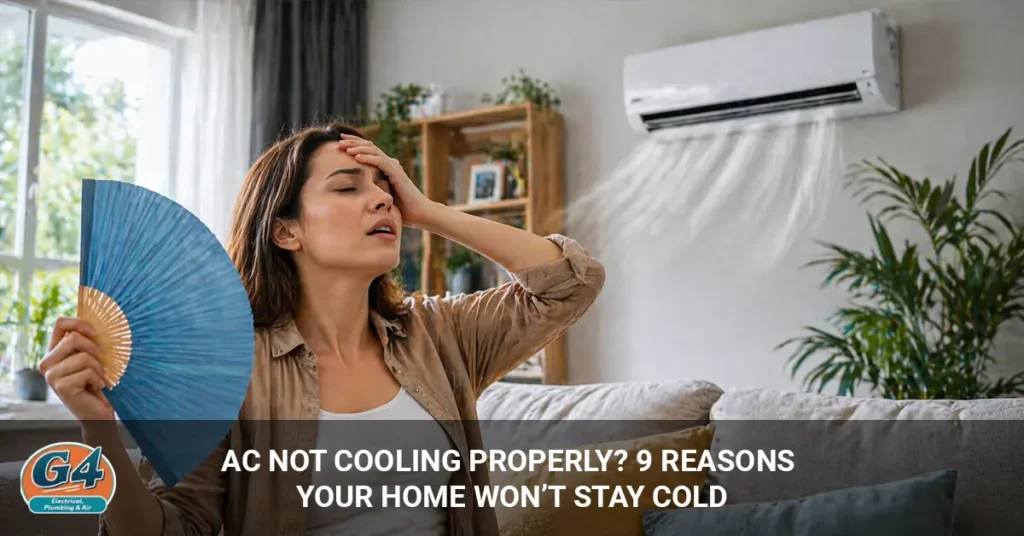
If your AC is running but your home still feels warm, something isn’t working right. This is a common problem, especially during hot days when your system works harder than usual.
The good news is most AC cooling issues come from simple, fixable causes. It could be something small like a dirty filter or incorrect settings, not a major breakdown.
Knowing what’s wrong helps you act fast. You can fix small issues yourself and avoid bigger, more expensive problems later.
In this guide, you’ll learn the 9 most common reasons your AC isn’t cooling properly, what each problem means, and what you should do next.
Why Is Your AC Not Cooling Properly?
Your AC is not cooling properly because airflow is blocked, settings are wrong, refrigerant is low, or parts are not working as they should.
When airflow is restricted, cool air can’t move through your home. A dirty filter or blocked vents often cause this.
Wrong thermostat settings can also stop your AC from cooling. If it’s set to “fan” instead of “cool,” it will blow air but not lower the temperature.
Low refrigerant is another common reason. Your system needs it to remove heat. If levels are low, the air will feel warm.
Worn-out or faulty parts can also reduce performance over time. This is more common in older systems.
Some of these problems are quick to fix, like changing a filter or adjusting settings. Others, like refrigerant or electrical issues, need a professional.
1. Dirty or Clogged Air Filter
A dirty air filter blocks airflow and stops your AC from cooling properly.
When dust and debris build up, air can’t move freely through the system. This reduces cooling and makes your AC work harder than it should.
You may notice weak airflow, rooms not cooling evenly, or longer run times. Energy bills can also go up because the system is under strain.
The fix is simple. Replace your air filter every 1 to 3 months. This keeps airflow steady and helps your AC cool your home more efficiently.
2. Thermostat Issues
Your AC may not cool properly because the thermostat is set wrong or not working correctly.
If the thermostat is set to “fan” instead of “cool,” it will blow air but won’t lower the temperature. A higher temperature setting can also make your home feel warm even when the system is running.
Dead batteries, wiring issues, or an old thermostat can also cause problems. In some cases, the thermostat may not read the room temperature correctly.
Start with a quick check. Make sure it’s set to “cool,” lower the temperature, and replace the batteries if needed. If it still doesn’t respond, the thermostat may need repair or replacement.
3. Low Refrigerant or Refrigerant Leak
Your AC may not cool properly because the refrigerant level is low or leaking.
Refrigerant is what removes heat from your home. If there isn’t enough, your AC can’t produce cold air.
This problem usually comes from a leak, not normal use. You might notice warm air from vents, ice on the lines, or a hissing sound near the unit.
This is not something you can fix yourself. A licensed technician needs to find the leak, repair it, and refill the refrigerant safely.
4. Frozen Evaporator Coil
Your AC may stop cooling because the evaporator coil is frozen.
The coil absorbs heat from your indoor air. When it freezes, it can’t remove heat, so your AC blows warm or weak air.
This usually happens due to poor airflow or low refrigerant. A dirty filter is a common cause. You may also see ice on the indoor unit or notice reduced airflow.
Turn off your AC and let the coil thaw completely. Then check and replace the air filter if needed. If the problem keeps coming back, you’ll need a professional to inspect the system.
5. Blocked or Closed Air Vents
Your AC may not cool properly because air vents are blocked or closed.
Vents need to stay open to move cool air through your home. When furniture, curtains, or other items block them, airflow becomes weak and uneven.
Closed vents can also create pressure inside the system. This reduces efficiency and can make some rooms feel warmer than others.
Check all vents in your home. Keep them open and clear so air can flow freely and cool your space evenly.
6. Dirty Condenser Coils
Your AC may not cool properly because the condenser coils are dirty.
These coils release heat from your home through the outdoor unit. When they are covered in dirt or debris, heat can’t escape properly, so your system struggles to cool.
You may notice your AC running longer but still not lowering the temperature. This also puts extra strain on the system and can increase energy use.
Keep the outdoor unit clean and clear of debris. Gently rinse the coils with water when needed to help your AC run more efficiently.
7. Electrical or Capacitor Problems
Your AC may not cool properly because of electrical or capacitor issues.
The system depends on electrical parts to start and run smoothly. If the capacitor or wiring is faulty, the AC may not work as it should.
You might notice the unit not starting, turning on and off frequently, or cooling unevenly. These are common signs of an electrical problem.
Do not try to fix this yourself. Electrical issues can be risky. It’s best to call a professional to inspect and repair the system safely.
8. Leaky Ductwork
Your AC may not cool properly because cool air is leaking from your ductwork.
Ducts carry cooled air to each room. When there are gaps or leaks, a lot of that air escapes before it reaches your space.
You may notice some rooms feel cool while others stay warm. Your energy bills may also increase because your system is working harder.
Sealing and insulating the ducts helps keep cool air inside and improves overall efficiency.
9. Aging or Undersized AC System
Your AC may not cool properly because the system is too old or too small for your home.
Older units lose efficiency over time, so they struggle to keep up with cooling demands. If the system is undersized, it won’t have enough power to cool the entire space.
You may notice the AC running all the time but still not reaching the set temperature. Some rooms may stay warm no matter how long it runs.
If your unit is around 10 to 15 years old or not cooling well anymore, it may be time to upgrade to a properly sized system.
If your unit is old or no longer effective, it may be time to upgrade. Understanding the AC replacement cost can help you plan for a more efficient system.
When to Call a Professional
You should call a professional when your AC is not cooling and basic fixes don’t work.
Some problems need expert tools and experience. Trying to fix them yourself can make the issue worse or unsafe.
Call a technician if:
- Your AC keeps blowing warm air
- You think there is a refrigerant leak
- The system turns on and off too often
- You hear strange noises or smell something unusual
- Simple checks like filters and settings don’t fix the issue
A professional can find the exact problem and fix it safely, so your system runs properly again.
Preventive Maintenance Tips
Regular maintenance keeps your AC cooling properly and prevents common problems.
Small tasks done on time can improve performance and reduce the chance of breakdowns.
Follow these simple steps:
- Replace air filters every 1 to 3 months
- Schedule a professional tune-up once or twice a year
- Keep the outdoor unit clean and free from dirt, leaves, and debris
- Check your thermostat settings from time to time
Taking care of your AC helps it run efficiently, lowers energy costs, and extends its lifespan.
Final Thoughts
Your AC may not cool properly, but the problem is often simple and fixable.
In many cases, it’s something small like a dirty filter or wrong settings, not a major issue.
Once you know the common causes, you can fix minor problems quickly and avoid bigger repairs.
If the issue is more serious, a professional can handle it safely and restore proper cooling.
Regular maintenance and timely repairs keep your home cool, comfortable, and energy-efficient.