
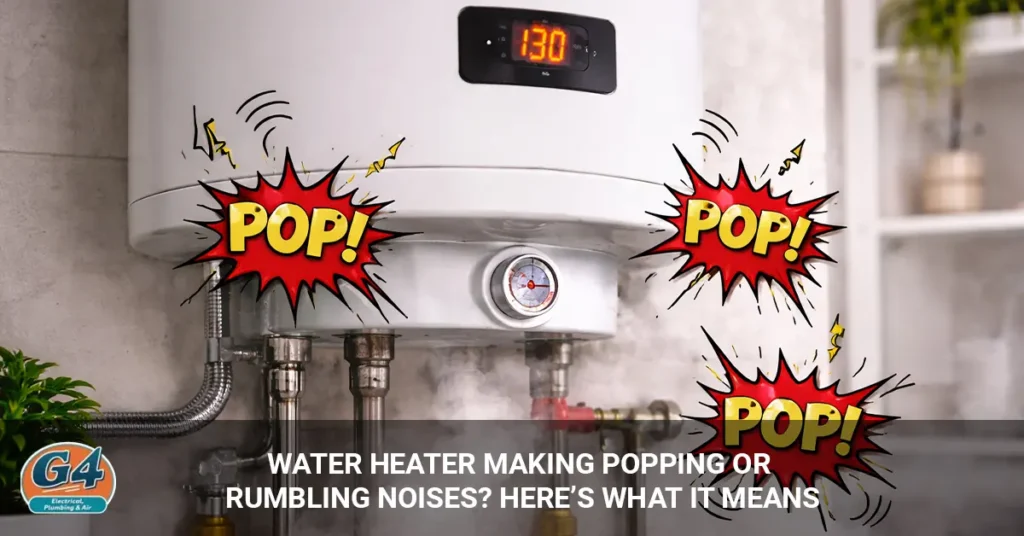
A water heater making popping or rumbling noises usually means there’s sediment buildup or pressure inside the tank.
These sounds can catch you off guard. You may hear popping, crackling, or a low rumbling noise coming from the unit. It can sound serious, but this is a common issue in many homes.
In most cases, the noise comes from mineral buildup at the bottom of the tank or normal wear over time. As the heater runs, trapped water under the sediment heats up and creates those popping sounds.
The important thing is to understand what’s causing the noise and fix it early before it leads to bigger problems.
Why Your Water Heater Is Making Popping or Rumbling Noises
Water heater noises are usually caused by sediment buildup, overheating, or pressure inside the tank.
As your water heater runs, minerals in the water settle at the bottom of the tank. Over time, this creates a layer that traps water underneath. When the heater warms up, that trapped water starts to bubble, which causes popping or rumbling sounds.
In some cases, the noise can also come from water getting too hot or pressure building up inside the system.
If you hear these sounds often, it’s a clear sign your water heater needs attention before the problem gets worse.
1. Sediment Buildup in the Tank (Most Common Cause)
Popping or rumbling noises are most often caused by sediment buildup at the bottom of the tank.
Over time, minerals from hard water settle and form a thick layer inside the tank. Water gets trapped under this layer. When the heater runs, that trapped water heats up and creates popping or crackling sounds.
You may also notice the water takes longer to heat or you’re getting less hot water than before.
Flushing the tank helps remove this buildup and brings the heater back to normal. Doing this once a year can prevent the noise from coming back and keep your system running smoothly.
2. Hard Water Mineral Deposits
Hard water mineral deposits can cause rumbling or popping noises during heating.
If your home has hard water, minerals like calcium and magnesium build up quickly inside the tank. Over time, this forms a layer of scale that makes it harder for the heater to work properly.
As the unit heats water, this buildup can trap heat and create rumbling or popping sounds.
Using a water softener and keeping up with regular maintenance can help reduce mineral buildup and keep your water heater running quietly.
3. Overheating Water
Overheating inside the tank can cause rumbling or boiling-like sounds.
When the temperature is set too high, the water starts to overheat and move more inside the tank. This creates that rumbling or boiling noise.
You may also notice the water coming out is extremely hot, which can be unsafe.
Lowering the thermostat to around 120°F (49°C) usually fixes the issue. If the problem continues, the thermostat may not be working properly and might need to be replaced.
4. Pressure Buildup in the Tank
Excess pressure inside the tank can cause rumbling, hissing, or unusual sounds.
Pressure builds up when the system can’t release it properly. This can happen if the pressure relief valve isn’t working or the system is closed and holding too much pressure.
You might hear hissing, rumbling, or short bursts of sound as pressure tries to escape.
This is not something to ignore. If you suspect pressure buildup, it’s best to have the system checked right away, as it can become a safety risk if left unresolved.
5. Aging Water Heater
An aging water heater often makes noise due to wear and buildup inside the tank.
As the unit gets older, sediment collects more easily and internal parts begin to wear out. This makes the system less efficient and more likely to produce rumbling or popping sounds.
You may also notice the heater isn’t working as well as before, your energy bills are higher, or the water looks rusty.
If your water heater is around 8 to 12 years old and making noise regularly, replacing it is usually the best long-term solution.
Is a Noisy Water Heater Dangerous?
A noisy water heater is not always dangerous, but it can be a warning sign of a bigger problem.
In many cases, the noise comes from sediment buildup and isn’t harmful right away. But if you ignore it, the buildup can reduce efficiency and put extra strain on the tank.
If the noise happens along with leaks, pressure issues, or overheating, it can turn into a safety concern. (Learn about water stains on walls and ceiling causes and fixes.)
It’s best to check the problem early and fix it before it leads to more serious damage.
How to Fix a Noisy Water Heater
Fixing a noisy water heater usually means removing buildup or adjusting key settings.
The most common fix is flushing the tank. This clears out sediment that causes popping or rumbling sounds and helps the heater work more efficiently.
You should also check the thermostat to make sure it’s set to a safe level and inspect the valves to confirm everything is working properly.
If the noise doesn’t go away after basic maintenance, it’s best to have a professional check the system to find and fix the exact cause.
How to Prevent Water Heater Noises
You can prevent most water heater noises with simple regular maintenance.
Flushing the tank once a year helps remove sediment before it builds up and causes popping sounds. Keeping the thermostat at a safe level also prevents overheating and reduces stress on the system.
If your home has hard water, using a water softener can help limit mineral buildup inside the tank.
Regular checks and basic maintenance keep your water heater running quietly, efficiently, and with fewer problems over time.
When to Call a Professional
You should call a professional when the noise is loud, constant, or getting worse over time.
If you notice leaks, pressure issues, overheating, or the sound doesn’t go away, it’s a sign the problem needs expert attention.
Waiting too long can lead to more damage, higher repair costs, and possible system failure. Getting it checked early helps prevent bigger issues and keeps your water heater working safely.
Final Thoughts
Water heater noises usually mean there’s a buildup or wear inside the system, and they shouldn’t be ignored.
In many cases, a simple fix like flushing the tank can stop the noise and improve performance. Knowing what the sound means helps you take action early and avoid bigger problems.
If the noise continues or seems serious, getting professional help early can save you time, money, and stress.