
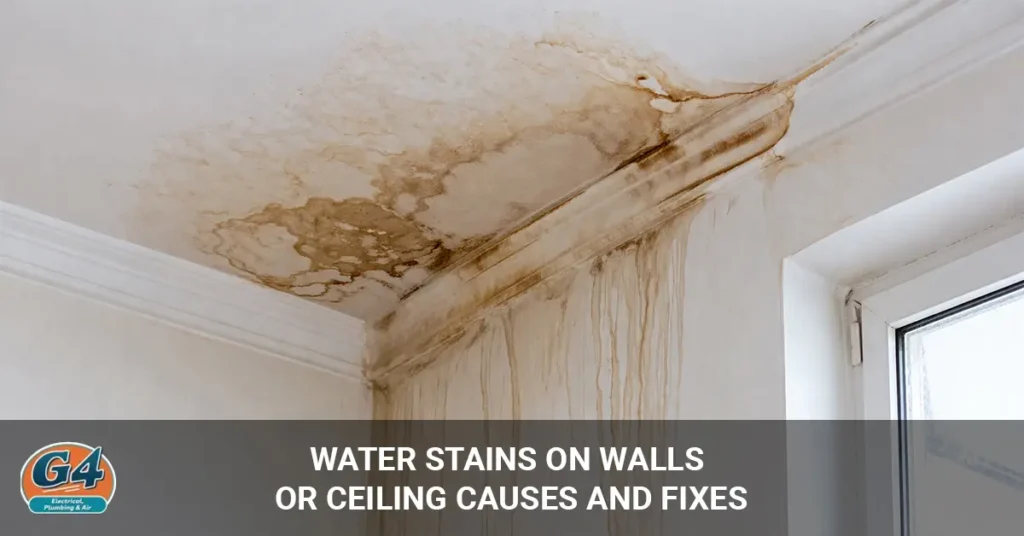
Water stains on walls or ceilings usually mean there’s a leak somewhere behind or above the surface.
At first, it may look like a small yellow or brown spot. Easy to ignore. But over time, that spot can grow, spread, and damage the structure of your home.
What you see on the surface is often just a warning sign. The real problem is usually hidden inside walls, ceilings, or floors.
In many homes, the cause is a slow plumbing leak. In other cases, it could be a roof problem or moisture from your HVAC system. No matter the source, ignoring it can lead to mold, weakened materials, and expensive repairs.
That’s why it’s important to act early.
This guide will help you understand what these stains really mean, what causes them, and what steps to take before the problem gets worse.
What Do Water Stains on Walls or Ceilings Mean?
Water stains on walls or ceilings mean moisture is collecting behind the surface and soaking through.
These stains usually show up as yellow, brown, or dark patches. Sometimes they form ring-like marks as the water spreads and dries.
You can often tell how serious it is by how the stain looks. If it’s dry and hasn’t changed, it may be from an old issue. But if it keeps growing, feels damp, or looks darker over time, the leak is likely still active.
Even small stains should not be ignored. They often point to a hidden problem that can get worse if left untreated.
Common Causes of Water Stains
Water stains are usually caused by water leaking from plumbing, the roof, or nearby systems.
1. Hidden Plumbing Leaks
Hidden plumbing leaks are one of the most common reasons water stains appear on walls or ceilings.
Pipes inside your walls or ceilings can develop small leaks over time. These leaks are often slow, so you may not notice them right away. But they can keep dripping for weeks or even months, slowly damaging your home from the inside.
2. Roof Leaks
Roof leaks cause water to enter from above and soak into your ceiling and walls.
This usually happens when shingles are damaged, flashing is loose, or sealing is worn out. During rain, water can slip through these weak spots and show up as stains inside your home.
3. Bathroom or Upstairs Leaks
Bathroom or upstairs leaks often cause water stains to appear on the ceiling below.
Water from showers, bathtubs, sinks, or toilets can slowly leak through the floor. Over time, that moisture builds up and shows as stains in the room underneath.
4. HVAC or AC Drain Issues
HVAC or AC problems can cause water stains when condensation is not draining properly.
Air conditioning systems produce moisture, and that water should drain away safely. If the drain line is clogged or the system is not working correctly, water can overflow and leak into the ceiling.
5. Poor Sealing Around Windows or Walls
Poor sealing allows rainwater to enter your home and cause water stains.
Small gaps or cracks around windows and exterior walls let water seep in during rain. This moisture can slowly build up and create visible stains over time.
Sometimes, leaks behind walls can also be related to water heater issues, especially if the problem is near utility areas.
Warning Signs of a Hidden Plumbing Leak
Hidden plumbing leaks usually show clear warning signs before serious damage happens.
You may notice a musty smell in certain areas of your home. Paint can start peeling, bubbling, or cracking as moisture builds up behind the surface. Mold or mildew may also appear on walls or ceilings.
Sometimes, the signs are less obvious. Your water bill may increase without any clear reason. You might also feel soft or sagging spots on the ceiling, which often means water is trapped inside.
If you notice any of these signs, don’t wait. Acting early can help prevent bigger damage and costly repairs.
In some cases, hidden leaks are connected to deeper plumbing issues, and recognizing the signs you need drain cleaning can help you catch problems early.
Are Water Stains Dangerous?
Water stains can be dangerous because they often lead to mold growth and structural damage.
When moisture gets trapped inside walls or ceilings, it slowly weakens the materials. Over time, this can cause surfaces to soften, sag, or even collapse in serious cases.
Mold is another major risk. It can spread quickly in damp areas and affect indoor air quality. This may lead to health problems, especially for people with allergies or breathing issues.
There’s also a safety concern. If water reaches electrical wiring inside walls or ceilings, it can create a serious hazard.
Even if the stain looks small, it’s important to take it seriously and fix the problem early.
How to Find the Source of the Leak
You can find the source of a leak by checking the area directly above or around the stain.
Start by looking right above the stained spot. If the stain is on the ceiling, check the room above it, such as a bathroom, kitchen, or attic. Leaks often travel downward, so the source is usually nearby.
Next, watch the stain over time. If it gets bigger, darker, or feels damp, the leak is still active. You can also turn off water fixtures one at a time to see if the stain stops spreading, which can help narrow down the source.
If you still can’t find where the water is coming from, it’s best to call a professional. They can locate hidden leaks quickly and prevent further damage.
How to Fix Water Stains and Leaks
You fix water stains and leaks by stopping the leak first, then repairing the damage.
Start by finding and fixing the source of the leak. This is the most important step. If you don’t fix the cause, the stain will come back again.
Next, dry the area completely. Any moisture left behind can lead to mold and further damage.
Once the area is dry, repair or replace damaged materials like drywall, insulation, or paint. Then finish by repainting or refinishing the surface to restore its appearance.
Taking these steps in the right order helps prevent the problem from returning.
When to Call a Professional
You should call a professional when you can’t find the leak or the damage is getting worse.
If the stain keeps growing, spreads to other areas, or doesn’t dry out, the problem is likely still active. Mold growth is another clear sign that you need expert help.
A professional can find hidden leaks that are not visible and fix them the right way. They also have the tools to check inside walls and ceilings without causing more damage.
Getting help early can prevent bigger repairs, protect your home, and keep your space safe.
Final Thoughts
Water stains on walls or ceilings are a clear sign that something is wrong behind the surface.
What looks like a small spot today can quickly turn into bigger damage if you ignore it. The longer you wait, the more costly and serious the problem can become.
The best approach is simple. Act early. Find the source, fix the leak, and repair the damage before it spreads.
Taking quick action helps protect your home, saves money, and keeps your living space safe and dry.