
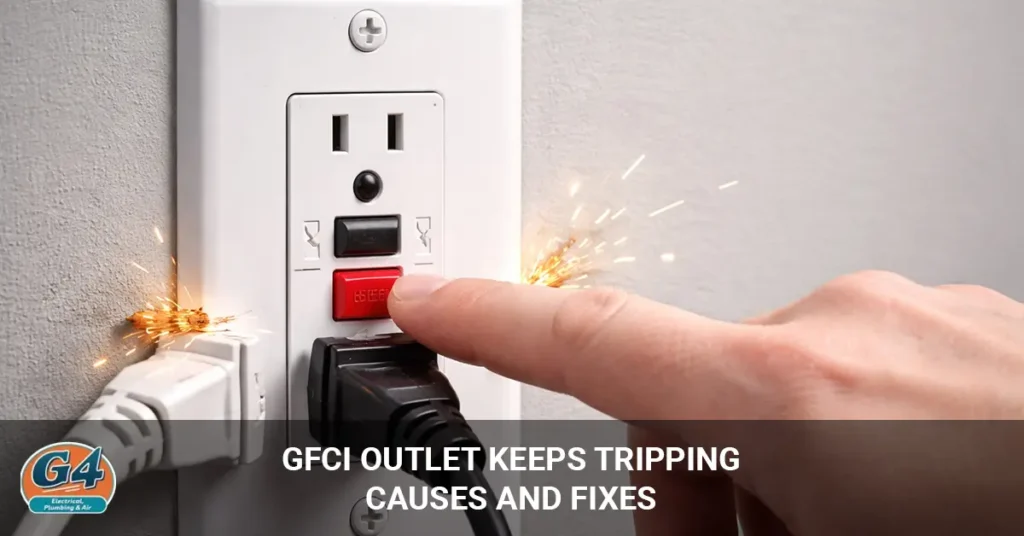
A GFCI outlet trips to protect you by cutting power when it senses a problem.
You’ve likely seen one in your bathroom, kitchen, or outside. It has “Test” and “Reset” buttons. When it trips, the power shuts off right away, which can feel confusing if you don’t know the reason.
In most cases, this is a good sign. It means the outlet is working and keeping you safe. But if it keeps tripping again and again, it may point to a deeper issue.
That’s why it’s important to understand what’s happening.
In this guide, you’ll learn how GFCI outlets work, why they trip, and when it’s time to replace them before it becomes a bigger problem.
What Is a GFCI Outlet and How Does It Work?
A GFCI outlet is a safety device that shuts off power when it detects an unsafe flow of electricity.
It works by constantly checking the current moving through the hot and neutral wires. If there’s even a small imbalance, it cuts the power immediately to prevent electric shock.
You’ll usually find these outlets in areas where water is present, like bathrooms, kitchens, garages, and outdoor spaces. That’s because water increases the risk of electrical hazards.
GFCI outlets react very fast within a fraction of a second, so they can protect you before serious harm occurs.
Why Do GFCI Outlets Trip?
GFCI outlets trip when they detect unsafe electrical flow or a possible shock risk.
1. Ground Fault (Normal Safety Function)
A ground fault is the most common reason a GFCI outlet trips.
This happens when electricity moves outside its normal path. The outlet quickly shuts off power to protect you from shock.
2. Moisture or Water Exposure
Moisture can cause a GFCI outlet to trip almost instantly.
Water near outlets, especially in bathrooms or kitchens, can trigger the safety system and cut off power to prevent danger.
3. Overloaded Circuit
An overloaded circuit can cause a GFCI outlet to trip when too many devices are connected.
When the electrical load becomes too high, the system shuts off power to prevent overheating and reduce the risk of damage.
4. Faulty Appliance
A faulty appliance can cause a GFCI outlet to trip repeatedly.
If the outlet trips every time you plug in a specific device, that appliance may have an internal problem and should be checked or replaced.
5. Wiring Problems
Wiring problems can cause a GFCI outlet to trip due to unstable electrical flow.
Loose, damaged, or incorrect wiring can interrupt the current and trigger the safety system. This is a serious issue and usually requires a professional electrician to fix it.
Signs Your GFCI Outlet Has a Problem
A faulty GFCI outlet usually shows clear warning signs before it stops working completely.
You may notice that it won’t reset, trips again and again, or suddenly stops giving power. These are similar to why an outlet is not working and often indicate a deeper issue.
Sometimes, the outlet may feel warm or look damaged. This can mean there is an internal issue that needs attention.
If you see burn marks or notice a strange smell, stop using the outlet right away. These are serious warning signs that should not be ignored.
How to Fix a Tripped GFCI Outlet
You can fix a tripped GFCI outlet by resetting it and checking for common problems.
Start by pressing the reset button. If it clicks and power comes back, the issue may have been temporary.
Next, unplug all devices connected to the outlet. Then try resetting it again. This helps you find out if a faulty appliance is causing the problem.
Check the area around the outlet for any moisture. Make sure everything is dry, especially in bathrooms or kitchens.
Finally, press the test button and then reset it again to confirm the outlet is working properly. If it still doesn’t work, the issue may need further inspection.
When a Tripping GFCI Is a Serious Issue
A tripping GFCI is serious when it happens often or shows signs of damage.
If the outlet keeps tripping again and again, it may point to a deeper electrical problem. You might also notice a burning smell or find that the outlet won’t reset at all.
These are electrical emergency warning signs that should not be ignored and may require immediate professional attention.
Ignoring them can lead to serious risks, including electric shock or even fire. It’s important to take action as soon as you notice these issues.
When to Replace a GFCI Outlet
You should replace a GFCI outlet when it no longer works properly or shows clear signs of wear.
If the outlet won’t reset, keeps tripping without a clear reason, or has been in use for more than 10 years, it’s usually time for a replacement.
You should also replace it if you notice visible damage, discoloration, or if the outlet feels warm. These are signs that it may not be safe to use anymore.
Replacing it on time helps keep your home safe and prevents electrical risks.
When to Call an Electrician
You should call an electrician when you can’t find the cause, or the issue may involve wiring.
If multiple outlets stop working or the GFCI keeps tripping even after basic checks, the problem is likely deeper in the system.
An electrician can inspect the wiring, find the exact issue, and fix it safely.
Electrical problems can be risky, so it’s always better to get professional help instead of guessing.
Final Thoughts
GFCI outlets are designed to protect you, and tripping usually means they are doing their job.
But if the outlet keeps tripping or behaves unusually, it’s a sign that something isn’t right. Ignoring it can lead to bigger electrical problems.
The key is to understand the cause and take action early.
Fixing the issue on time helps keep your home safe and your electrical system working properly.