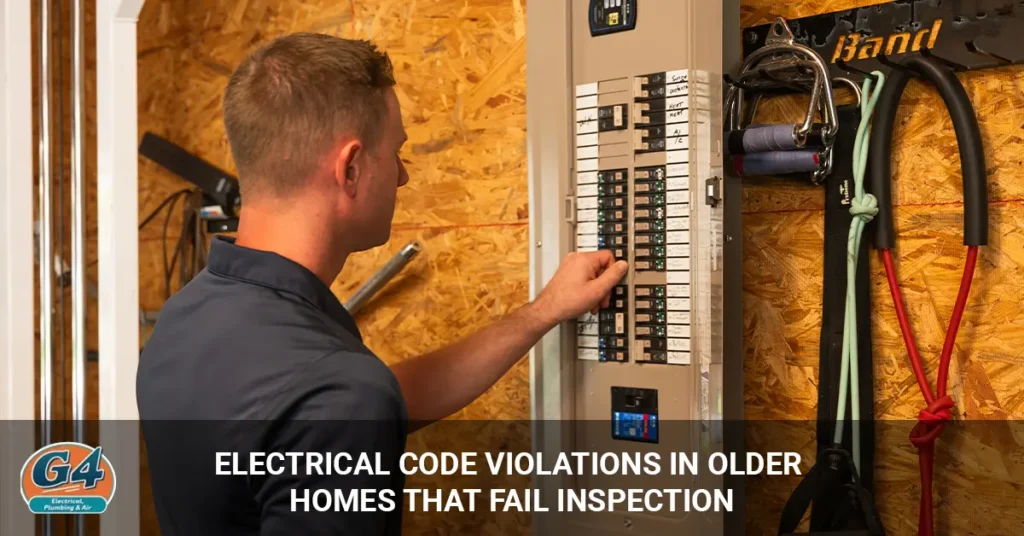
Electrical code violations are common in older homes because their wiring systems were installed before modern safety standards existed. Even if the electrical system still works, it may not meet today’s safety requirements.
Many homes built decades ago were designed for fewer appliances and lower electricity use. As technology and safety standards improved, electrical codes were updated to reduce fire risks and electrical shocks.
During a home inspection, inspectors often look for outdated wiring, missing safety devices, and improper electrical installations. If these problems are found, they can cause the home to fail the inspection or require repairs before the sale can move forward.
Understanding the most common electrical code violations in older homes can help homeowners identify potential problems early. Fixing these issues improves safety and helps ensure the home meets modern electrical standards.
What Are Electrical Code Violations in Older Homes
Electrical code violations in older homes happen when the electrical system does not meet current safety standards. These standards are created to reduce fire risks, prevent electrical shocks, and ensure that wiring systems operate safely.
Many older homes were built before modern electrical safety rules were introduced. Because of this, their wiring systems may lack important protections that are now required in newer homes.
For example, older electrical systems may not include proper grounding, GFCI outlets, or updated circuit protection. These missing features can create safety concerns even if the electrical system still works.
During a home inspection, electricians and inspectors check the electrical system carefully. They look for outdated wiring, missing safety devices, and improper electrical installations that may violate current electrical codes.
Why Electrical Inspections Fail in Older Homes
Electrical inspections often fail in older homes because their wiring systems do not meet modern safety standards. Many older electrical systems were installed before today’s safety requirements existed.
Over time, electrical codes have changed to reduce fire risks and improve protection from electrical shocks. When older homes still use outdated wiring or equipment, inspectors may flag these issues during an inspection.
Below are some of the most common reasons older homes fail electrical inspections.
Outdated Electrical Systems
Older electrical systems were designed for a time when homes used far fewer electrical devices. Today’s homes use more appliances, electronics, and high-powered equipment.
Because of this, older wiring systems may not have enough capacity to safely handle modern electrical demand.
Lack of Modern Safety Requirements
Many safety devices that are required today were not installed in older homes. For example, Ground Fault Circuit Interrupter (GFCI) and Arc Fault Circuit Interrupter (AFCI) protection were not commonly required decades ago.
Without these safety features, the electrical system may not meet current inspection standards.
DIY Electrical Work
Electrical problems often occur when homeowners attempt repairs or upgrades without proper training or permits. Improper wiring connections, overloaded circuits, and unsafe installations can create serious hazards.
Inspectors frequently identify these types of issues during home inspections.
Aging Wiring and Components
Electrical systems naturally wear down over time. Wires, outlets, switches, and circuit breakers can deteriorate after years of use.
When these components become worn or damaged, they may no longer meet safety standards and may need replacement or upgrades.
10 Common Electrical Code Violations in Older Homes
Older homes often fail inspections because their electrical systems include outdated or unsafe installations. These violations may still allow electricity to work, but they can create safety risks and fail modern electrical inspections.
Below are some of the most common electrical code violations inspectors find in older homes.
1. Ungrounded Electrical Outlets
Ungrounded outlets are one of the most common electrical issues in older homes. These outlets usually have two prongs instead of three and do not include a grounding wire.
Grounding helps protect people and electrical devices from shocks and electrical damage. Modern electrical codes require grounded outlets in most areas of the home.
2. Missing GFCI Outlets
Missing GFCI outlets are a common reason homes fail electrical inspections. GFCI outlets protect against electrical shocks by shutting off power when a ground fault is detected.
They are typically required in areas where water is present, such as kitchens, bathrooms, garages, laundry rooms, basements, and outdoor spaces.
3. Lack of AFCI Protection
A lack of AFCI protection can increase the risk of electrical fires. AFCI breakers detect dangerous electrical arcs that may occur due to damaged wires or loose connections.
Modern electrical codes often require AFCI protection in bedrooms, living rooms, and other main living areas.
4. Overcrowded Electrical Panels
An overcrowded electrical panel can create safety risks and fail inspection. This often happens when too many circuits are connected to a panel or when breakers are double-tapped.
Double-tapping occurs when two wires are connected to a breaker designed for only one wire.
5. Outdated Wiring Types
Outdated wiring systems can raise safety concerns during an inspection. Some older homes still contain knob and tube wiring or aluminum wiring.
These wiring systems may not meet modern safety standards and often require upgrades.
6. Improper Junction Boxes
Electrical wire connections must always be placed inside junction boxes with proper covers. These boxes protect the wires and reduce the risk of electrical fires.
Exposed or hidden wire connections without a protective box are considered code violations.
7. Extension Cords Used as Permanent Wiring
Extension cords are meant for temporary use only. Using them as permanent wiring can create overheating and fire hazards.
Inspectors often flag this issue when cords are used to power appliances or fixtures permanently.
8. Improper Grounding and Bonding
Proper grounding helps direct excess electrical current safely into the ground. Without grounding, electrical systems can become dangerous during power surges or faults.
Older homes may lack proper grounding systems, which can lead to inspection failures.
9. Incorrect Breaker Size
Circuit breakers must match the size and capacity of the wires they protect. If the breaker is too large for the wiring, the wires may overheat before the breaker trips.
This condition increases the risk of electrical fires.
10. Missing Electrical Permits for Past Work
Electrical upgrades or repairs often require permits and inspections. If previous electrical work was completed without permits, it may fail inspection.
Inspectors often review past upgrades to confirm they were completed according to local electrical codes.
Warning Signs Your Older Home May Have Electrical Code Violations
Certain warning signs can indicate that an older home may have electrical code violations. These problems often appear when wiring, outlets, or electrical components no longer meet modern safety standards.
Recognizing these signs early can help homeowners address electrical issues before they become serious safety hazards.
Common warning signs include:
Circuit Breakers That Trip Frequently
Frequent breaker trips often indicate that the electrical system is overloaded or that there is a wiring problem. If this happens regularly, it may be helpful to understand the common causes behind a circuit breaker that keeps tripping and how it relates to outdated electrical systems.
Flickering or Dimming Lights
Lights that flicker or dim unexpectedly may signal loose wiring, overloaded circuits, or outdated electrical connections.
Warm or Discolored Outlets
Outlets that feel warm to the touch or show discoloration may indicate overheated wires or poor electrical connections. This can be a potential fire hazard.
Burning Smells Near Electrical Outlets
A burning smell coming from outlets or switches is a serious warning sign. It may indicate damaged wiring or overheating electrical components.
Outlets Without Grounding
Two-prong outlets without grounding are common in older homes. These outlets do not provide the same level of protection as grounded outlets and may fail modern electrical inspections.
If these signs appear in an older home, it is important to have the electrical system inspected to identify and correct potential code violations.
How to Fix Electrical Code Violations Before an Inspection
You can fix many electrical code violations in older homes by upgrading outdated components and improving safety features. Addressing these issues before a home inspection can help prevent delays and ensure the electrical system meets current safety standards.
Taking action early also improves the overall safety of the home.
Upgrade Outlets and Switches
Replacing old outlets and switches is one of the simplest ways to improve electrical safety. Many older homes still have worn or outdated outlets that may not meet current code requirements.
Installing modern outlets and switches can improve reliability and help bring the electrical system closer to current standards.
Install GFCI and AFCI Protection
Adding GFCI and AFCI protection helps reduce the risk of electrical shocks and fires. These safety devices are now required in many areas of the home.
GFCI outlets are commonly installed in kitchens, bathrooms, garages, and outdoor locations. AFCI protection is often required in bedrooms and living areas.
Replace Outdated Wiring
Older wiring systems may not be able to safely handle today’s electrical demands. Wiring that is damaged, worn, or outdated may need to be replaced.
Upgrading wiring helps ensure the electrical system operates safely and meets modern code requirements.
Update the Electrical Panel
An outdated electrical panel can cause inspection failures if it lacks capacity or contains unsafe breaker configurations. In many cases, upgrading through electrical panel upgrade services can improve safety, eliminate overloaded circuits, and bring the system up to modern standards.
Upgrading the panel can improve electrical capacity, eliminate overcrowded circuits, and provide better protection for the home’s wiring.
Hire a Licensed Electrician
A licensed electrician can evaluate the electrical system and identify potential code violations. They can also recommend the best upgrades to meet current safety standards.
Professional inspections and repairs help ensure the electrical system is safe and ready for a home inspection.
Electrical Upgrades That Improve Safety in Older Homes
Upgrading key electrical components can greatly improve safety in older homes. Modern electrical upgrades help prevent fires, reduce shock risks, and ensure the electrical system can handle today’s power demands.
Many older homes benefit from a few important electrical improvements.
Modern Circuit Breaker Panels
Replacing an outdated electrical panel with a modern circuit breaker panel improves safety and reliability. New panels provide better circuit protection and can handle the higher electrical loads used in modern homes.
This upgrade also helps eliminate overcrowded circuits and outdated breakers.
Whole-Home Surge Protection
Whole-home surge protection protects electrical devices from sudden power surges. These surges can occur during storms, utility issues, or electrical faults.
Installing surge protection helps protect appliances, electronics, and the home’s electrical system.
Updated Grounding Systems
Proper grounding helps direct excess electrical current safely into the ground. Many older homes lack modern grounding systems.
Updating the grounding system reduces the risk of electrical shock and improves overall system safety.
Replacement of Outdated Wiring
Replacing outdated wiring can greatly improve the safety of an older home. Older wiring systems may not be able to safely handle modern electrical demand.
Upgrading the wiring helps reduce fire risks and improve electrical reliability.
Installation of Modern Outlets and Switches
Installing modern outlets and switches improves both safety and functionality. New outlets often include grounding and safety features that older outlets do not provide.
These upgrades help bring the electrical system closer to modern safety standards.
When to Call a Professional Electrician
You should call a professional electrician when electrical issues involve safety risks, outdated wiring, or inspection concerns. Some problems require expert knowledge and should not be handled without proper training.
A licensed electrician can inspect the system, identify code violations, and recommend safe upgrades.
Homeowners should consider contacting an electrician in the following situations.
Preparing for a Home Inspection
If you are preparing to sell your home or schedule an inspection, it is helpful to have an electrician review the electrical system first. You can start with professional electrical inspection services to identify potential issues early and avoid delays during the official inspection.
Suspected Outdated Wiring
Older wiring systems may not meet modern electrical safety standards. If your home still uses outdated wiring, an electrician can evaluate whether upgrades are needed.
Recurring Electrical Problems
Frequent breaker trips, flickering lights, or warm outlets can indicate deeper electrical problems. These issues should be inspected by a professional to prevent safety hazards.
Planning Electrical Upgrades
If you plan to upgrade outlets, wiring, or the electrical panel, a licensed electrician can ensure the work meets local electrical codes and safety requirements.
A professional evaluation helps ensure the electrical system operates safely and complies with modern electrical standards.
Final Thoughts
Older homes often have electrical systems that were built under outdated safety standards. Even if the wiring still works, it may not provide the level of protection required by modern electrical codes.
Issues like missing grounding, outdated wiring, or lack of safety outlets can create risks and may cause a home to fail an inspection. These problems are common in older properties but can usually be fixed with the right upgrades.
By identifying electrical code violations early and correcting them before an inspection, homeowners can improve safety and avoid costly surprises. Updating key parts of the electrical system helps ensure the home meets current safety standards and operates reliably.