
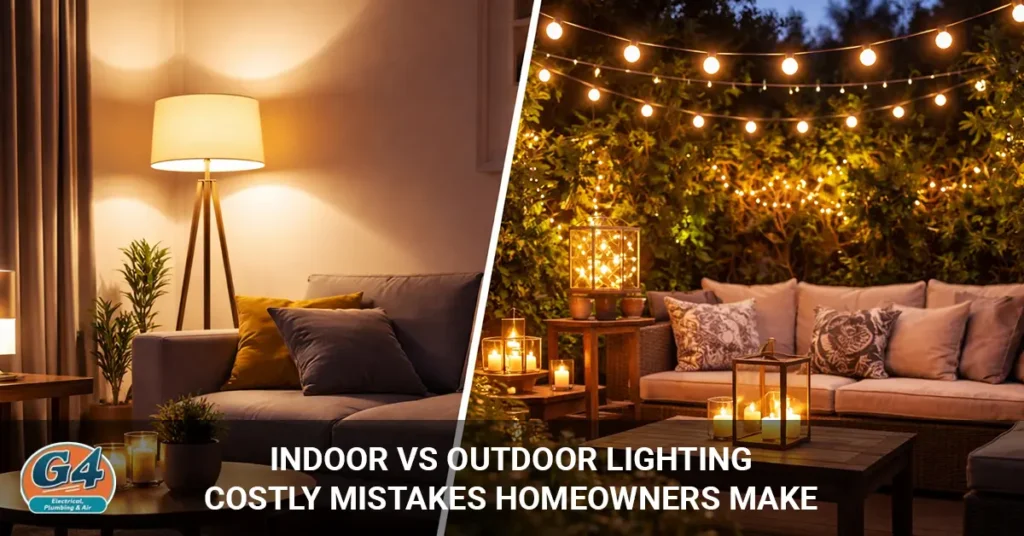
Indoor and outdoor lighting are not the same. Using the wrong type can cause safety risks, damage fixtures, and increase energy costs.
Many homeowners make simple lighting mistakes without realizing the long-term impact. For example, installing indoor fixtures outside or choosing lights without proper weather protection can lead to electrical problems and costly replacements.
Lighting should match the environment where it is installed. Indoor lighting focuses on comfort, visibility, and interior design. Outdoor lighting must handle rain, humidity, temperature changes, and exposure to the elements.
When the wrong lighting is used, fixtures can fail quickly. Moisture can damage wiring. Poor lighting placement can also create dark areas that reduce safety around the home.
Understanding the difference between indoor and outdoor lighting helps you avoid these problems. It also helps you choose the right fixtures for better performance, longer lifespan, and safer installation.
This guide explains the key differences between indoor and outdoor lighting, the costly mistakes homeowners often make, and practical tips to choose the right lighting for every area of your home.
Understanding the Difference Between Indoor and Outdoor Lighting
Indoor and outdoor lighting are built for different environments. Using the wrong type can create safety risks and shorten the life of your lighting fixtures.
Indoor lights are made for controlled environments inside the home. Outdoor lights are built to handle weather, moisture, and temperature changes. Because of this, they should never be used interchangeably.
Knowing the difference helps homeowners choose the right fixtures and avoid expensive repairs.
What Is Indoor Lighting
Indoor lighting is designed for use inside the home. It focuses on comfort, visibility, and interior style.
These fixtures are commonly used in living rooms, kitchens, bedrooms, hallways, and offices. They provide balanced light that makes everyday activities easier while also improving the look of a room.
Common types of indoor lighting include:
- Ceiling lights
- Recessed lighting
- Pendant lights
- Table lamps
- Wall sconces
- Under-cabinet lighting
Indoor lighting fixtures are not sealed against moisture. They are not built to handle rain, humidity, or extreme temperature changes. Installing them outdoors can quickly damage the wiring and internal components.
What Is Outdoor Lighting
Outdoor lighting is designed for exterior areas of a home. These fixtures are built to handle rain, humidity, dust, and changing temperatures.
Outdoor lighting improves safety, security, and nighttime visibility around the property. It also highlights landscaping and outdoor living spaces.
Common outdoor lighting types include:
- Security lighting
- Landscape lighting
- Pathway lighting
- Porch and patio lighting
- Motion sensor lights
- Flood lights
Outdoor fixtures are sealed to keep water and debris away from electrical components. They are usually made from durable materials that resist rust and corrosion.
Why Indoor and Outdoor Lighting Are Not Interchangeable
Indoor and outdoor lights should not be used in the wrong location. Each type is designed for a specific environment.
Indoor lights do not have protection against moisture or weather exposure. If they are installed outside, water can enter the fixture and damage the wiring. This may lead to electrical shorts, fixture failure, or safety hazards.
Outdoor lighting includes protective seals, weather-resistant materials, and stronger construction. These features prevent water intrusion and help the fixture last longer in outdoor conditions.
Using the correct lighting type ensures safer installation, better performance, and a longer lifespan for your fixtures.
Why Using the Wrong Lighting Type Can Be Dangerous
Using the wrong lighting type can create serious safety risks and expensive repairs. In some cases, these issues can be part of larger electrical warning signs you should never ignore, especially when moisture or damaged wiring is involved.
Indoor fixtures are not designed for outdoor conditions, and installing them outside can lead to electrical damage, fire hazards, and code violations.
Choosing the correct lighting for each location helps protect your home, your electrical system, and your family
Electrical Safety Risks
Using indoor lights outdoors can expose electrical components to water. When moisture reaches the wiring, it can cause electrical shocks or short circuits.
Outdoor lighting fixtures are sealed to prevent water from entering the electrical parts. Indoor fixtures do not have this protection.
Weather Exposure Damage
Outdoor lighting must handle rain, humidity, wind, and temperature changes. Indoor fixtures are not designed for these conditions.
When indoor lights are exposed to outdoor weather, the materials can quickly deteriorate. This often leads to rust, damaged wiring, and malfunctioning fixtures.
Reduced Fixture Lifespan
Indoor fixtures installed outdoors usually fail much faster than expected. Moisture and corrosion can damage bulbs, sockets, and wiring.
Instead of lasting for years, the fixture may need replacement within a short time. This increases maintenance and replacement costs.
Fire Hazards
Water entering a lighting fixture can cause overheating or sparks inside the electrical components. These problems can create a potential fire risk.
Using the correct outdoor-rated lighting helps prevent moisture from reaching sensitive electrical parts.
Code Violations
Many electrical codes require outdoor-rated fixtures for exterior installations. These safety rules are designed to reduce electrical hazards.
If indoor lighting is installed outdoors, it may violate local building codes. This can create problems during inspections or when selling a home.
Costly Mistakes Homeowners Make With Indoor and Outdoor Lighting
Many homeowners make lighting mistakes because they assume all fixtures work the same way. In reality, indoor and outdoor lighting are built for very different conditions. Choosing the wrong fixture, bulb, or placement can lead to safety issues, higher energy bills, and poor lighting performance.
Understanding the most common mistakes can help you avoid unnecessary repairs and make better lighting decisions for your home.
Installing Indoor Fixtures Outside
Installing indoor fixtures outdoors is one of the most common lighting mistakes. Indoor lights are not weatherproof and cannot handle rain, humidity, or temperature changes.
When indoor fixtures are exposed to outdoor conditions, moisture can enter the wiring and electrical components. This often causes corrosion, electrical failure, and safety hazards. Outdoor areas should always use fixtures designed for exterior environments.
Using Outdoor Fixtures Indoors Without Planning
Outdoor fixtures can technically be installed indoors, but they are not always designed for interior comfort or style. Many outdoor lights produce brighter and harsher light because they are made for visibility and security.
If used indoors without proper planning, these fixtures can create uncomfortable lighting and may not match the room’s design.
Ignoring Weather and Moisture Ratings
Outdoor lighting fixtures include protection ratings that indicate how well they resist water and dust. These ratings help determine whether a light is suitable for exposed or partially covered areas.
Ignoring these ratings can result in fixtures that fail quickly when exposed to moisture or weather conditions.
Choosing the Wrong Bulb Type
Using the wrong bulb can cause flickering, overheating, or poor lighting performance. Some bulbs are not compatible with certain fixtures or dimmer switches.
LED bulbs are usually the best option because they last longer, use less electricity, and produce consistent light.
Poor Placement of Outdoor Lighting
Poor lighting placement can reduce safety and visibility around your home. For example, pathway lights placed too far apart may leave dark spots along walkways.
On the other hand, placing lights too close together can create glare or overly bright areas that make visibility worse.
Not Considering Energy Efficiency
Older lighting systems often use more electricity than necessary. Traditional bulbs consume more energy and need frequent replacement.
Modern LED lighting uses significantly less power and lasts much longer, helping homeowners reduce electricity costs.
Overloading Electrical Circuits
Adding too many lights to a single circuit can overload the electrical system. This may cause circuit breakers to trip or lead to wiring problems.
Outdoor lighting should always be installed with proper electrical planning to ensure the system can safely handle the load.
Indoor Lighting Types for Different Rooms
Different rooms need different types of lighting. The best indoor lighting uses multiple layers to create comfortable and functional spaces.
Most homes combine ambient, task, accent, and decorative lighting. This layered approach improves visibility while also enhancing the overall design of a room.
Ambient Lighting
Ambient lighting provides the main source of light in a room. It creates overall brightness so people can move around safely and comfortably.
Common ambient lighting fixtures include ceiling lights, recessed lighting, and large overhead fixtures. This type of lighting spreads light evenly across the space.
Living rooms, bedrooms, kitchens, and hallways all rely on ambient lighting as the foundation of their lighting setup.
Task Lighting
Task lighting provides focused light for specific activities. It helps people see clearly when performing detailed tasks.
Examples of task lighting include desk lamps, reading lamps, vanity lights, and under-cabinet kitchen lighting. These fixtures direct light exactly where it is needed.
Task lighting reduces eye strain and improves comfort when working, cooking, reading, or studying.
Accent Lighting
Accent lighting highlights specific features in a room. It draws attention to decorative elements and adds depth to the space.
Homeowners often use accent lighting to illuminate artwork, shelves, plants, or textured walls. Track lighting and wall-mounted lights are common accent lighting options.
This type of lighting helps create a more visually interesting and inviting interior.
Decorative Lighting
Decorative lighting adds style while also providing illumination. These fixtures often serve as design features within a room.
Examples include chandeliers, pendant lights, and unique wall fixtures. Decorative lighting is commonly used in dining rooms, entryways, and living areas.
Well-chosen decorative lighting can enhance the character of a room while still contributing to the overall lighting plan.
Outdoor Lighting Types for Different Areas
Outdoor lighting improves safety, visibility, and the appearance of your home. The right lighting setup helps prevent accidents, increases security, and highlights outdoor features.
Different outdoor areas require different types of lighting. Using the correct fixtures ensures better performance and longer-lasting results.
Security Lighting
Security lighting helps protect your home by illuminating dark areas around entry points. These lights are commonly installed near doors, garages, backyards, and driveways.
Bright lighting discourages unwanted activity and makes it easier to see movement at night. Flood lights and wall-mounted lights are often used for security lighting.
Landscape Lighting
Landscape lighting highlights outdoor features such as gardens, trees, and decorative elements. It improves the visual appeal of your yard while also increasing nighttime visibility.
Homeowners often use landscape lights to showcase plants, stone pathways, and water features. Soft lighting creates a balanced and attractive outdoor environment.
Pathway Lighting
Pathway lighting improves safety along walkways and driveways. These lights guide people safely through outdoor areas after dark.
Small ground lights or low post lights are commonly placed along sidewalks, garden paths, and entryways. Proper spacing ensures clear visibility without excessive brightness.
Deck and Patio Lighting
Deck and patio lighting create a comfortable space for outdoor relaxation and gatherings. These lights make outdoor seating areas more functional after sunset.
Common options include wall lights, step lights, string lights, and recessed deck lighting. Soft lighting helps create a warm and inviting atmosphere.
Motion Sensor Lighting
Motion sensor lighting automatically turns on when movement is detected. This improves security while also saving energy.
These lights are often installed near garages, driveways, and entry points. Because they only turn on when needed, motion lights help reduce electricity usage while increasing nighttime safety.
Key Features to Look for in Outdoor Lighting
Outdoor lighting should be durable, weather-resistant, and energy efficient. Choosing fixtures with the right features helps them last longer and perform safely in outdoor environments.
Homeowners should focus on materials, weather protection, energy use, and smart control options when selecting outdoor lighting.
Weather-Resistant Materials
Outdoor lighting should be made from materials that can handle rain, humidity, and temperature changes. Fixtures made from aluminum, stainless steel, or heavy-duty plastic tend to last longer outdoors.
These materials resist damage from weather exposure and help protect internal electrical components.
Waterproof or Moisture-Resistant Design
Outdoor fixtures should include sealed components that prevent water from entering the light housing. This protection keeps moisture away from wiring and electrical parts.
Lights installed in open areas, such as gardens or pathways, should always have strong moisture resistance.
Durable and Corrosion-Resistant Finishes
Outdoor lighting is constantly exposed to moisture and air, which can cause rust over time. Fixtures with corrosion-resistant coatings or powder-coated finishes are better suited for outdoor use.
These finishes help the fixture maintain its appearance and structural strength for many years.
Energy Efficient LED Technology
LED lighting is one of the best choices for outdoor spaces. LED bulbs use much less electricity than traditional bulbs and can last for many years.
They also produce consistent brightness and require less maintenance, making them a practical option for outdoor lighting systems.
Motion Sensors or Smart Lighting Controls
Motion sensors and smart lighting controls improve both convenience and security. Motion lights automatically turn on when movement is detected, which helps illuminate dark areas and discourage unwanted activity.
Smart lighting systems allow homeowners to control outdoor lights through timers, mobile apps, or automation systems, making lighting easier to manage while reducing energy use.
Tips to Avoid Lighting Installation Mistakes
Avoiding lighting installation mistakes starts with proper planning. Choosing the right fixtures, checking safety requirements, and installing lights correctly can prevent electrical problems and costly repairs.
Following a few simple guidelines helps ensure your lighting system is safe, efficient, and long-lasting.
Always Use Fixtures Designed for the Installation Location
Use lighting fixtures that are specifically designed for the location where they will be installed. Indoor lights should stay inside, while outdoor areas require weather-resistant fixtures.
Using the correct fixture helps protect the electrical components and ensures better performance.
Check Moisture and Weather Ratings for Outdoor Lights
Outdoor lighting should have proper moisture and weather protection. These ratings indicate whether the fixture can safely handle rain, humidity, and dust.
Choosing fixtures with the correct rating helps prevent water damage and electrical failure.
Avoid Mixing Incompatible Bulbs and Fixtures
Not all bulbs work well with every fixture. Some bulbs may cause flickering, overheating, or reduced efficiency when used with incompatible lighting systems. If you notice this issue, it may help to understand the common causes of flickering lights in your home to identify whether the problem is with the bulb, fixture, or electrical system.
Always check the fixture specifications before selecting a bulb.
Plan the Lighting Layout Before Installation
Planning your lighting layout helps you place lights in the right locations. This improves visibility and prevents dark spots or overly bright areas.
A clear lighting plan also helps determine how many fixtures you need and where they should be installed.
Ensure Circuits Can Handle the Electrical Load
Adding too many lights to a single circuit can overload the electrical system. This may cause breakers to trip or damage wiring.
Make sure the circuit can handle the total power demand of the lighting system.
Follow Local Electrical Safety Codes
Electrical codes exist to protect homeowners and ensure safe installations. Following these regulations helps reduce the risk of electrical hazards.
It also ensures your lighting system meets safety standards.
Hire a Professional Electrician for Complex Installations
Some lighting installations require professional expertise. Large outdoor lighting systems, new wiring, or electrical upgrades should be handled by a licensed electrician.
A professional can ensure the installation is safe, reliable, and compliant with electrical codes.
Indoor vs Outdoor Lighting Comparison
| Feature | Indoor Lighting | Outdoor Lighting |
| Installation Location | Inside the home | Outside the home |
| Weather Resistance | Not required | Required |
| Fixture Materials | Decorative materials | Durable weatherproof materials |
| Safety Protection | Standard electrical protection | Waterproof and sealed components |
| Environmental Exposure | Controlled environment | Rain, humidity, temperature changes |
When to Call a Professional Electrician
You should call a professional electrician when lighting problems involve wiring, circuit issues, or safety risks. Some lighting problems may look simple, but can indicate deeper electrical issues that require expert attention.
A licensed electrician can inspect the system, identify the cause of the problem, and ensure the lighting is installed safely.
You may need a professional electrician if you notice the following issues:
Flickering or Failing Lights
Frequent flickering lights can signal loose wiring, voltage fluctuations, or incompatible fixtures. If replacing the bulb does not solve the problem, an electrician should inspect the wiring and electrical connections.
Outdoor Wiring Damage
Outdoor wiring can become damaged by weather, moisture, or physical impact. Damaged wiring can create electrical hazards and should be repaired by a professional.
Circuit Breakers Tripping Frequently
If your circuit breaker trips often after installing lights, the circuit may be overloaded. An electrician can evaluate the electrical load and determine if the system needs adjustment.
Overheating Fixtures
Lighting fixtures that feel unusually hot may indicate incorrect bulbs, poor ventilation, or electrical issues. Overheating can damage fixtures and increase fire risk.
Installing Large Outdoor Lighting Systems
Large lighting projects, such as landscape lighting or security lighting systems, often require new wiring and electrical planning. A professional electrician can ensure the installation meets safety standards and electrical codes.
Calling a professional when needed helps prevent electrical hazards and ensures your lighting system operates safely and efficiently.
Final Thoughts
Indoor and outdoor lighting are designed for different environments, and using the wrong fixture can lead to safety risks, higher repair costs, and poor lighting performance.
Indoor lights work best in controlled environments inside the home. Outdoor lights are built to handle rain, humidity, dust, and temperature changes. Choosing the right type for each location helps protect your electrical system and ensures your lighting lasts longer.
Homeowners can avoid common lighting mistakes by selecting fixtures designed for the installation area, checking weather resistance for outdoor lights, and planning the lighting layout carefully.
When lighting is installed correctly, it improves safety, energy efficiency, and the overall appearance of your home. The right lighting setup helps create comfortable indoor spaces and well-lit outdoor areas that are both functional and secure.