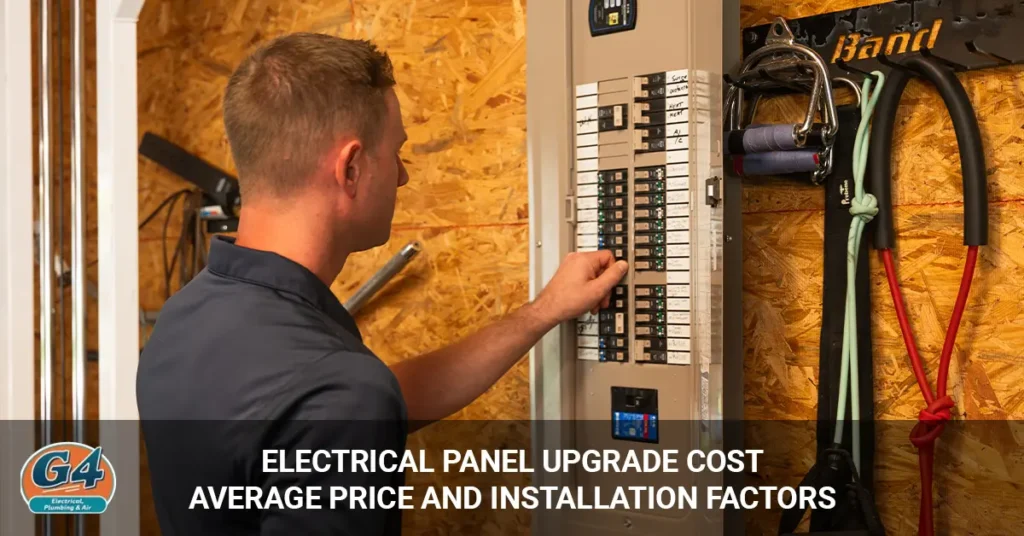
Upgrading an electrical panel improves safety and allows your home to handle modern power needs. Many older homes still use small panels that were not designed for today’s appliances, air conditioning systems, and electronics.
The average electrical panel upgrade cost ranges from $1,200 to $4,500 for most homes. The exact price depends on the panel size, labor costs, and whether additional electrical work is required. In larger homes or complex installations, the cost can reach $6,000 or more.
Your electrical panel is the main hub of your home’s electrical system. It controls how electricity flows to outlets, lights, and appliances. When the panel becomes outdated or overloaded, it can cause breaker trips, flickering lights, or even safety risks.
Many homeowners upgrade their electrical panels when renovating, installing new appliances, or adding equipment such as electric vehicle chargers or heat pumps.
Understanding the average electrical panel upgrade cost and installation factors helps homeowners plan their budget and choose the right upgrade for their home. A properly sized panel improves safety, supports modern appliances, and ensures your electrical system runs reliably.
What Is an Electrical Panel Upgrade
An electrical panel upgrade means replacing an old or undersized breaker panel with a new one that can safely handle your home’s electrical demand. The upgrade increases the system’s capacity and improves overall safety.
The electrical panel is the main control center of your home’s electrical system. It receives electricity from the utility company and sends it to different circuits that power lights, outlets, and appliances.
Older electrical panels were built when homes used far less electricity. Today’s homes rely on air conditioning, large kitchen appliances, home offices, and smart devices. Because of this, older panels may struggle to supply enough power.
Upgrading the panel gives your home the capacity needed to support modern appliances and technology while reducing the risk of electrical problems.
Why Electrical Panels Need Upgrading
Electrical panels need upgrading when the existing system cannot safely support the home’s electrical demand. As power usage increases, older panels may become overloaded or outdated.
Homeowners usually upgrade their electrical panels for several common reasons.
Older homes may still have fuse boxes, which are outdated and less safe than modern breaker panels. Replacing them improves safety and reliability.
Another reason is the limited electrical capacity. Many older homes have 60-amp or 100-amp panels, which may not support modern appliances, heating systems, or large electronics.
Panel upgrades are also common when homeowners install electric vehicle chargers, new HVAC systems, or major appliances that require more power.
Safety is another important reason. Damaged, overheated, or outdated panels can increase the risk of electrical fires. A modern breaker panel helps prevent overloads and improves system protection.
Upgrading the electrical panel ensures your home can safely handle higher electrical loads.
Signs Your Electrical Panel Is Outdated
An electrical panel may be outdated if it struggles to supply enough power or shows warning signs of electrical problems. Recognizing these signs early can help prevent safety issues.
One common sign is frequent circuit breaker trips. This often means the panel cannot handle the amount of electricity being used.
Another warning sign is flickering or dimming lights, especially when large appliances turn on. This may indicate that the electrical system is overloaded.
A burning smell near the electrical panel is a serious warning sign that should never be ignored. It may indicate overheating or damaged wiring.
Homeowners may also notice a warm or buzzing breaker box, which can signal electrical problems inside the panel.
Finally, many older panels have very limited space for additional circuits. If there is no room for new breakers, it may be time to upgrade.
If you notice these issues, it may help to review the warning signs that you need an electrical panel upgrade before contacting a licensed electrician.
Average Electrical Panel Upgrade Cost
The cost of upgrading an electrical panel depends on several factors, such as panel capacity, labor costs, and the complexity of the installation.
Most homeowners pay between $1,200 and $4,500 for a standard upgrade.
Typical Cost Range
| Upgrade Type | Average Cost |
| Basic panel replacement | $1,200 – $2,000 |
| 100-amp upgrade | $1,300 – $2,500 |
| 200-amp upgrade | $2,000 – $4,500 |
| 400-amp upgrade | $4,000 – $10,000 |
The final cost will depend on your home’s electrical system and the amount of work required.
Electrical Panel Upgrade Cost by Amperage
Electrical panel upgrade cost depends on the panel’s amperage, which determines how much electricity the panel can safely handle. Higher-amp panels support more appliances and usually cost more to install.
Most homes today upgrade to 150-amp or 200-amp panels because they provide enough power for modern appliances, HVAC systems, and home electronics.
Below is a breakdown of typical costs by panel size.
100 Amp Panel Upgrade Cost
The average cost to upgrade to a 100-amp electrical panel ranges from $800 to $1,500. This is usually the lowest-cost panel upgrade.
A 100-amp panel is typically suitable for smaller homes, apartments, or older houses with lower electrical demand. It can support basic appliances, lighting, and small HVAC systems.
However, many homeowners skip this option today because modern homes often require more electrical capacity.
150 Amp Panel Upgrade Cost
Upgrading to a 150-amp panel usually costs between $1,300 and $1,600. This option provides more electrical capacity than a 100-amp panel.
A 150-amp panel can support standard household appliances, air conditioning units, and moderate electrical usage. It works well for medium-sized homes.
Even though it offers more capacity, it is less common than 200-amp upgrades, which have become the standard for modern homes.
200 Amp Panel Upgrade Cost
A 200-amp panel upgrade typically costs between $1,800 and $4,500. This is the most common electrical panel upgrade for residential properties.
A 200-amp panel provides enough power for large kitchen appliances, central air conditioning, home offices, and electric vehicle chargers.
Many electricians recommend this upgrade because it prepares the home for future electrical needs and modern technology.
400 Amp Panel Upgrade Cost
Upgrading to a 400-amp electrical panel usually costs between $4,500 and $10,000 or more. This upgrade is designed for homes with very high electrical demand.
A 400-amp panel is often installed in large homes, luxury properties, or houses with multiple HVAC systems, workshops, or extensive electrical equipment.
Because of the higher capacity, this upgrade may require additional wiring, service line upgrades, and coordination with the utility company, which increases the overall cost.
Electrical Panel Upgrade Cost Breakdown
The total electrical panel upgrade cost includes the panel, materials, labor, and permit fees. Each part of the project contributes to the final price.
Understanding these costs helps homeowners see where their money goes and why prices can vary from one project to another.
Electrical Panel and Materials
The electrical panel itself usually costs between $150 and $500 depending on the brand and amperage. Higher-capacity panels and well-known brands often cost more.
Besides the panel, electricians also install several supporting components to complete the upgrade. These materials ensure the electrical system works safely and efficiently.
Common materials include:
- Circuit breakers
- Electrical wiring and connectors
- Grounding equipment
- Mounting hardware and protective components
The total material cost can increase if the project requires additional wiring or upgraded electrical parts.
Labor Cost
Labor is one of the largest parts of the electrical panel upgrade cost. Electricians typically charge between $50 and $120 per hour for professional installation.
Most panel upgrades take 6 to 10 hours, depending on the complexity of the job.
Several factors can affect labor costs, including:
- The complexity of the electrical system
- Local electrician rates
- The accessibility of the panel location
- Whether additional wiring or upgrades are needed
Projects that require rewiring or service line changes may take longer and increase labor costs.
Permits and Inspection Fees
Most electrical panel upgrades require permits and inspections to meet local building codes. These permits ensure the installation follows electrical safety standards.
Permit costs usually range from $50 to $300, depending on the location and local regulations.
After the installation, a building inspector may check the work to confirm the panel upgrade meets safety requirements. This step helps protect homeowners and ensures the electrical system operates safely.
Factors That Affect Electrical Panel Upgrade Cost
Electrical panel upgrade cost depends on several factors, including panel size, wiring condition, installation difficulty, and local code requirements. These factors can increase or reduce the total project cost.
Understanding what affects the price helps homeowners estimate the budget before starting the upgrade.
Panel Size and Capacity
Larger electrical panels cost more because they provide higher power capacity. Panels with higher amperage ratings require larger components and sometimes additional wiring.
For example, upgrading from a 100-amp panel to a 200-amp panel usually costs more than replacing a panel with the same capacity. Higher-capacity panels also take longer to install and may require service line upgrades.
Many modern homes choose 200-amp panels because they support larger appliances and future electrical needs.
Condition of Existing Wiring
The condition of your home’s wiring can significantly affect upgrade costs. If the wiring is old, damaged, or unsafe, electricians may recommend repairs or partial rewiring.
Older homes may still have outdated wiring systems, which may not meet modern electrical safety standards. Fixing these issues during the panel upgrade improves safety but increases the overall cost.
Panel Location
The location of the electrical panel can also influence installation costs. Panels that are easy to access are quicker and cheaper to upgrade.
However, panels installed in tight spaces such as basements, crawl spaces, or exterior walls may require additional labor. In some cases, electricians may need to move equipment or reroute wiring to complete the installation safely.
Local Electrical Codes
Local building codes often affect the total cost of an electrical panel upgrade. Different cities and regions have different safety requirements for electrical work.
Some areas require additional inspections, upgraded grounding systems, or specific panel types. These requirements help ensure safety but can increase installation costs.
Additional Electrical Work
Some electrical panel upgrades require additional work that increases the final price. This usually happens when the existing electrical system needs improvements.
Common additional upgrades include:
- Replacing outdated circuit breakers
- Installing new grounding systems
- Updating the electrical service line
- Adding new circuits or subpanels
These upgrades improve safety and system performance, but they can add to the total project cost.
Additional Costs That May Increase the Price
Some electrical panel upgrades require extra work, which can increase the total installation cost. These additional costs usually appear when the existing electrical system needs improvements or when the panel setup must be changed.
Homeowners should be aware of these potential costs when planning an electrical panel upgrade.
Rewiring Parts of the Home
Partial home rewiring may be required if the existing wiring is outdated or unsafe. Older homes often have wiring that cannot support modern electrical loads.
Electricians may recommend replacing certain wires to improve safety and ensure the new panel works properly. Partial rewiring can add $1,000 to $5,000 or more to the total project cost, depending on how much wiring needs to be replaced.
Moving the Electrical Panel
Relocating an electrical panel increases installation costs because it requires additional wiring and labor. Sometimes panels need to be moved to meet safety codes or to improve accessibility.
For example, a panel may need to be relocated from a closet or interior wall to a more accessible area. Moving the panel typically adds $1,000 to $3,000 to the project cost.
Upgrading the Meter Base
Some electrical panel upgrades require a new meter base to meet utility company requirements. The meter base is the device that measures the electricity used by your home.
If the existing meter base is outdated or incompatible with the new panel, it may need to be replaced. This upgrade usually costs $300 to $1,000, depending on the equipment and installation work required.
Installing a Subpanel
A subpanel may be installed when the main electrical panel does not have enough space for additional circuits. Subpanels provide extra circuit capacity for new appliances, workshops, or home additions.
Installing a subpanel usually costs $500 to $2,000, depending on the number of circuits and the distance from the main panel. This upgrade helps distribute power more efficiently in larger homes.
When Should You Upgrade Your Electrical Panel
You should upgrade your electrical panel when it cannot safely support your home’s electrical demand. An outdated or overloaded panel can lead to frequent power issues and potential safety risks.
Several common situations indicate that a panel upgrade may be necessary.
Frequent Circuit Breaker Trips
Frequent breaker trips often mean the electrical panel is overloaded. When too many devices use power at the same time, the breaker shuts off to prevent overheating.
If this happens regularly, the panel may not have enough capacity for your home’s electrical needs. Upgrading the panel can help handle the increased power demand.
Adding New Appliances
Installing new appliances may require upgrading the electrical panel. Many modern appliances use more electricity than older models.
For example, equipment such as electric vehicle chargers, heat pumps, electric stoves, and electric water heaters often require additional power capacity. A larger panel ensures these systems run safely without overloading the circuits.
Home Renovations
Home renovations often require an electrical panel upgrade. Projects like kitchen remodels, home additions, or basement finishing usually add new outlets, lighting, and appliances.
If the existing panel does not have enough circuits or power capacity, upgrading the panel becomes necessary to support the new electrical load.
Insurance Requirements
Some insurance companies require electrical panel upgrades for safety reasons. Older panels or fuse boxes may increase the risk of electrical fires.
Because of this risk, insurers may require homeowners to replace outdated panels before approving or renewing a policy. Installing a modern breaker panel improves safety and helps meet insurance requirements.
Benefits of Upgrading an Electrical Panel
Upgrading an electrical panel improves safety, increases power capacity, and allows your home to support modern electrical needs. A newer panel also helps your electrical system run more reliably.
Below are some of the main benefits homeowners gain from upgrading their electrical panel.
Improved Electrical Safety
A modern electrical panel improves safety by reducing the risk of electrical overloads and fires. New breaker panels are designed with better safety features that shut off power when circuits become overloaded.
Older panels or fuse boxes may not provide the same level of protection. Upgrading the panel helps prevent overheating, damaged wiring, and other electrical hazards.
Increased Electrical Capacity
Upgrading your panel increases the amount of electricity your home can safely use. Modern homes rely on many power-hungry appliances and devices.
A larger panel can support equipment such as:
- Air conditioning systems
- Electric ranges and dryers
- Electric vehicle chargers
- Smart home devices and electronics
This extra capacity prevents circuits from becoming overloaded.
Better System Reliability
A new electrical panel helps your electrical system operate more reliably. Older panels may struggle to distribute electricity evenly throughout the home.
Upgrading the panel can reduce problems such as breaker trips, power fluctuations, and flickering lights. A modern system provides steady power to appliances and electronics.
Higher Home Value
An electrical panel upgrade can increase your home’s resale value. Buyers often prefer homes with updated electrical systems because they know the system can support modern appliances.
A newer panel also signals that the home has been properly maintained and meets current electrical safety standards.
Tips to Save Money on Electrical Panel Upgrades
You can reduce electrical panel upgrade costs by planning the project carefully and comparing options before starting the work. A few smart decisions can help homeowners avoid unnecessary expenses.
Here are several practical ways to save money on a panel upgrade.
Compare Electrician Quotes
Getting quotes from multiple licensed electricians helps you find a fair price. Electrical panel upgrade costs can vary depending on the contractor and location.
Ask at least three electricians for estimates and compare the services included in each quote. Make sure the electrician is licensed and experienced with panel upgrades.
Upgrade During Renovations
Completing a panel upgrade during a home renovation can reduce labor costs. When electricians are already working on the electrical system, it may be easier and cheaper to upgrade the panel at the same time.
For example, kitchen remodels, home additions, and basement renovations often involve electrical work. Combining these projects can save both time and money.
Choose the Right Panel Size
Selecting the correct panel size helps avoid unnecessary costs. Installing a panel that is too large may increase the price without providing additional benefits.
However, the panel should still provide enough capacity for future electrical needs. Many electricians recommend 200-amp panels because they support modern appliances and potential upgrades.
Check Local Incentives
Some local programs offer rebates or incentives for electrical upgrades. These incentives may apply to improvements that support energy efficiency or electric vehicle charging.
Homeowners can check with local utilities or government programs to see if any financial incentives are available for electrical system upgrades.
Final Thoughts
An electrical panel upgrade improves safety and allows your home to handle modern power needs. It ensures your electrical system can support today’s appliances, heating systems, and electronic devices without overloading the circuits.
The average electrical panel upgrade cost ranges from $1,200 to $4,500, depending on the panel size, labor requirements, and any additional electrical work needed. Larger homes or complex installations may cost more.
Before starting the project, it is important to have a licensed electrician inspect your current electrical system. A professional can recommend the right panel size and ensure the installation meets local safety codes.
A properly installed electrical panel provides reliable power, reduces electrical risks, and helps your home meet future energy demands for many years.