
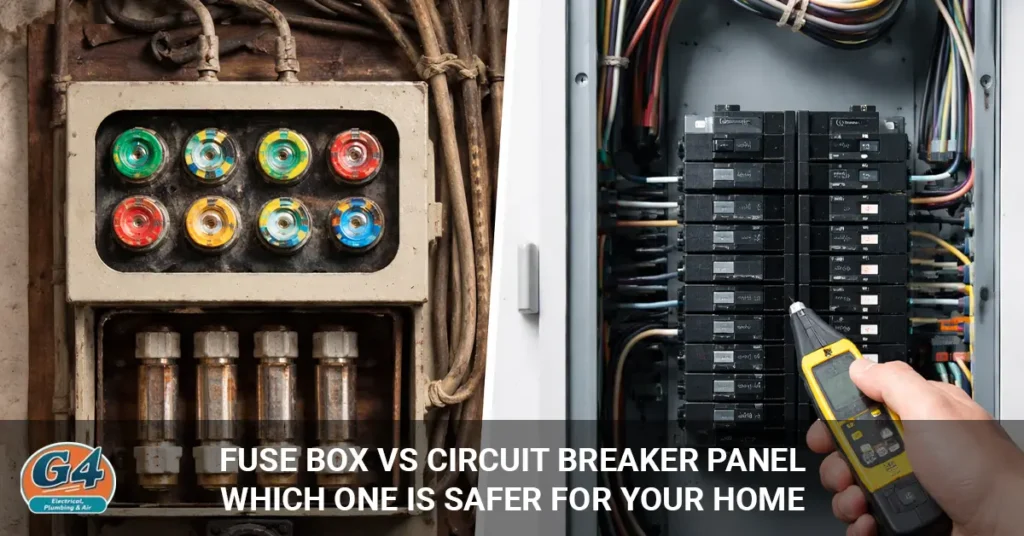
Your home’s electrical system needs a safe way to stop power when a circuit becomes overloaded. This protection usually comes from either a fuse box or a circuit breaker panel.
Many older homes still use fuse boxes. Most newer homes use circuit breaker panels instead. Both systems are designed to protect your wiring by shutting off electricity when too much power flows through a circuit.
However, they do this in different ways.
A fuse box stops the flow of electricity by using fuses that burn out when a circuit overloads. A circuit breaker panel uses breakers that automatically trip and shut off the power.
Over time, electrical systems have changed because modern homes use much more electricity than older homes did. Air conditioners, kitchen appliances, computers, and other devices all increase the demand on a home’s electrical system.
Understanding the difference between a fuse box and a circuit breaker panel can help you determine which system is safer and whether your home may need an electrical upgrade.
What Is a Fuse Box?
A fuse box is an older electrical panel that protects your home by using fuses that melt when a circuit gets overloaded. When the fuse melts, it stops the flow of electricity and helps prevent damage to the wiring.
Fuse boxes were commonly installed in homes built before the 1960s and 1970s. At that time, homes used far less electricity than they do today, so fuse boxes were usually enough to handle the power demand.
Inside a fuse box, each electrical circuit is protected by a screw-in fuse. If too much electricity flows through a circuit, the fuse blows and shuts off the power. To restore electricity, the blown fuse must be removed and replaced with a new one.
While fuse boxes can still work, they are considered outdated for modern homes. Today’s homes use more appliances and electronics, which often require a more advanced electrical system like a circuit breaker panel.
How Fuse Boxes Work
Fuse boxes work by using a small metal fuse that melts when too much electricity flows through a circuit. The fuse contains a thin metal strip that heats up and melts if the electrical current becomes too high.
When the strip melts, the circuit breaks and the electricity stops flowing. This helps protect the wiring from overheating and possible electrical fires.
Once a fuse blows, it cannot be used again. The homeowner must replace it with a new fuse of the correct size before power can be restored.
Where Fuse Boxes Are Commonly Found
Fuse boxes are most commonly found in older homes built before the 1970s. During that time, homes used fewer appliances and required less electricity.
Some homes still have fuse boxes today, especially if the electrical system has never been upgraded.
Lifespan of Fuse Box Systems
Fuse box systems can last for many years, but they are not designed for the electrical demands of modern homes.
Today’s homes use more appliances, electronics, and heating or cooling systems. Because of this, fuse boxes often lack the capacity and safety features needed to support modern electrical usage.
What Is a Circuit Breaker Panel?
A circuit breaker panel is a modern electrical panel that protects your home by automatically shutting off power when a circuit becomes overloaded. It helps prevent overheating, wiring damage, and electrical fires.
Unlike fuse boxes, circuit breakers do not need to be replaced after they trip. When a breaker shuts off power, you can usually restore electricity by simply switching the breaker back to the “on” position after fixing the problem.
Today, circuit breaker panels are the standard electrical system in most homes because they offer better safety, higher power capacity, and easier control of the electrical system.
How Circuit Breakers Work
Circuit breakers work by monitoring the amount of electricity flowing through each circuit. If the current becomes too high, the breaker quickly shuts off power to protect the wiring.
This automatic shut-off prevents wires from overheating and reduces the risk of electrical damage or fire. After the issue is fixed, the breaker can be reset by flipping the switch back on.
Why Breaker Panels Replaced Fuse Boxes
Circuit breaker panels replaced fuse boxes because they are safer, more convenient, and easier to manage.
With fuse boxes, a blown fuse must be removed and replaced with a new one. Breaker panels make this process much easier because homeowners can simply reset the breaker instead of replacing parts.
Electrical Capacity of Modern Panels
Most modern homes use 150-amp or 200-amp breaker panels. This higher capacity allows the electrical system to safely power appliances, HVAC systems, lighting, and modern electronics without overloading the circuits.
Fuse Box vs Circuit Breaker Panel: Key Differences
Fuse boxes and circuit breaker panels both protect your home from electrical overloads, but they work in different ways and offer different levels of safety and convenience.
Understanding these differences can help homeowners decide which system is better for modern electrical needs.
- How they stop overloads: Fuse boxes stop overloads by melting the fuse when too much electricity flows through a circuit. Once the fuse melts, the power stops. Circuit breaker panels stop overloads by tripping a breaker switch, which immediately shuts off the electricity.
- Ease of restoring power: When a fuse blows, the fuse must be removed and replaced with a new one before power returns. When a breaker trips, you can usually restore power by simply resetting the breaker switch.
- Electrical capacity: Fuse boxes were designed for older homes that used less electricity. Because of this, they often have limited electrical capacity.
Circuit breaker panels are built to support higher electrical loads, which makes them better suited for modern appliances and electronics. - Maintenance: Fuse boxes require homeowners to keep replacement fuses on hand and install them when a fuse blows.
Circuit breaker panels require less maintenance because breakers can be reset instead of replaced in most cases.
Which One Is Safer for Your Home?
A circuit breaker panel is generally safer for modern homes than a fuse box. It provides faster protection, supports higher electrical loads, and is designed to meet today’s electrical safety standards.
Circuit breaker panels automatically shut off power when a circuit becomes overloaded. This helps prevent overheating and reduces the risk of electrical fires.
Breaker panels also eliminate a common problem found with fuse boxes: using the wrong fuse size. When the wrong fuse is installed in a fuse box, the circuit may not shut off during an overload, which can allow wires to overheat.
Modern breaker panels also include improved safety features that help protect your home’s wiring, appliances, and electrical system. Because of these advantages, most electricians recommend upgrading to a circuit breaker panel if a home still uses a fuse box.
Common Problems With Fuse Boxes
Fuse boxes can still work, but they often create problems in modern homes that use more electricity. Because these systems are older, they may struggle to keep up with today’s power demands.
Here are some common issues homeowners experience with fuse boxes.
Overfusing Risks
Overfusing is one of the biggest safety problems with fuse boxes. This happens when someone replaces a blown fuse with a larger fuse to stop it from blowing again.
A larger fuse may allow too much electricity to flow through the circuit. This can cause wiring to overheat and increase the risk of an electrical fire.
Difficulty Finding Replacement Fuses
Replacement fuses can be harder to find today because fuse boxes are no longer commonly installed in homes.
Homeowners may need to visit specialty stores or order fuses online, which can make repairs inconvenient.
Limited Electrical Capacity
Most fuse box systems were designed for homes that used much less electricity than today’s homes.
Modern appliances, electronics, and HVAC systems require more power, which can place extra strain on an older fuse box.
Higher Risk of Overloaded Circuits
Fuse boxes have lower electrical capacity, which means circuits can overload more easily.
When several appliances run at the same time, the fuse may blow frequently. This is often a sign that the electrical system cannot handle the demand.
Benefits of Upgrading to a Circuit Breaker Panel
Upgrading to a circuit breaker panel improves safety, increases electrical capacity, and makes your home’s electrical system easier to manage. Modern breaker panels are built to handle the power needs of today’s homes.
Here are some of the main benefits homeowners can expect.
Improved Electrical Safety
A circuit breaker panel improves safety by shutting off power quickly when a circuit becomes overloaded. This helps prevent overheating, damaged wiring, and electrical fires.
Modern panels are designed with better safety protection than older fuse box systems.
Higher Electrical Capacity
Breaker panels can handle the higher electrical demand of modern homes. Today’s homes use more electricity for appliances, electronics, and heating or cooling systems.
A larger panel, such as a 150-amp or 200-amp service, provides the capacity needed to power these devices safely.
Easier Troubleshooting
Breaker panels make it easier to identify and fix electrical issues. When a breaker trips, you can quickly see which circuit is affected.
Power can usually be restored by simply resetting the breaker once the issue is resolved.
Better Support for Modern Appliances
A modern panel provides enough power for today’s appliances and devices. Equipment like dishwashers, electric ovens, HVAC systems, and electric vehicle chargers requires more electricity than older systems were designed to handle.
Increased Home Value
An upgraded electrical panel can increase the value and appeal of your home. Many buyers prefer homes with modern electrical systems because they know the system will be safer and more reliable.
Updated electrical panels can also help a home pass inspections more easily during the selling process.
Signs Your Home Still Uses an Outdated Fuse Box
Your home may still use an outdated fuse box if you notice certain signs in your electrical panel or experience frequent power issues. These signs usually indicate that the electrical system has not been upgraded to a modern circuit breaker panel.
Here are some common signs to look for.
- Screw-in fuses instead of breaker switches: If your electrical panel uses round screw-in fuses instead of switch-style breakers, your home likely still has a fuse box.
- Frequent blown fuses: Fuses that blow often can be a sign that the electrical system cannot handle the power demand of modern appliances.
- Limited number of electrical circuits: Older fuse boxes usually have fewer circuits, which can make it difficult to power multiple rooms and appliances safely.
- Difficulty running multiple appliances: If lights dim or power cuts out when several appliances run at the same time, the electrical system may be overloaded.
If you notice any of these signs, it is a good idea to have a licensed electrician inspect your electrical system and recommend whether an upgrade is needed.
Cost to Replace a Fuse Box With a Breaker Panel
Replacing a fuse box with a circuit breaker panel usually costs between $1,500 and $4,000, depending on the size of the panel and the complexity of the installation. The final cost can vary based on the electrical work needed in your home.
Several factors can affect the total price of the upgrade.
- Panel size and capacity: Larger panels cost more to install. For example, upgrading to a 200-amp panel may cost more than installing a smaller panel because it supports a higher electrical load.
- Electrical wiring upgrades: Some homes need wiring improvements to safely support the new panel. Updating old wiring can increase the total cost, but it improves safety.
- Labor and installation work: The amount of labor required can affect the price. If the panel location is difficult to access or additional electrical work is needed, installation costs may be higher.
- Local permits and inspections: Most electrical panel upgrades require permits and inspections. These fees can vary depending on local regulations.
Although the upgrade requires an investment, installing a modern circuit breaker panel improves safety and allows your home to support today’s electrical needs.
When You Should Upgrade Your Electrical Panel
You should upgrade your electrical panel when your current system cannot safely handle your home’s electrical demand. An outdated panel can lead to frequent power problems and increase the risk of electrical hazards.
Here are some common situations when upgrading the panel is recommended.
Your Home Still Uses a Fuse Box
You should consider upgrading if your home still uses a fuse box instead of a circuit breaker panel. Fuse boxes are older systems and may not provide the level of safety or convenience that modern breaker panels offer.
A breaker panel can shut off power quickly during an overload and can be easily reset when the issue is resolved.
You Are Adding New Appliances
You may need a panel upgrade if you are installing large appliances or new electrical equipment. Devices like HVAC systems, electric ovens, dryers, and electric vehicle chargers require more electricity.
Older electrical systems may not have enough capacity to support these appliances safely.
You Are Remodeling Your Home
Home renovations often increase the demand on your electrical system. Adding new rooms, outlets, lighting, or appliances can require more electrical capacity.
Upgrading the panel during a renovation helps ensure your home has enough power for modern living.
You Experience Frequent Electrical Problems
Frequent blown fuses, tripped breakers, or power interruptions may indicate that your electrical panel is overloaded. If breakers trip often, you can also review circuit breaker keeps tripping to learn common causes and troubleshooting steps.
If these problems occur regularly, it may be a sign that your electrical system needs an upgrade to safely handle the load.
Final Thoughts
Circuit breaker panels are generally safer and more suitable for modern homes than fuse boxes. While fuse boxes were once the standard for electrical protection, today’s homes require systems that can handle higher electrical demand.
If your home still uses a fuse box, it may still work, but it may not provide the level of safety and capacity needed for modern appliances and electronics. A licensed electrician can inspect your electrical system and recommend whether upgrading to a circuit breaker panel is the right choice. An upgrade can improve safety, support modern power needs, and help prevent electrical problems in the future.