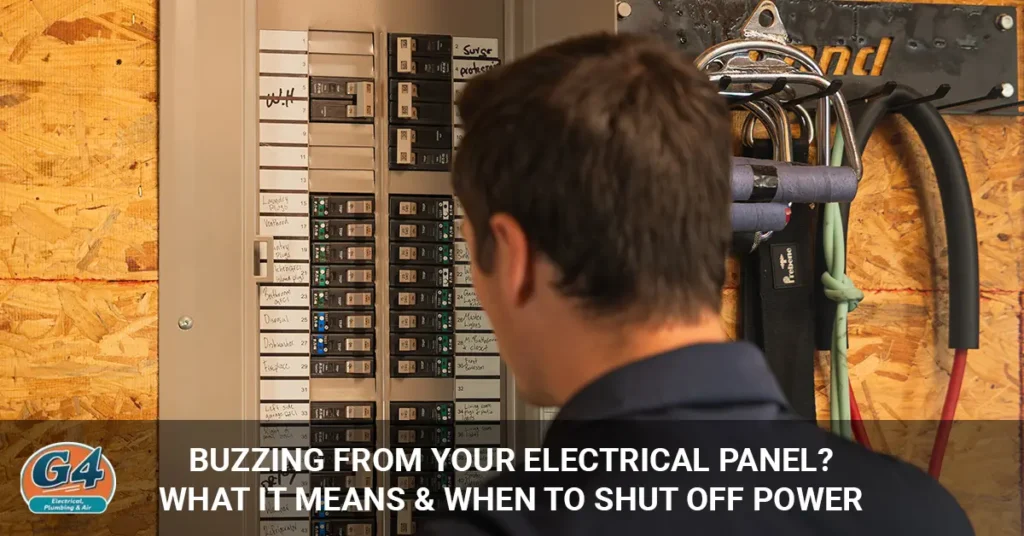
If you hear buzzing coming from your electrical panel, something is not working properly.
A breaker panel should be quiet. You shouldn’t hear sharp buzzing, crackling, or humming that gets louder over time. While a very faint hum can be normal, noticeable noise is usually a warning sign.
Sometimes the cause is minor. Other times, it can point to loose wiring, an overloaded circuit, or a serious fire risk.
In this guide, you’ll learn why electrical panels buzz, what you can safely check, and when you should shut off power and call a licensed electrician.
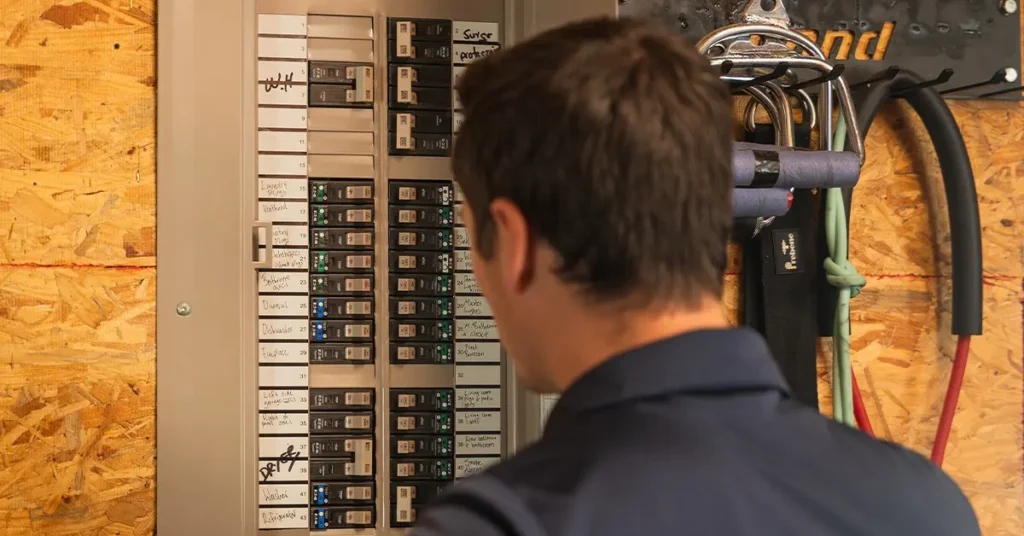
Is It Normal for an Electrical Panel to Buzz?
A very faint hum can be normal, but loud or ongoing buzzing is not.
Electrical panels sometimes make a soft humming sound when electricity is flowing. That low sound is usually harmless. But sharp buzzing, crackling, or a noise that gets louder over time is not normal.
If the buzzing changes, increases, or happens along with other warning signs like heat or a burning smell, it needs attention right away.
What Does It Mean When an Electrical Panel Is Buzzing?
When an electrical panel buzzes, it usually means there is a loose or unstable electrical connection.
Electricity should flow smoothly through the breakers and wiring. If a breaker is failing or a connection is loose, the power can vibrate or arc instead of flowing cleanly. That vibration often creates the buzzing sound you hear.
Common causes include:
- Loose breaker connections
- Overloaded circuits
- Failing breakers
- Electrical arcing
- An aging or worn panel
Sometimes the problem is small and easy to fix. Other times, buzzing can be a sign of overheating inside the panel, which increases fire risk.
Common Reasons an Electrical Panel Buzzes
Loose Breaker Connection
A loose breaker connection is one of the most common reasons an electrical panel buzzes.
When a breaker is not fully seated or a wire is loose, electricity cannot flow evenly. Instead of moving smoothly, it may vibrate under load. That vibration often creates a buzzing sound.
Loose connections also create resistance. Resistance creates heat. And heat increases the risk of fire.
If buzzing is coming from a specific breaker, it should be inspected by a licensed electrician to prevent overheating and damage.
Overloaded Circuit
An overloaded circuit can make a breaker buzz before it trips.
When too many appliances run on the same circuit, the breaker has to carry more current than it was designed for. That extra strain can cause vibration inside the breaker, which creates a buzzing sound.
You may notice the noise when large appliances like an air conditioner, oven, or space heater are running.
Turning off some devices may reduce the buzzing for now. But repeated overloads can weaken breakers and increase the risk of overheating over time.
Failing Circuit Breaker
A failing breaker can cause buzzing because its internal parts are worn out.
Circuit breakers do not last forever. Over time, heat and normal use weaken the internal components. When that happens, the breaker may start to buzz, feel warm to the touch, or trip more often than it should.
If the noise is coming from one specific breaker, it may need to be replaced. A licensed electrician can test it and install a new one if necessary.
Electrical Arcing
Electrical arcing is one of the most dangerous reasons an electrical panel buzzes.
Arcing happens when electricity jumps across a loose or damaged connection instead of flowing through it properly. When this happens, it creates intense heat and often produces a sharp buzzing or crackling sound.
This is not normal. Arcing can quickly overheat wires and increase the risk of fire.
If you suspect electrical arcing, shut off power if it’s safe to do so and contact a licensed electrician immediately.
Loose Main Service Connection
A loose main service connection can cause the entire electrical panel to buzz.
This is the connection where power enters your home from the utility line. If it becomes loose or unstable, the panel may vibrate or buzz, especially when large appliances are running.
A loose main connection can cause unstable voltage throughout the house. You may also notice lights flickering or appliances acting irregularly.
This is a serious issue. It should be addressed right away to protect your electrical system and reduce fire risk.
Aging or Outdated Electrical Panel
An aging or outdated electrical panel can buzz because it struggles to handle modern power demands.
Older panels were not designed for today’s appliances, electronics, and HVAC systems. As more devices are added over time, the panel may become overloaded or worn down.
With age, internal components loosen and breakers weaken. That can lead to buzzing, frequent trips, or unstable power.
In many cases, upgrading the electrical panel improves safety, reliability, and overall performance.
When Buzzing Is a Fire Risk
Buzzing becomes a fire risk when it is caused by overheating or electrical arcing.
A small hum is not usually dangerous. But buzzing combined with heat or other warning signs can point to a serious electrical problem inside the panel. Watch for these signs:
- Burning smell
- Warm or hot panel surface
- Breakers that trip frequently
- Flickering lights
- Crackling sounds
- Visible sparks
Electrical fires often start inside panels when loose or damaged connections overheat. The heat builds quietly before you see visible damage.
If you notice any of these warning signs, take action right away and contact a licensed electrician.
When to Shut Off Power Immediately
You should shut off the main breaker right away if you smell burning, feel heat from the panel, see sparks, or hear loud buzzing.
These are warning signs that something inside the panel may be overheating or arcing.
If it’s safe, turn off large appliances first. Then switch the main breaker to the OFF position.
Do not remove the panel cover. Do not try to tighten wires or fix anything inside the panel yourself.
After shutting off power, contact a licensed electrician immediately. Acting quickly can help prevent serious damage or an electrical fire.
Step-by-Step Checks You Can Do Safely
You can check a few simple things before calling an electrician, as long as you do not open the panel. Start with the basics.
Reduce Electrical Load
Turn off high-demand appliances like air conditioners, ovens, or space heaters. Then listen to see if the buzzing decreases. If the sound becomes quieter or stops, the panel may be overloaded.
Listen Carefully
Stand near the panel and try to determine where the sound is coming from. Is it one specific breaker? Or the entire panel? This detail can help an electrician diagnose the issue faster.
Check for Recent Changes
Think about any recent changes in your home. Did you install a new appliance? Add a heater? Set up heavy electrical equipment?
New loads can strain an older panel and trigger buzzing. Never open the panel cover or touch internal components. Electrical panels carry high voltage and can be dangerous.
When to Call a Licensed Electrician
Call a licensed electrician if the buzzing continues or if you notice any warning signs. Do not ignore the noise if it keeps coming back. You should also call if:
- The panel feels warm or hot
- Breakers trip often
- Lights flicker throughout the home
- The panel is more than 20 years old
Your electrical panel controls power to your entire house. Problems inside the panel can get worse quickly and increase fire risk.
G4 Electrical Services can inspect the connections, test the breakers, and determine whether you need a simple repair or a full panel upgrade. Acting early helps protect your home and your safety.
Repair vs Electrical Panel Upgrade
Sometimes the fix is simple. A loose or failing breaker may just need to be reseated or replaced.
In many cases, replacing one damaged breaker solves the buzzing and restores safe operation.
But if the panel is old, overloaded, or undersized for your home’s electrical demand, a larger upgrade may be the better option.
An aging panel can struggle to handle modern appliances and may continue to cause problems over time.
A professional inspection helps determine whether you need a small repair or a full panel upgrade for long-term safety and reliability.
How Regular Maintenance Prevents Panel Problems
Regular electrical maintenance helps prevent buzzing and other panel issues before they start.
Over time, connections can loosen, and breakers can weaken. Small problems like these often lead to unstable power and unusual sounds.
During an inspection, an electrician can tighten connections, balance circuits, and check breaker performance to make sure everything is working safely.
Catching minor issues early reduces the risk of overheating, prevents costly damage, and keeps your electrical system running reliably.
Final Thoughts
If your electrical panel is buzzing, it’s a sign that something needs attention.
Sometimes the cause is minor, like a loose breaker. Other times, it can point to a deeper electrical problem that increases fire risk.
Your panel controls the power to your entire home. Any unusual sound coming from it should never be ignored.
Addressing the issue early helps protect your home, your appliances, and your safety. In most cases, fixing the problem quickly makes the repair simpler and far less expensive.