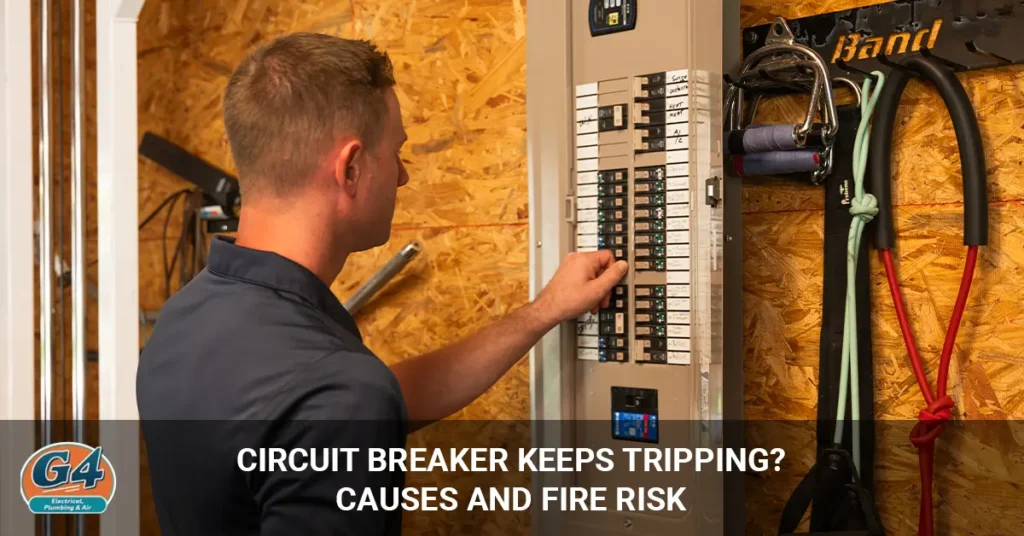
If your circuit breaker keeps tripping, it means your electrical system is under stress.
This is not something to ignore. A breaker does not trip randomly. It shuts off power to protect your home from overheated wires and possible fire.
Sometimes the problem is small. Too many appliances on one circuit. A faulty device. A temporary overload.
Other times, it points to a deeper wiring issue that needs professional repair.
This guide explains why breakers trip, what you can safely check yourself, and when it’s time to call a licensed electrician before the problem becomes dangerous.
Is It Normal for a Circuit Breaker to Keep Tripping?
No, it is not normal for a circuit breaker to keep tripping during regular use.
A breaker might trip once if you overload a circuit. That can happen if too many appliances are running at the same time. But it should not keep shutting off again and again.
Circuit breakers are built for safety. They cut power when they detect too much heat or an unsafe electrical problem. That shutdown is a warning.
If the breaker keeps tripping, your system is trying to tell you something is wrong.
Ignoring it can increase the risk of an electrical fire and may damage your wiring or appliances over time.
What Does It Mean When a Circuit Breaker Keeps Tripping?
When a circuit breaker keeps tripping, it means your electrical system is shutting off power to prevent damage or fire.
This is a safety response. It is not random.
Modern electrical panels are designed to cut power when they detect a problem, such as:
- Too much electrical load on one circuit
- A short circuit
- A ground fault
- Wires are overheating behind the walls
The breaker trips because something is unsafe. It is doing its job.
If it keeps happening, the real issue needs to be identified and fixed. Resetting the breaker without solving the cause will not make the problem go away.
Common Reasons a Circuit Breaker Keeps Tripping
Circuit Overload
A circuit overload is the most common reason a circuit breaker keeps tripping.
This happens when too many appliances are running on the same circuit at the same time. Every circuit has a limit. When you go over that limit, the breaker shuts off power to prevent overheating.
For example, running a space heater, microwave, and coffee maker on one kitchen circuit can easily overload it. The breaker trips because the wiring cannot safely handle that much demand.
In many cases, the fix is simple. Spread high-power appliances across different circuits. Avoid plugging multiple heavy-load devices into the same outlet or power strip.
If the breaker stops tripping after reducing the load, overload was likely the problem.
Short Circuit
A short circuit happens when a hot wire touches a neutral wire, causing a sudden surge of electricity.
When this happens, the breaker trips immediately to stop the flow of power. It reacts fast because short circuits can generate intense heat in seconds.
Common signs of a short circuit include:
- A burning smell
- Scorch marks around outlets or switches
- The breaker trips instantly after you reset it
This is a serious electrical problem. Short circuits can quickly increase the risk of fire.
If you notice these signs, do not keep resetting the breaker. Turn the circuit off and contact a licensed electrician to inspect the wiring safely.
Ground Fault
A ground fault happens when a hot wire touches a ground wire or a metal surface.
This usually occurs in areas where water is present, such as bathrooms, kitchens, garages, or outdoor outlets. Moisture increases the chance of electricity flowing where it shouldn’t.
When a ground fault happens, the breaker trips to prevent electric shock and overheating.
If your breaker keeps tripping in areas exposed to water, it needs attention right away. Electrical problems near moisture can be dangerous and should be checked by a licensed electrician.
Faulty Appliance
Sometimes the circuit breaker is not the problem. A faulty appliance can cause the breaker to trip.
When an appliance is damaged, it may draw more power than it should. That extra load forces the breaker to shut off the circuit to prevent overheating.
You can test this safely. Unplug everything on that circuit first. Reset the breaker. Then plug devices back in one at a time.
If the breaker trips when a specific appliance is plugged in, that appliance is likely the issue. Stop using it until it is repaired or replaced.
Worn-Out or Failing Breaker
Sometimes the breaker itself is the problem. Circuit breakers do not last forever.
Over time, internal parts wear down. When that happens, the breaker may trip more easily than it should or fail to reset.
If your electrical panel is older, or the breaker feels loose, weak, or will not stay in the ON position, it may be failing.
A worn-out breaker is a safety concern. It should always be inspected and replaced by a licensed electrician to ensure your electrical system stays protected.
When a Tripping Breaker Becomes a Serious Fire Risk
A tripping breaker becomes a serious fire risk when it keeps happening and you notice other warning signs.
One trip once in a while is usually not dangerous. But repeated shutdowns mean something is overheating or unsafe. When heat builds up inside the walls or the panel, the risk of fire increases.
Watch for these red flags:
- Burning smell from outlets or the electrical panel
- A panel that feels warm or hot to the touch
- Flickering or dimming lights
- Buzzing sounds from the breaker box
- A breaker that will not reset
- Scorch marks around outlets or switches
Electrical fires often start quietly. Wires overheat behind the walls. Insulation breaks down. Loose connections spark. Overloaded circuits create constant heat.
If you notice any of these signs, do not keep resetting the breaker. Turn off the power to the affected area and contact a licensed electrician right away. Acting quickly can prevent serious damage and protect your home.
How Repeated Tripping Affects Your Home
Repeated breaker tripping can damage your home’s electrical system and create safety risks.
It does more than just shut the lights off. When a breaker trips again and again, it puts stress on wiring, outlets, and connected appliances.
Frequent tripping can:
- Damage sensitive electronics and appliances
- Interrupt work, cooking, and daily routines
- Wear down electrical components faster
- Increase the risk of hidden overheating inside walls
Over time, ignoring the issue can lead to expensive repairs and unsafe electrical conditions. Fixing the root cause early helps protect your home and everything connected to it.
Step-by-Step Checks You Can Do Right Now
You can safely check a few basic things before calling an electrician. These simple steps may help you find the cause if the issue is minor.
Unplug Excess Devices
Start by reducing the load on the circuit.
Unplug high-wattage appliances like space heaters, hair dryers, microwaves, or air fryers. These devices use a lot of power and can easily overload a circuit.
After unplugging them, reset the breaker.
If the breaker stays on, the problem was likely an overloaded circuit. In that case, spreading appliances across different outlets or circuits can prevent it from happening again.
Check for a Faulty Appliance
A faulty appliance can cause the breaker to trip even if the wiring is fine.
After resetting the breaker, plug your devices back in one at a time. Give it a few seconds between each one.
If the breaker trips when a specific appliance is plugged in, that appliance is likely the problem.
Stop using it right away. A damaged appliance can overheat, short out, or create a fire risk if it continues to run. Have it repaired or replace it before using it again.
Inspect Visible Outlets
Check your outlets for clear signs of damage.
Look for discoloration, melted plastic, loose faceplates, or a burning smell. These are signs that heat has built up inside the outlet.
Do not touch exposed wiring or try to open the outlet yourself.
If anything looks or smells unusual, stop using that outlet immediately and contact a licensed electrician. Damaged outlets can overheat and increase the risk of fire.
Reset the Breaker Once
You can safely reset the breaker one time to see if the issue was temporary.
Push the breaker fully to the OFF position first. Then switch it back to ON. Make sure it clicks firmly into place.
If the breaker trips again right away, stop there.
Do not keep resetting it. Repeated resets can allow overheating to continue and increase the risk of electrical damage or fire. At that point, the problem needs professional inspection.
When to Call a Licensed Electrician
You should call a licensed electrician when the breaker problem does not stop or shows warning signs. Do not wait if you notice any of the following:
- The breaker trips repeatedly
- It will not reset
- You smell something burning
- The electrical panel feels warm or hot
- The lights flicker often
- Your home has older wiring
Electrical systems carry high voltage. Most of the wiring runs behind walls where you cannot see the damage. Trying to fix complex electrical issues without proper training can be dangerous.
A licensed electrician can safely test the circuit, inspect the wiring, and identify the exact cause. If the problem continues, it’s best to schedule an electrical safety inspection before the issue becomes a fire risk.
Repair vs. Electrical Panel Upgrade
Sometimes repeated breaker trips mean your electrical panel is outdated and cannot handle your home’s power needs.
Older homes were built for fewer appliances. Today, we run large refrigerators, HVAC systems, home office equipment, gaming systems, and multiple kitchen appliances at the same time. Older panels were not designed for that level of demand.
If your breakers trip often, even after reducing the load, your panel may be overloaded.
In some cases, a simple repair or breaker replacement solves the issue. But if the panel itself is undersized or aging, it may be time to consider an electrical panel upgrade to safely handle your home’s power demands.
Upgrading the panel increases capacity, improves safety, and reduces the risk of future electrical problems.
How to Prevent Circuit Breaker Trips in the Future
You can prevent most breaker trips by reducing electrical overload and keeping your system maintained. Simple preventive steps make a big difference.
- Avoid running multiple high-power appliances on the same circuit
- Use dedicated circuits for large appliances like refrigerators, ovens, and HVAC systems
- Schedule periodic electrical inspections
- Upgrade outdated electrical panels
- Replace damaged or loose outlets promptly
Regular maintenance helps catch small wiring problems early. Fixing minor issues before they grow reduces fire risk and keeps your electrical system running safely and reliably.
Final Thoughts
If your circuit breaker keeps tripping, it is a warning sign you should not ignore.
Sometimes the fix is simple. You may just need to reduce the load on a circuit or replace a faulty appliance. But in other cases, repeated tripping points to a deeper electrical problem that needs attention.
Remember, breakers trip to prevent fires. If it keeps happening, your electrical system may be under stress.
Taking action early protects your appliances, reduces safety risks, and helps prevent a serious electrical fire. In most situations, fixing the issue sooner is easier, safer, and far less expensive than waiting.